Artificial Intelligence in Education: International Conflict Between Banning and Adoption - 1 - Dr. Mohammed bin Ibrahim Al-Mulhim
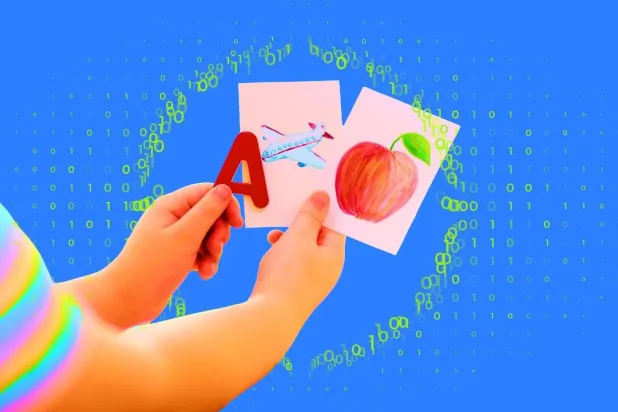
Is the problem that artificial intelligence enters the school, or that it enters before we know what we want from it? This is the question that should precede all technological enthusiasm, as well as all educational fear. The school is not a showroom for new tools, nor is it a fortress that closes its doors to the times. The school is a place where a child learns to read, write, think, make mistakes, and correct them. If a tool appears that can give the answer before the child builds their path to it, the issue is no longer just technical, but becomes an educational matter at the heart of the meaning of learning. In reality, the international dispute over artificial intelligence in general education is no longer between countries that accept it and those that absolutely reject it. The educational policies that have emerged globally to date reveal a more nuanced gradation: teaching children what AI is and its risks, allowing the use of restricted tools designed for learning, and prohibiting the free use of generative tools for young ages or for completing homework. There is a big difference between teaching students what AI is, how it works, its limits and risks, and allowing students to use a chatbot that writes the homework or solves the problem for them. The former is called AI literacy or AI culture, and the latter, if not controlled, may turn into early cognitive delegation—that is, the student transfers thinking processes to an external machine before their own thinking muscles have developed. The simplest example to recall is allowing the use of calculators in tests for primary school students.
Norway appears as a notable model of caution. On June 19, 2026, the government recommended that students in grades 1–7 use AI in schoolwork only to a very limited extent, and that its use in grades 8–10 (roughly ages 13–16) should be gradual and under teacher guidance, while upper secondary students learn to use it critically and appropriately. This stance is not based on a rejection of technology, but on an old and solid educational idea: do not shorten the path for the child before they learn to walk it. Reading, writing, and arithmetic are not just school outcomes; they are tools through which the mind builds its independence and cognitive entity. France has chosen a similar gradation, but more detailed. Primary school students learn basic AI concepts without directly dealing with generative tools. Limited, explained, and teacher-guided classroom use begins in the fourth grade of collège, around age 13 or 14 (roughly our intermediate school first and second years). Then, in high school, student use becomes more independent but within an educational task defined by the teacher. Notably, the French framework does not just regulate use; it redefines cheating: completing an assignment with AI without explicit permission and without personal work is considered cheating. Singapore offers another lesson. It did not leave students to general commercial tools, nor did it completely ban AI. Instead, it built a closed learning environment within the national learning platform. From the fourth grade of primary school, a so-called "learning assistant" can be used under close supervision. It is designed to ask guiding questions and lead the student to think rather than give the final answer. The educational meaning here is that not every AI tool is necessarily rejected; a tool that asks the student "Why this step?" differs from a tool that writes the entire solution. The former supports thinking, the latter may hinder it.
In Australia, the national framework for the responsible use of generative AI in schools places the equation elsewhere. It neither mandates use nor declares a general ban, but ties it to principles such as learning, well-being, transparency, fairness, accountability, privacy, security, and safety. In my view, this is an important shift from the question "Do we allow or prohibit?" to the question: "What evidence shows that this tool serves learning and does not harm it?"
Reviewing these four international experiences, we derive an educational rule: age is not an administrative detail. Young students need manual, linguistic, and social practice before they need intelligent shortcuts. Older students can learn how to question the tool, examine its answer, and know its limits. Therefore, caution with young children is not fear of the future, but protection for a stage in which the foundation of the future and its basic human skills are formed. It is the stage of cognitive and skill formation for this human being, and it must proceed within human limits. The conclusion is that the world is not moving toward free permission nor absolute prohibition; there is variation, and the deeper trend is the distinction between knowing AI and using it, and between use that leads the student to thinking and use that replaces it. This is the difference we must pay attention to before we repeat the phrase that AI is "the future of education." The future is not enough to be new; it must be educational. To be continued.
** **
- Former Director General of Education
Original source: Al-Jazirah



Comments (0)
Be the first to comment.