Like Vampires... How Do These Invasive Creatures Threaten the Balance of the Great Lakes?
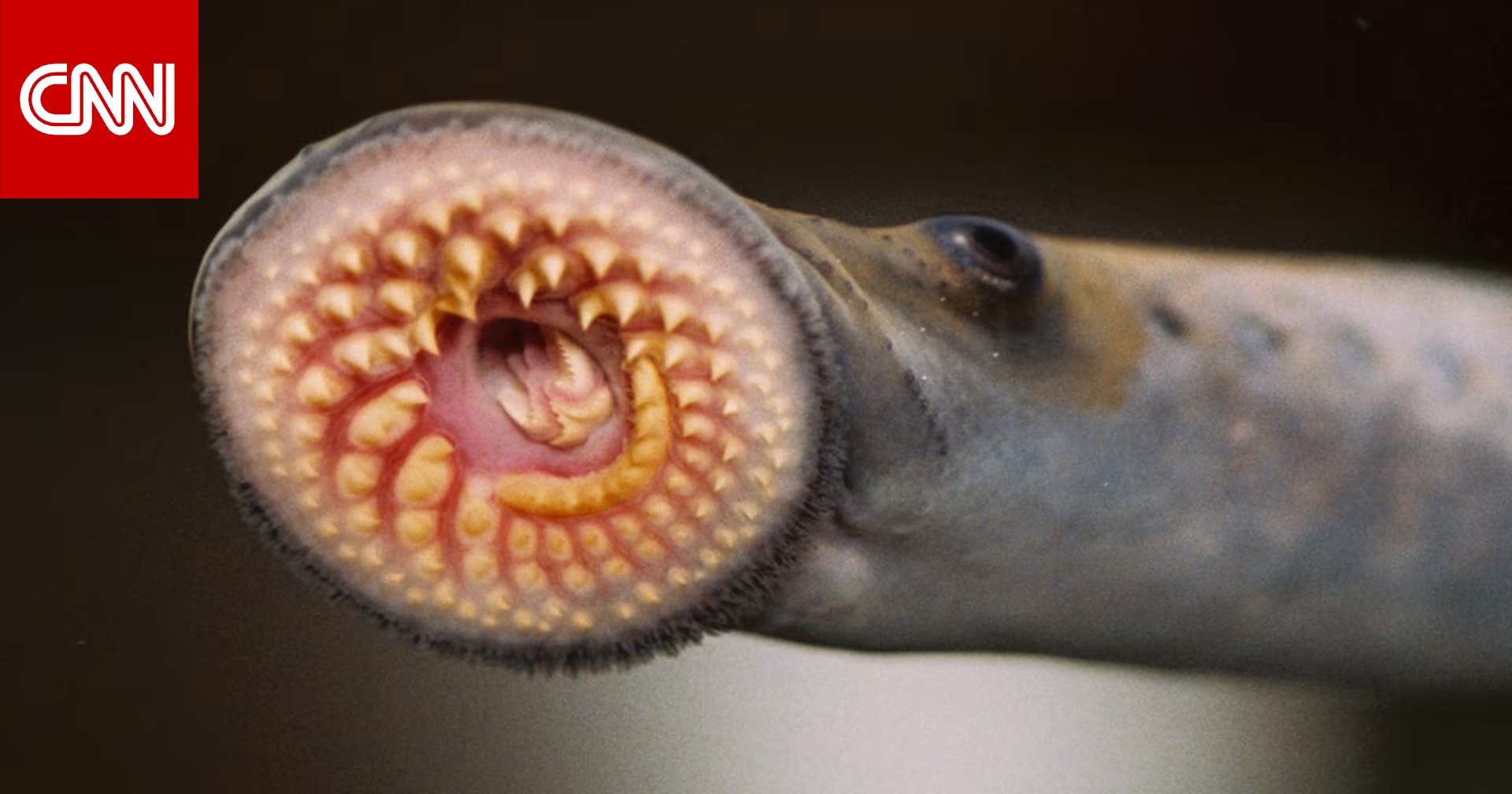
About 70 years ago, an ambitious project succeeded in containing the threat of sea lampreys to the Great Lakes region... Can a new project save it from invasive mussels?
(CNN)-- An old enemy recently visited the U.S. Capitol.
After 6 guests arrived from the Great Lakes region, these creatures bared their teeth in front of camera lenses and posed for photos alongside policymakers from Florida to California.
There were no handshakes, but one of the guests bit the palm of U.S. Representative Bill Huizenga of Michigan.
Despite sharp divisions in Congress, everyone agrees on one thing: the need to eradicate invasive sea lampreys.
Greg McClintche, director of policy and legislative affairs for the Great Lakes Fishery Commission (GLFC), said: 'I've spent my entire life involved in political work... I've never seen an issue unite everyone like this.'
The meeting in June, which brought together officials and visitors, was the latest event organized by the GLFC to remind policymakers that this threat remains under control only thanks to government funding from the United States and Canada.
Photo showing a sexually mature adult sea lamprey. Credit: A. Miehls/GLFC
This invasive species originated in the Atlantic Ocean and has caused many problems in the Great Lakes since entering Lake Ontario in the mid-19th century, leading to a significant decline in lake trout and whitefish populations.
Sea lampreys did not earn their vampire-like reputation for nothing; in fact, these parasites attach to fish with their mouths surrounded by rings of teeth, not eating the flesh of their prey but sucking their fluids until they leave them emaciated like a shell.
A single sea lamprey consumes about 40 pounds (18 kg) of fish over 12 to 18 months, while females can lay 100,000 eggs in one spawning season.
Photo showing a wound caused by a sea lamprey. Credit: Z. Allen/GLFC
The commission was established by a treaty signed by the United States and Canada in 1954 to control the sea lamprey problem.
In 1957, an ambitious project succeeded in controlling lamprey populations after developing a chemical compound known as 'TFM' or '3-trifluoromethyl-4-nitrophenol,' which kills lamprey larvae without harming most native fish.
It is generally used in the breeding areas of these parasites before their young move into the lakes, where scientists find it difficult to reach them.
The GLFC explained that failure to control sea lampreys could cause the collapse of the Great Lakes fishery, along with a fishing industry worth billions of dollars, in just five years.
About 9 million sea lampreys must be killed annually just to prevent uncontrolled reproduction.
McClintche said that complete eradication of invasive lampreys is a 'very realistic possibility we continue to work toward,' but 'it's not on the table at this time.'
But seven decades after the ambitious project launched, this long effort nearly went to waste. Worse, new invasive species have arrived, and controlling them may require another ambitious project.
"The Forbidden Experiment"
The GLFC has recently been able to resume its activity after the repercussions of the COVID-19 pandemic.
During the lockdown period between 2020 and 2021, staff had to adhere to social distancing, which reduced the number of treatments and prevented the commission from implementing its full sea lamprey control program.
McClintche said that numbers 'skyrocketed' by 300% in some areas, adding: 'It proved our case.'
He explained: 'We call it the forbidden experiment here in the office... We always said that stopping sea lamprey control would lead to their resurgence; they are a lurking threat... But we never dared to do that.'
The GLFC reports that fishing activities in the Great Lakes support 75,000 jobs. The increase in sea lamprey numbers during the pandemic caused economic losses of $2 billion.
However, the GLFC succeeded in containing the problem using lampricide.
And in December 2025, it announced that it had reduced parasite numbers to pre-pandemic levels, although they remained elevated in Lake Superior.
Photo showing a worker treating water with lampricide. Credit: Z. Allen/GLFC
The effectiveness of lampricide lies in the larvae's inability to metabolize the chemical compound, which disrupts their energy production and leads to death.
After about 70 years of use, the GLFC confirmed no signs of sea lamprey resistance to this compound.
But that hasn't stopped the commission from continuing to research other methods to control the parasites, including the use of dams, bubble curtains, and acoustic barriers in rivers surrounding the lakes.
It is also working on an innovative concept known as the 'Fish Pass' to replace the Union Street Dam in Traverse City, located on the shores of Lake Michigan in the U.S.
The new dam will span the Boardman River, with a parallel channel allowing specific fish species to move between sections of the river.
The channel, still under construction, will be equipped with multiple means to sort sea lampreys, isolate them, and prevent them from moving upstream.
Can an ambitious project inspire another?
Sea lampreys are among 186 invasive species in the Great Lakes, which host about 3,000 species of organisms.
While some cause environmental harm, others have become economically valuable resources.
For example, rainbow smelt accidentally entered the Great Lakes in the early 20th century and later became the largest fishery in Lake Erie, according to Great Lakes Foods in Chatham, Canada, which exclusively harvests this species.
In contrast, both quagga mussels and zebra mussels have become an environmental plague since their arrival in the 1980s.
They have impacted fish egg survival, contributed to the spread of toxic algae, and outcompeted native mussel species. Currently, there is no safe way to eradicate them from the Great Lakes.
The Great Lakes fishing industry has faced the sea lamprey threat for decades, but today it faces a new danger from invasive mussels. Credit: Scott Olson/Getty Images
Currently, Congress is discussing the 'Great Lakes Fish Rescue Act of 2025,' which would task the relevant commission with finding solutions to the problem, with a budget of $500 million over 10 years.
On June 3, the American-Canadian advisory committee to the Great Lakes Fishery Commission, composed of representatives from Indigenous communities, commercial and recreational fishing sectors, academia, and government and environmental agencies, announced its unanimous support for the bill and urged the U.S. Congress to pass it.
McClintche said the next step from Congress on the issue remains unclear.
He added: 'We need Congress to make a decision... Our commissioners have already expressed their desire to achieve the second great accomplishment.'
Original source: CNN Arabic





Comments (0)
Be the first to comment.