Eva Perón: Secrets of the 16-Year Theft of the Argentine Icon of the Poor and Workers
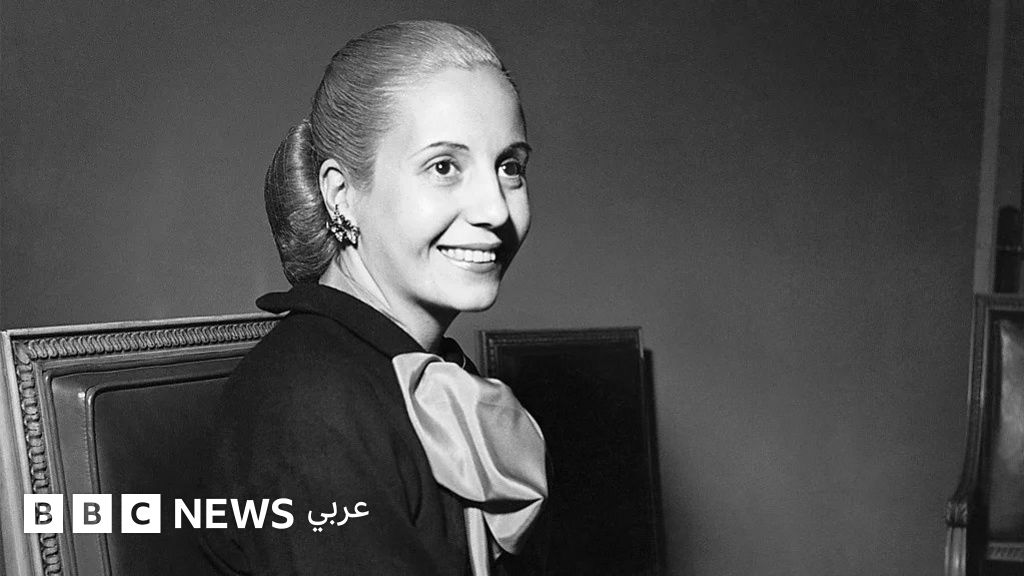
After the death of Argentina's most famous first lady, Eva Perón, in July 1952, an extraordinary chapter began as her body disappeared and was secretly moved between several countries over 16 years, in one of the strangest political stories featured by the BBC.
Eva Perón: Secrets of the 16-Year Theft of the Argentine Icon of the Poor and Workers
Article Information
Author, Fiona MacDonaldRole, BBC
Published 1 hour ago
Reading time: 6 minutes
Eva Perón, Argentina's most famous first lady, died in July 1952. Sixty years later, the BBC explored the strange disappearance of her body and its 16-year journey across several countries.
Hours after Eva's death on July 26, 1952, renowned Spanish anatomist Pedro Ara was tasked with embalming the first lady's body using the same technique the Russians used to preserve Lenin and Stalin's bodies.
Eva's body (Evita, as she was affectionately known) was kept in the Ministry of Labour building, as plans were underway to build a workers' monument with a glass-topped coffin as her final resting place.
However, three years later, in September 1955, her husband, President Juan Perón, was ousted in a military coup and forced into exile. The new ruling regime decided to seize Eva's body, beginning a harrowing 16-year journey. It was first held at military intelligence headquarters, then stored in a truck, buried in Milan, moved to Madrid, and eventually returned to Buenos Aires, where it was reburied in a heavily fortified cemetery.
Wives Who Shared Political Power with Their Husbands
Eva died of cervical cancer at the age of 33. Her husband had political motives for embalming her body, as her poor rural upbringing and charitable work as first lady had earned her widespread support among the working class.
Flavia Fiorucci, a historian specializing in the Peronist period, told the BBC in 2012: 'So he (Perón) wanted to preserve that legacy by preserving the body. It was also tied to the importance Perón and Peronism placed on symbols, and Evita was a symbol.'
This became clear in the weeks after her death, when Ara succeeded in embalming Evita's body so lifelike, using paraffin and glycerin injections, that two million people visited her coffin during a 14-day display at Congress. The devotion she inspired in life continued after death.
The symbolism of Evita's body led to a long and difficult journey over the next 16 years. When Perón was overthrown in 1955, the dictatorship led by General Pedro Aramburu sought to erase all traces of Peronist rule, fearing her body would become a symbol of resistance.
The Story of the Undertaker Who Sold 560 Corpses
Skip most read and continue reading
Thus, Carlos Mori Koenig, head of army intelligence, moved her body around various locations in Buenos Aires, driven by fears that Peronist supporters might try to reclaim it. Evita's body was reportedly hidden in a parked truck in the capital's streets, behind a cinema screen, and inside city waterworks. Wherever it was moved, flowers and candles appeared.
Koenig then moved the body to his office, where he is said to have kept the coffin upright and displayed it to visitors. He reportedly became obsessed with her body.
Officer Héctor Cabanillas said in a 1997 documentary titled 'Evita, The Tomb Without Peace': 'I knew him (Koenig) from military academy; he was completely normal, but after the body came into his possession, he went mad.'
Argentine academic Cecilia Macón told the BBC in 2012 that while it is hard to know the truth, as 'myth and history constantly merge in stories about Evita,' one account says Koenig became fascinated with the body he was tasked with guarding, before being relieved of his duties in 1957.
After that, Cabanillas was given the task of hiding Evita's body. He arranged its transfer to Italy in 1957, where it was buried in a Milan cemetery under the name Maria Maggi de Magistris. But her supporters did not forget her. Graffiti appeared in Buenos Aires asking 'Where is Eva Perón's body?' and demands for its return became a rallying cry for Peronist supporters in Argentina.
Return of the Body
Skip podcast and continue reading
In-depth explanation of the most important events and topics, to help you understand the key changes around you and their impact on your life
Episodes
End of podcast
Fiorucci believes that the army's disappearance of Evita's body added to its symbolism: 'The pain inflicted on Evita's body was also a symbol of the pain inflicted on the working class.'
A new government, seeking to return Argentina to democratic rule in 1971, eased restrictions on Peronist supporters and agreed to return Evita's body to former president Juan Perón. The body was handed over in a silver coffin at a villa where the former dictator lived in the outskirts of Madrid during his exile, accompanied by his third wife, Isabel.
Iran Protests: Accusations of Security Forces 'Stealing' Body of Girl Killed During Demonstrations
Carlos Spadoni, then a close associate of Juan Perón, was among the first to see Evita's body. He told the BBC in 2012: 'The general, the gardener, and I removed the body from the coffin. We placed it on a marble-topped table, and our hands got dirty with dust, so we had to clean it. Isabel did that using a cotton cloth and water, nothing else, working very carefully. Then she combed the blonde hair, which was long, and cleaned it strand by strand with a comb, then dried it with a hairdryer.'
New stories circulated about what happened next, often focusing on the esoteric beliefs of former government minister José López Rega.
According to one account, the Peronist politician asked Isabel to lie next to Eva Perón's body so that Evita's magical political power would transfer to her. Such beliefs reflected the near-religious veneration Evita's followers held for her.
Image caption, Former Argentine President Juan Perón with Eva at an official event
The former dance hall girl who rose to power alongside her husband became a spiritual leader in the eyes of her supporters, and her body took on sacred importance for them, even as she was heavily criticized by anti-Peronists.
Juan Perón returned to power in Argentina in 1973, with Isabel as vice president. Evita's body remained in Spain, but after Juan's sudden death in 1974, her body was returned to Buenos Aires.
Original source: BBC Arabic

Comments (0)
Be the first to comment.