China: Landslides kill 8, leave 34 missing
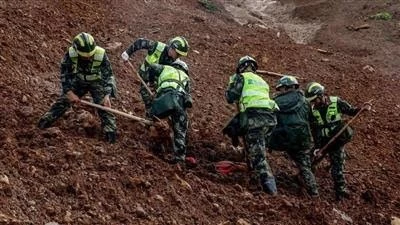
At least 8 people were killed and 34 others missing after a landslide occurred today in Bengshui County, southeastern China. China's CCTV reported that more than 800 rescue personnel participated in search operations, while 18 trapped people were found, 8 of whom died. Television footage showed large amounts of rocks and soil covering a residential and commercial area at the foot of a mountain. Chinese President Xi Jinping called for comprehensive search operations and determination of the cause of the incident, while the Chinese government allocated 50 million yuan to support rescue efforts and assist those affected. It comes…
The Portuguese parliament, at the committee stage, approved a bill banning face coverings in public places, a move the government justified on grounds of public security and facilitating identity verification, though the bill still needs to complete its legislative stages before coming into effect.
The bill was supported by the Social Democratic Party (PSD), Chega, the Liberal Initiative (IL), and CDS, while left-wing parties opposed it, arguing that the law could impose restrictions on personal and religious freedoms.
From the 'Burka Law' to public security. Chega initially proposed the measure under the name 'Burka Law', before the Social Democratic Party amended its wording to become a general law banning face coverings in public places for reasons of security and public order, without explicitly referring to the niqab, burqa, or any specific religious dress.
Fines instead of imprisonment. The amended version replaced the prison sentences stipulated in the initial proposal with administrative penalties, including financial fines for violators, as part of an approach aimed at implementing the law as a regulatory measure rather than a punitive one.
Political division. Proponents of the bill argue that banning face coverings contributes to enhancing public safety and makes it easier for authorities to verify people's identities in public places, while opponents assert that the law may restrict certain individual freedoms, even though its text does not directly target any religious group.
The bill still needs to complete legislative procedures within the Portuguese parliament before final approval and implementation.
Original source: Okaz





Comments (0)
Be the first to comment.