Dbeibeh: Unified Spending and Development Agreement Continues in Libya
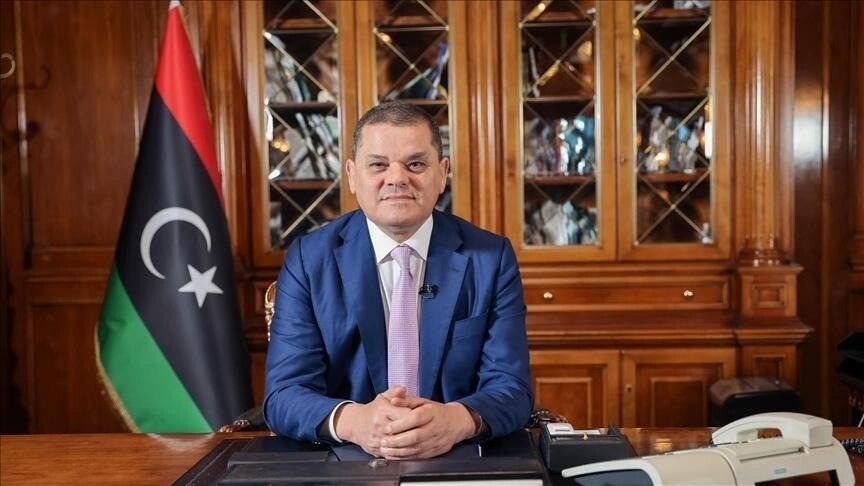
The head of Libya's Government of National Unity said that implementing the agreement is a complex process aimed at correcting a financial path that has been flawed for years, while the unified budget totals more than $26 billion.
Libya
Dbeibeh: Unified Spending and Development Agreement Continues in Libya
The head of Libya's Government of National Unity said that implementing the agreement is a complex process aimed at correcting a financial path that has been flawed for years, while the unified budget totals more than $26 billion.
Mohammed Ertima
18 July 2026 • Updated: 18 July 2026
LIBYA
Tripoli / Mohammed Ertima / Anadolu
Libya's Government of National Unity head Abdul Hamid Dbeibeh confirmed on Saturday the continuation of the unified development and financial agreement in the country, saying that attempts to question it or disrupt its path will not hinder its implementation.
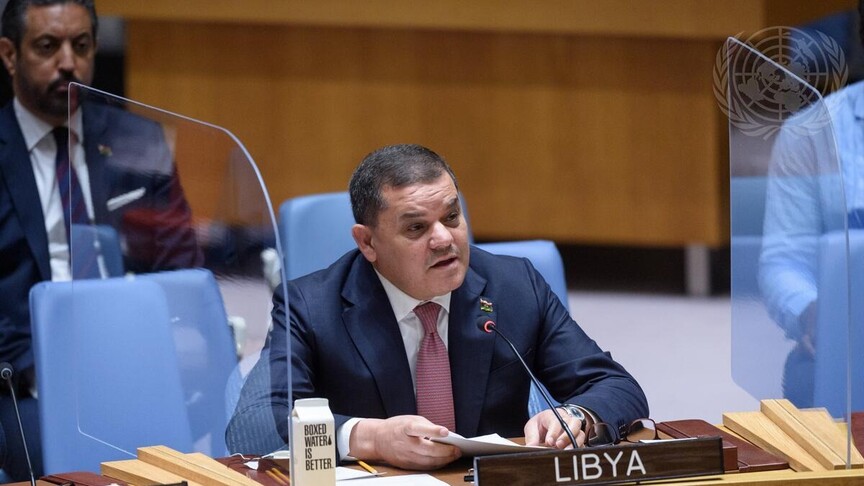
This came in a speech by Dbeibeh during the fourth regular meeting of the Cabinet for 2026, held in the city of Zliten, east of the capital Tripoli.
Dbeibeh said: 'I reassure our people that the unified development and financial agreement is continuing, and attempts to question or disrupt the path that aim to return to square one will not hinder it.'
He added that the country 'has endured 13 years of financial division, which has had a direct impact on state institutions, the level of services, and development opportunities in various fields.'
Dbeibeh explained that 'it is natural for addressing this legacy to be a very complex process, facing challenges and difficulties, because we are not only treating the crisis of division, but correcting a path that has been flawed for years.'
Dbeibeh's confirmation comes amid differences over the pace of implementing the agreement, as the head of the Unified Spending Committee in the House of Representatives, Issa al-Araibi, warned last June of the possibility of withdrawing from it if what he described as 'obstruction of implementation' continued.
On 18 November 2025, representatives from the House of Representatives (east) and the High Council of State (west) signed an agreement on the 'Unified Development Program,' aiming to unify the development path and reduce parallel spending in the country.
Last 11 April, representatives of the two councils signed Annex No. (1) to the agreement, concerning the unification of public spending and adoption of financial tables, in the first consensus of its kind nationwide in more than 13 years.
The value of the unified budget for 2026 amounts to about 167.36 billion Libyan dinars (over $26 billion) distributed across 4 main public spending categories.
The budget includes 73.36 billion dinars (about $11.5 billion) for salaries, and 44 billion dinars (about $7 billion) for subsidies.
It also allocates 10 billion dinars (about $1.5 billion) for operational expenditures, and about 40 billion dinars (about $6 billion) for development projects.
On the political file, Dbeibeh said that local and international initiatives aimed at unifying the country and preparing conditions for elections continue, as they are 'the entitlement that all Libyans await.'
Addressing Libyans, he added: 'There will be no decision regarding Libya's future taken away from you or imposed on you by force.'
Dbeibeh affirmed that his government will proceed with any path that gains the acceptance of Libyans.
He noted that national solutions are built only through concession and courage.
Dbeibeh pointed to his government's adherence to the principles of a civil state, the rule of law, and recourse to the will of the people through free and fair elections, away from imposing a fait accompli or the logic of force.
Dbeibeh stressed the need to consolidate peace and stability, the categorical rejection of the use or threat of force to resolve political differences, and the adoption of serious and responsible dialogue as the only way to address differences among Libyans.
Two governments compete for power in Libya; the first is the internationally recognized Government of National Unity, headed by Dbeibeh, based in the capital Tripoli, and controls the west of the country.
The second was appointed by the House of Representatives in early 2022, currently headed by Osama Hammad, based in the city of Benghazi, and controls the east and most southern areas.
For years, the United Nations Support Mission in Libya has led efforts to reach a political settlement leading to elections that would end the conflict in the country.
Original source: Anadolu Agency
Comments (0)
Be the first to comment.