Did Trump abort the peace deal with Iran?
Trump's abortion of the Iran peace deal, reasons why no severe economic crisis has occurred in reality due to the Iran war, and the potential for the AI sector to break free from the dominance of a few companies – all in today's press review.
Did Trump abort the peace deal with Iran? - The Independent
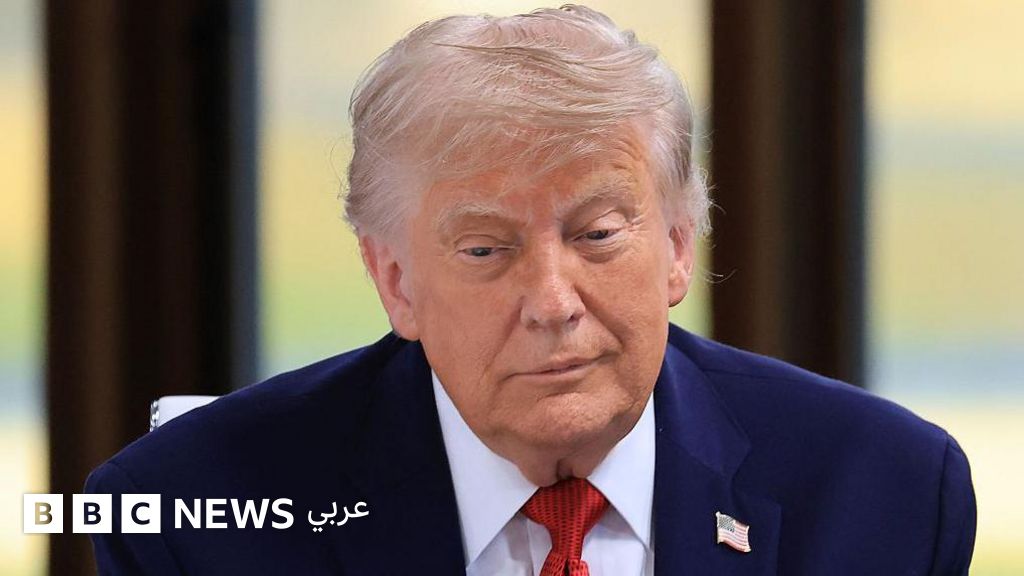
Image caption, Trump renewed his attack on the Iranian leadership and indicated that the deal with Tehran had become "practically" null and void.
Published 1 hour ago
Reading time: 6 minutes
We begin our press review with the British Independent, which published an article about how US President Donald Trump is handling the peace deal he signed with Iran.
The British newspaper stated in its editorial that Trump announced that the "interim agreement between the US and Iran is no longer practically in effect" during his participation in the NATO summit in Ankara, describing negotiations with the Iranians as a "waste of time."
Trump said: "I think it's over," directing sharp criticism at the Iranian leadership, as he appeared live on air tearing up the agreement signed last month.
His remarks came at a time when European allies had hoped the summit would focus on NATO issues and collective defense, but the Iran file dominated much of the summit's attention.
However, Trump, during a press conference with NATO Secretary General Mark Rutte, criticized Spain, Britain, and the alliance, saying they failed to support Washington in its confrontation with Iran. The US president's announcement of abandoning the deal surprised several attendees, especially since he had spent months promoting it.
These statements came amid renewed military escalation in the Middle East between Washington and Tehran.
Iran launched attacks targeting more than 80 US military sites in Bahrain and Kuwait, in response to approximately the same number of US strikes in southern Iran.
US Central Command confirmed that more than 80 Iranian targets were bombed with the aim of "weakening Iran's ability to continue attacking international trade" in the Strait of Hormuz.
Skip most read and continue reading
Iran targets US bases in Gulf and Jordan in response to US strikes on 90 Iranian military targets
Is FIFA biased towards Argentina in the World Cup?
Resignation to "relieve the government of embarrassment" raises question: how are ministers chosen in Egypt?
Khamenei's coffin arrives in Mashhad at the end of a six-day funeral procession
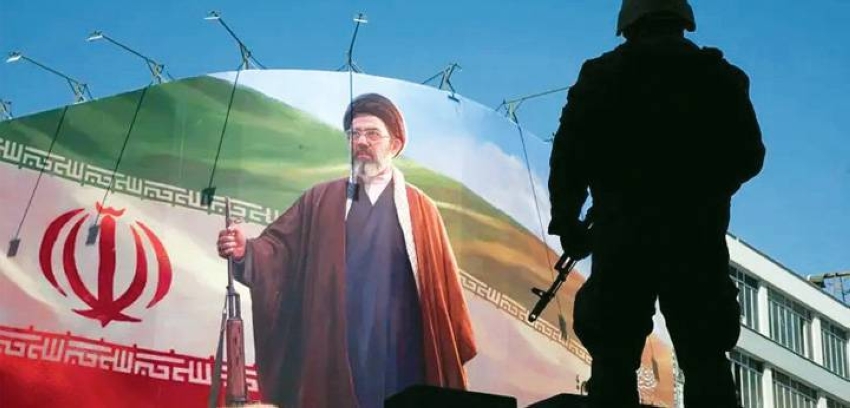
Trump said of the Iranian government: "There's something abnormal about them," adding: "I don't like them."
In contrast, Israel welcomed the tough US stance, asserting that it does not consider itself bound by this agreement. It also continued to call for stricter measures regarding about 400 kilograms of highly enriched uranium believed to still be under Iranian control.
Israeli Prime Minister Benjamin Netanyahu said: "All enriched material must leave Iran."
However, EU foreign policy chief Kaja Kallas stressed the importance of conducting "deeper negotiations" on Iran's nuclear program, considering that fundamental issues related to oversight and nuclear materials have been postponed to a later stage.
At the end of a day marked by clear tension within the alliance, Trump threatened to withdraw more than 80,000 US troops from Europe and cut trade relations with Spain, saying: "No one wanted to help."
How did the Iran war reveal the fragility of the Iraqi economy?
Trump oversees the signing of a "historic peace agreement" between Thailand and Cambodia
Why did the Iran war not turn into a global inflationary shock?
Image caption, The Iran war was behind the rise in oil prices to historic and record levels
Skip podcast and continue reading
Noteworthy
In-depth explanation of the most prominent events and topics, to help you understand the key changes around you and their impact on your life
Episodes
Podcast end
The Financial Times published an article addressing the economic impact of the war against Iran from a new angle, as its author Alan Beattie questioned the secret behind the Iran war not turning into a global inflationary shock.
The article's author said: "When the war with Iran broke out, there were widespread expectations that it would lead to a long-term shock in energy markets and prices, and cause inflationary chaos for the global economy."
He added that this has not materialized so far, as developments indicate that the actual impact has been less severe than expected.
Despite continued fears of a worsening situation in the Gulf or disruption to global energy supplies, current estimates assume the Strait of Hormuz remains partially open to ships, especially oil tankers.
In this context, consensus is growing that the war's impact has been much weaker than the disruptions caused by the COVID-19 pandemic and the Russian invasion of Ukraine in 2022.
Beattie noted that warnings of the world returning to an era of "stagflation" like the 1970s have not materialized so far.
According to the article, recent events have proven that expectations of sustained price increases and structural economic disruptions were exaggerated.
Data shows that the rise in import prices within emerging economies, which often bear the brunt of global crises, was much lower than the rise recorded during the COVID and Ukraine crises.
According to the Financial Times article, "what happened after the outbreak of the war was weaker than the wave seen in 2016, which coincided with Chinese fiscal stimulus, a commodity boom, and a strong US dollar."
Part of this difference is attributed to global trade conditions. During the post-pandemic period, shortages of shipping containers disrupted supply chains and raised prices.
During the current crisis, non-oil trade continued to show "reasonable" performance after a short period of adjustment, according to Beattie.
The article described the Strait of Hormuz as a "closed lymphatic vessel for trade, not an artery carrying the oxygen of global trade," explaining that its closure did not significantly affect container trade.
It noted that activity at Dubai's Jebel Ali port quickly shifted to other hubs, while shipping rates remained stable during the first months of the war.
In the food sector, impacts were also limited. Gulf countries are net food importers, unlike Ukraine, which is a major global grain exporter.
Nor were there signs of damage to agriculture in Europe or North America due to disrupted fertilizer supplies, while "India, one of the world's largest importers of urea and fertilizers and heavily dependent on the Gulf, appears to be handling the situation well."
On economic policy, the article noted that the global economy experienced a "soft landing" in 2024, and that central banks managed to contain inflationary pressures by raising interest rates, without a widespread economic recession.
How did Iran's economy reach the brink of collapse?
International reservations about the "Peace Council" proposed by Trump for $1 billion per permanent seat
Dominance of specific companies in the AI sector
Image caption, Many believe competition with China is central to the future of the AI sector
The New York Times discussed the issue of dominance by a limited number of major AI companies, by examining controversial statements from a figure in the sector.
Original source: BBC Arabic


Comments (0)
Be the first to comment.