Egypt Reiterates Commitment to International Law in GERD Crisis
Egypt continues its efforts to strengthen its position on the Grand Ethiopian Renaissance Dam (GERD) crisis and garner international support for its vision of reaching a binding legal agreement regulating the operation and management of the dam.
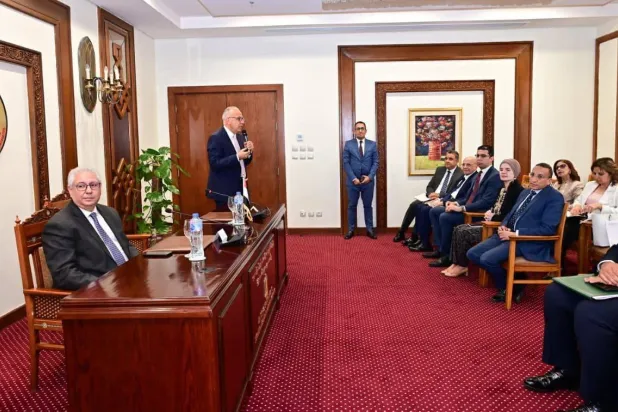
The latest of these efforts was a meeting on Wednesday between Egyptian Minister of Water Resources and Irrigation Hani Sweilem and the ambassadors designated to head several Egyptian diplomatic missions abroad, during which he outlined the key determinants of Egypt's water policy, according to a statement from the Ministry of Irrigation.
During the meeting, Sweilem reiterated that "Egypt's policy is based on adherence to the rules of international law governing shared international rivers, ensuring the preservation of water rights and enhancing cooperation among basin states."
Such efforts carry great diplomatic significance in supporting the Egyptian position internationally on the dam crisis, according to Deputy Head of the Egyptian Council for African Affairs and former Assistant Foreign Minister Ambassador Salah Halima, speaking to Asharq Al-Awsat. He predicted that the path to resolving the dam crisis would involve three tracks, including the success of the current U.S. mediation and Addis Ababa's response to Egyptian demands.
Egypt's share of the Nile water is estimated at 55.5 billion cubic meters, on which it relies for about 97% of its drinking and agricultural uses. It is anticipating a potential shortage in its water share (which is insufficient for its needs) due to the GERD, built by Ethiopia on the main tributary of the Nile, which has caused tensions with the downstream countries (Egypt and Sudan).
Egypt suffers from a "water deficit" estimated at about 54 billion cubic meters annually; its water resources amount to about 60 billion cubic meters annually, compared to needs of up to 114 billion cubic meters annually, according to official data.
Egypt's Water Determinants
The Egyptian irrigation minister confirmed during the meeting with his country's ambassadors that "Egypt adopts an approach based on achieving common interests and supporting sustainable development efforts with Nile Basin countries, through implementing projects to clean waterways, construct rainwater harvesting dams, solar-powered groundwater wells, rainfall forecasting and water quality measurement centers, in addition to training programs and capacity building."
In this context, Sweilem stressed that "the issue of Nile water represents one of Egypt's national security files, given Egypt's reliance on the Nile to provide about 98% of its renewable water resources," reviewing developments in the Ethiopian dam file and the negotiation path that has extended for more than thirteen years.
At the conclusion of the meeting, Sweilem emphasized to the ambassadors "the importance of the role played by Egyptian diplomatic missions in supporting national positions, thereby contributing to supporting Egyptian interests and enhancing Egypt's regional and international standing."
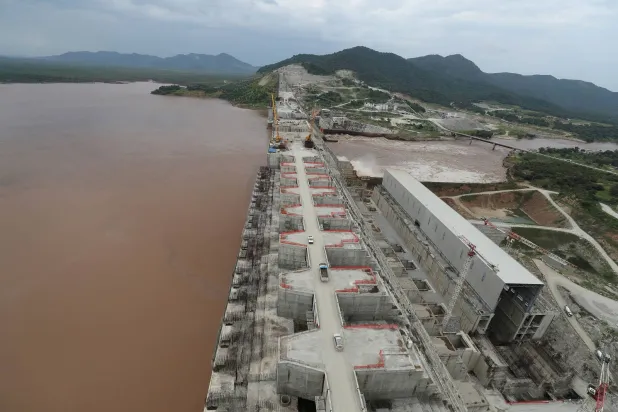
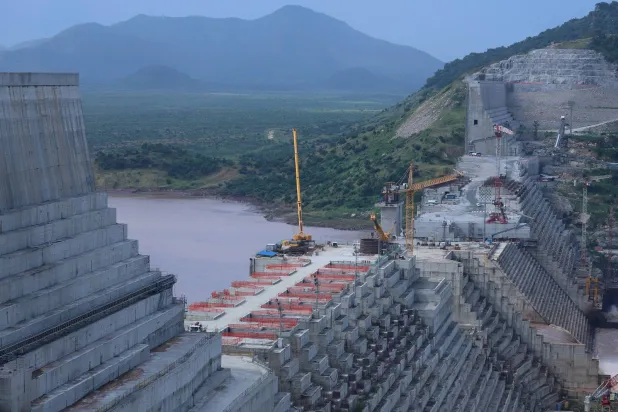
The Grand Ethiopian Renaissance Dam (Reuters)
Deputy Head of the Egyptian Council for African Affairs and former Assistant Foreign Minister Ambassador Salah Halima believes that the meeting held by the irrigation minister with the new ambassadors was clear in conveying specific political messages affirming Egypt's role and position regarding water resources in the Nile Basin region.
These messages focused on axes including: highlighting Egypt's role in implementing vital projects in Nile Basin countries to enhance water resources for the benefit of all member states, and affirming Egypt's established water rights consistent with international law, which stipulates equitable and reasonable utilization and no significant harm.
According to Ambassador Salah Halima, "the efforts come to bolster international community support for Cairo's position, which calls for reaching a legally binding, equitable and fair agreement—a position that enjoys the support of all countries and regional and international organizations."
Exchange of Accusations
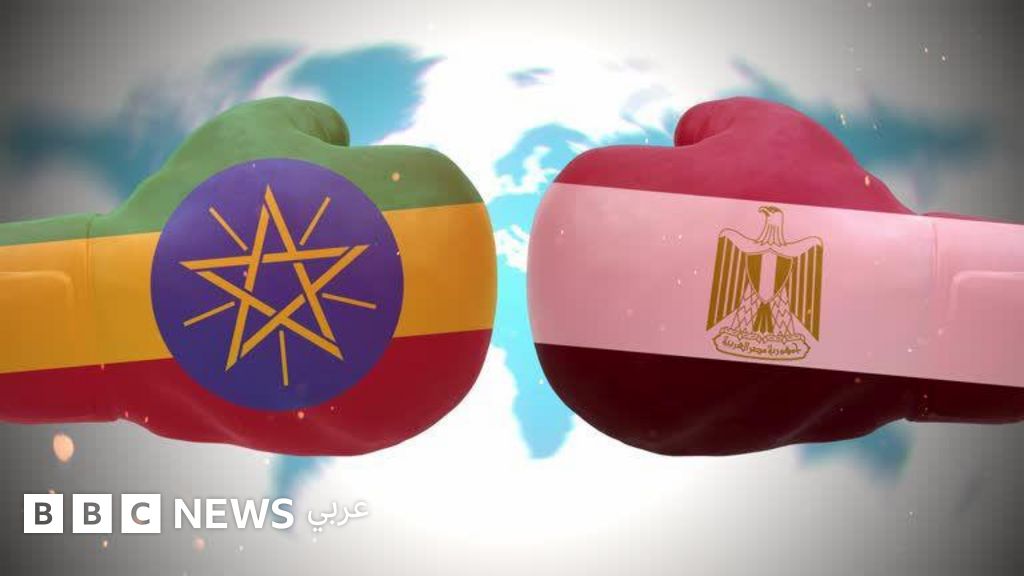
This comes amid a notable exchange of accusations between Egypt and Ethiopia over the dam in recent days, as the official Ethiopian News Agency has intensified publication of criticism of Egypt regarding its rejection of the continued operation of the GERD on the Nile without prior coordination.
On Monday, Egyptian Foreign Minister Badr Abdelatty accused Ethiopia of managing the GERD in a "politicized" manner through unilateral measures.
Cairo had announced the suspension of the negotiation track with Addis Ababa over the dam in 2024 after rounds that lasted for years, attributing this to "the lack of political will on the Ethiopian side," according to previous statements by the Ministry of Water Resources and Irrigation.
Regarding the future of negotiations in light of these mutual accusations, Halima believes there are three tracks: first, Ethiopia voluntarily abandoning unilateral actions to reach a binding agreement; second, the success of the U.S. mediation that has been ongoing for months; and third, Egypt and Sudan resorting to the United Nations under Chapters VI and VII of the Charter.
He explained that "Chapter VI concerns peaceful settlement, and Chapter VII (Article 51) concerns the right to self-defense of vital interests, life, and existence in the event of significant harm, which is considered a type of aggression that must be stopped."
Original source: Asharq Al-Awsat

Comments (0)
Be the first to comment.