Forgotten fossil reveals first dinosaur bone found in Antarctica
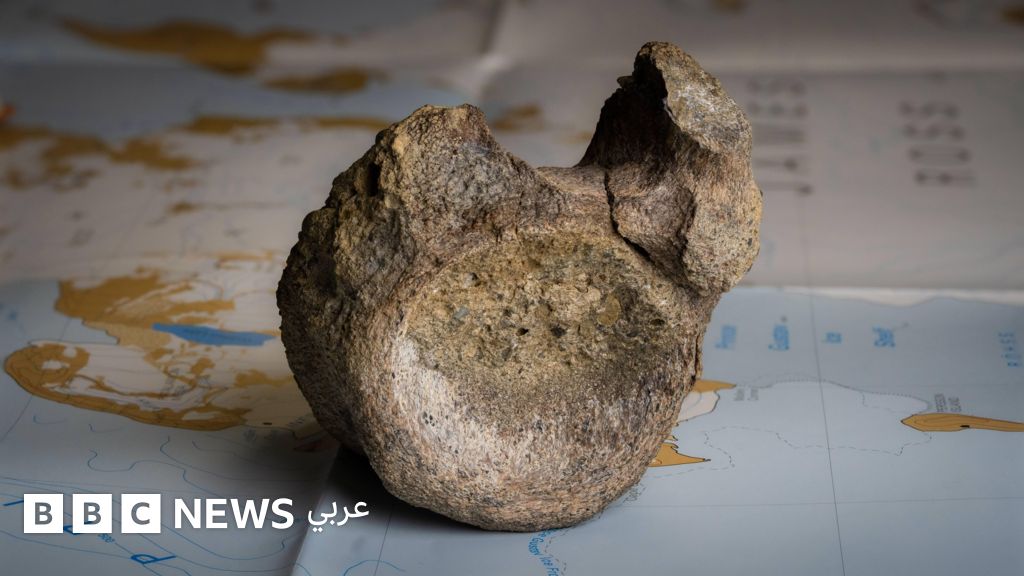
A fossil that lay forgotten in a drawer for 40 years has turned out to be the oldest dinosaur find in Antarctica. The specimen was first collected in 1985, but the team that discovered it was unsure what it was. Now, paleontologists have confirmed it belongs to a dinosaur from the titanosaur group.
Forgotten fossil reveals first dinosaur bone found in Antarctica
Image caption, The fossil was originally found in 1985 on James Ross Island, Antarctica.
Article Information
By Rebecca Morelle, Science editor, and Alison Francis, Science journalist
Published 29 June 2026
Reading time: 5 minutes
A modest-looking fossil that spent 40 years forgotten in a drawer has turned out to be the first dinosaur bone ever found in Antarctica.
The specimen was collected in 1985, but the team that found it was unsure what it was. So it was kept in the geology collection of the British Antarctic Survey in Cambridge.
The fossil has now been studied by paleontologists who confirmed it is a tail bone from a type of dinosaur called a titanosaur, a group that includes the largest dinosaurs ever to have walked the Earth.
The discovery helps shed light on how these creatures lived in a part of the world with very few fossil records.
Mansourasaurus: Another dinosaur found in Egypt
The story of the day the dinosaurs went extinct
Image caption, The discovery was recorded in field notebook of geologist Mike Thompson.
Dr Mark Evans, head of collections at the British Antarctic Survey, recently spotted this fossil among thousands of samples brought from expeditions to Antarctica over decades.
Dr Mark Evans says: 'When you start thinking 'what's in this drawer', you sometimes come across something and go, 'oh, that looks interesting'.'
The specimen was originally collected from James Ross Island, and its discovery was recorded in a field notebook kept by geologist Dr Mike Thompson.
Dinosaurs 'may have been native to Britain'
On 9 December 1985, Dr Mike Thompson wrote in the notebook: 'large reptile vertebra', noting its width was about 10 centimetres, along with a small sketch.
Skip most read and continue reading
Do you really need to avoid gluten?
Ukraine strikes major oil depot in Russian city of St Petersburg
'The meal I had on holiday left me with 38 parasites in my brain'
Hossam Abu Safiya: warnings of life-threatening danger after repeated attacks in Israeli prison
Dr Evans says the team that found it likely thought the fossil belonged to a marine reptile.
But as soon as he saw it, Evans realised the vertebra looked very similar to dinosaur vertebrae, and its discovery date would make it the first dinosaur fossil found on the continent.
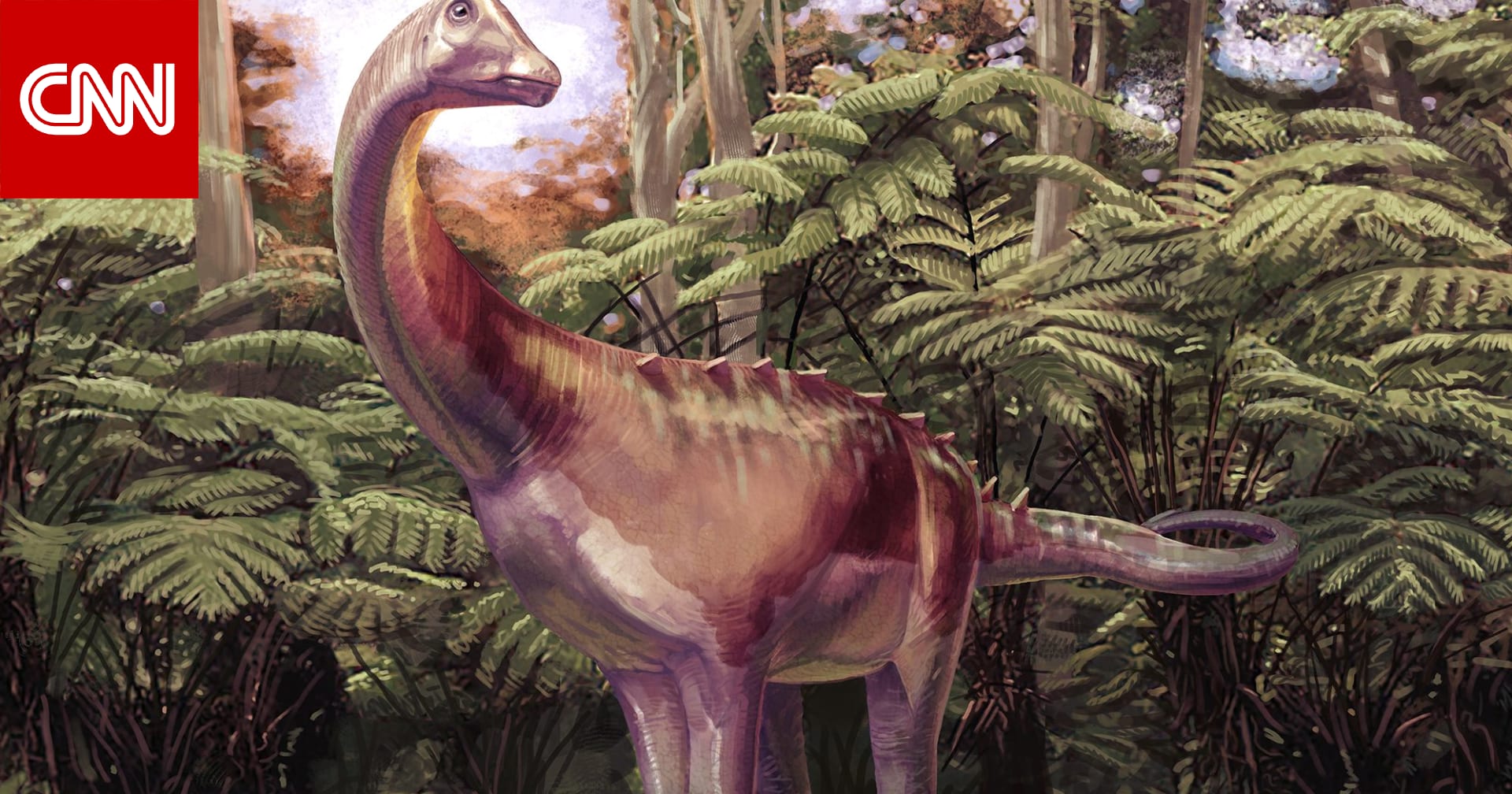
Image caption, When titanosaurs roamed Antarctica 80 million years ago, the continent was covered in green forests.
Dr Mark Evans contacted Professor Paul Barrett from the Natural History Museum to confirm the find.
Holding the fossil, Paul Barrett told us: 'Even though it might not look very exciting, it actually has a really distinctive shape.'
He pointed to a hollow at one end, then turned it over to reveal a rounded bump at the other. The vertebrae line up to form a chain of ball-and-socket joints from head to tail.
Professor Paul Barrett explained: 'As soon as I saw it, I realised what we were dealing with... it was absolutely certain we were looking at a dinosaur from the titanosaur group. It's a set of features that are completely unique to this type of dinosaur.'
Thousands of dinosaur tracks in Bolivia
Image caption, A cast of a titanosaur skeleton is on display at Peterborough Cathedral, on loan from the Natural History Museum.
More than 100 species of titanosaur have been identified worldwide.
All were four-legged plant-eaters with extremely long necks to reach trees and long tails for balance. The largest titanosaurs exceeded 35 metres in length and weighed about 60 tonnes.
Based on the size of this tail bone, scientists estimate the Antarctic titanosaur was about seven metres long.
Regarding that titanosaur, Barrett says: 'It might have been a young dinosaur, or it might have been genuinely small. That is, it was an adult but small compared to others of its group.'
This dinosaur lived 82 million years ago, in the Late Cretaceous, when Antarctica was very different: covered in dense forests that provided plenty of food for this large plant-eater.
Image caption, Dr Mark Evans spotted the fossil in the geological collections of the British Antarctic Survey.
This long-forgotten fossil now holds an important place in Antarctic exploration history. Other dinosaur fossils have been found in this remote part of the world since 1985, but only a few.
Antarctica is a tough environment for paleontologists, and the ice hides the prehistoric fossil record in the rocks beneath.
Finally a solution to the mystery of 'Frankenstein dinosaur' or 'monster dinosaur'
Barrett explains: 'It shows that an area we now consider really inhospitable was once very hospitable, and home to a huge diversity of creatures.'
He adds: 'That helps us understand how they fitted into these broader ecosystems at the bottom of the world about 80 million years ago.'
Skip short clips and continue reading
Short clips
End of short clips
Discovery of giant predatory dinosaur with short arms 9 July 2022
Smallest dinosaur found 'preserved in amber' 15 March 2020
Asteroid that wiped out dinosaurs led to snake boom 14 September 2021
Original source: BBC Arabic


Comments (0)
Be the first to comment.