From the Heart of History: Did Assassinations of Leaders Achieve Their Aims?
SummaryBrian O'Neill, professor of international affairs at the Georgia Institute of Technology, says that recent studies have found that killing or capturing leaders may weaken the opponent on the battlefield, but it does not necessarily predict how they will respond politically—whether they become more willing to negotiate, less able to negotiate, or more determined to continue fighting.
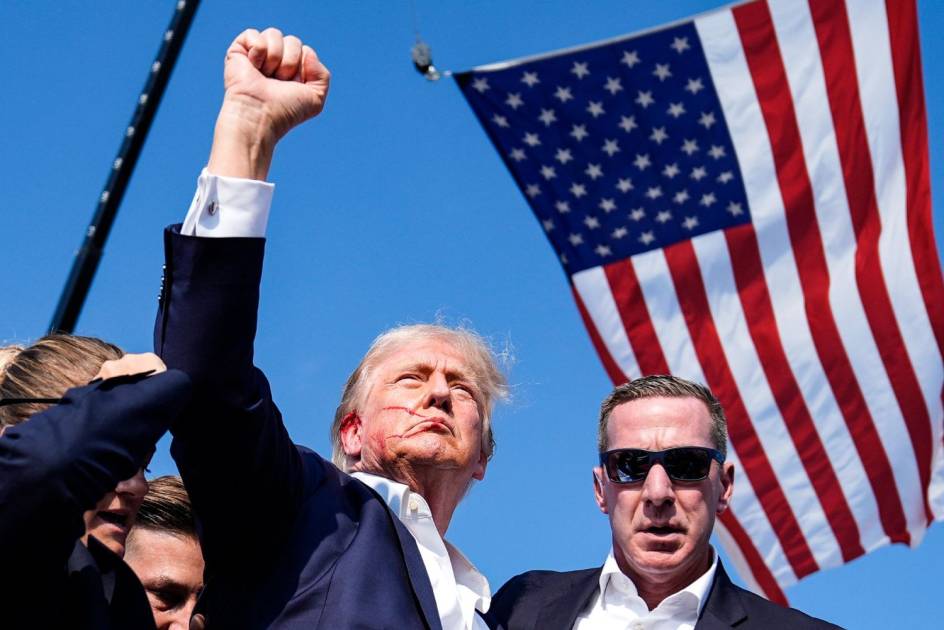
Amid President Donald Trump's threats to Iran of consequences for his assassination following open calls made during the funeral of the late Supreme Leader Ali Khamenei, who was killed in a US-Israeli strike during the first day of the war against Tehran, fears have increased of escalating tensions that could take a completely catastrophic form if the White House occupant faces an assassination attempt.
This situation raises questions not only about the potential consequences but extends to the reasons why assassinating state leaders often fails to support the cause of the perpetrators, based on historical and strategic analyses. What are the reasons for failure, and what are the most prominent historical examples, from Julius Caesar, Abraham Lincoln, and John F. Kennedy to Indira Gandhi, Anwar Sadat, Yitzhak Rabin, Muammar Gaddafi, Idriss Déby, and Ali Khamenei?
Mutual Threats
It appears that the information Israel conveyed to the White House that Iran is currently planning to assassinate Donald Trump—which coincided in timing with explicit Iranian calls for his assassination during the funeral of the elder Khamenei—has left a significant impact on the US president, who threatened to completely destroy all areas of Iran if it attempts to assassinate him. He said on the platform "Truth Social" that 1,000 missiles are ready to launch and will be followed by thousands more, and that he has ordered the military to be on standby to carry out the mission. He also told the New York Post that he has been the number one target on their assassination list for a long time.
However, these threats did not stop Tehran from vowing revenge. Only a few hours after Trump's threat, the new Iranian Supreme Leader Mojtaba Khamenei vowed in a statement published by the official Iranian news agency to avenge the murder of his predecessor and father. Although Mojtaba did not directly name any country or leader, he referred to two wars, presumably meaning the open conflicts with the United States and Israel in 2025 and 2026.
Catastrophic Results
But regardless of whether the Israeli warnings about Iran's plans to assassinate Trump are real, and whether the explicit Iranian calls for revenge by assassinating Trump are realistic or were produced by the atmosphere of the late Supreme Leader's funeral without practical preparation for execution, the expected results of assassinating the US president remain catastrophic by all standards, based on historical and strategic analysis of targeting leaderships. It is highly unlikely that assassinating Donald Trump would support the Iranian cause; on the contrary, it would certainly backfire, severely harming Iran's strategic and political positions for several main reasons.
An open attack on a current or even former US president would cross a crucial geopolitical line. Instead of forcing the United States to retreat, this act would unify the American political spectrum and public opinion, generating broad popular authorization for a devastating conventional military response. Instead of achieving its goals, Iran would likely face systematic destruction of its military, economic, and nuclear infrastructure, as Trump made clear in his recent threat.
Iranian reports regarding the threat to assassinate Trump do not stop (AFP)
If the strategic logic behind the "decapitation" policy or assassination of prominent leaders incorrectly assumes that removing a single individual will change the policy of the US political system, the reality indicates that assassinating a figure like Trump would turn him into a political martyr and entrench a hardline anti-Iran position as a cornerstone of US foreign policy in subsequent administrations.
While Iran currently manages its global political affairs through alliances with countries like Russia and China, carrying out a high-level assassination on US soil would eliminate what remains of its diplomatic influence. Even world powers sympathetic to or neutral toward Iran would find it extremely difficult to publicly defend Iran or economically cooperate with a state that engages in open assassination of foreign heads of state, leading to complete international isolation and harsh sanctions.
Wrong Assumptions
Some political systems, whether revolutionary bureaucracies or democracies with established institutional structures, assume that states targeted for assassinating their leaders will collapse or lose their political will if their leader is removed. However, the outcome depends on how power is distributed. In democratic systems, there are institutions built on laws, making them resilient to decapitation. Revolutionary or authoritarian systems often rely heavily on personal authority or a single charismatic figure, making them more prone to chaotic succession struggles but not necessarily total collapse. As happened in Iran after the decapitation operation of Supreme Leader Ali Khamenei, the country experienced tactical disruption, but it did not cause the collapse of the Iranian regime as the perpetrators intended.
Read more
Reports: Israeli warning regarding a "specific" Iranian plan to assassinate Trump
Trump: I am number 1 on Iran's assassination list
New mystery in the "Kennedy files"... A "Polish driver" warned of the president's assassination
Deferred justice between Assad's Syria and Lebanon: Assassinations without accountability (1-3)
President Trump and Israeli Prime Minister Benjamin Netanyahu portrayed their war not merely as a reaction or coercion, but as an opportunity for political collapse. The prevailing logic for them was that by removing the Supreme Leader and enough Iranian leadership, the structure on which it stands would collapse or become fragile enough for a popular uprising to finish the job. But open assassination of a head of state rarely leads to political collapse.
As Brian O'Neill, professor of international affairs at the Georgia Institute of Technology, points out, recent studies have found that killing or capturing leaders may weaken the opponent on the battlefield, but it does not necessarily predict how they will respond politically—whether they become more willing to negotiate, less able to negotiate, or more determined to continue fighting.
Removing the leaders of another state may weaken it in the short term, by changing the behavior of the remaining side to negotiate or reach compromises with it or through escalation, and thus the strike may practically succeed in narrowing subsequent political options, as happened after the arrest of Maduro in Venezuela. However, the more optimistic studies indicate only conditional gains in assassination cases; they do not consider the removal of leadership through assassination as a path to automatic political success or a substitute for a broader strategy.
Even in counterterrorism efforts, killing the leadership may be valuable in causing enough disruption to delay terrorist organizations' attacks or weaken their operational effectiveness, as US policymakers practiced in their campaign against al-Qaeda. Nevertheless, the killing of Osama bin Laden and repeated strikes against his senior aides were considered strong blows, but they were not evidence of the end or disintegration of the organization or the disappearance of its danger as an operational threat.
Legal prohibition of assassinating leaders
Original source: Independent Arabia




Comments (0)
Be the first to comment.