Humanitarian Catastrophe in Bangladesh: Floods and Landslides Displace Thousands
At least 51 people have been killed, and more than a million others affected, due to heavy monsoon rains that swept across large parts of Bangladesh in recent days, causing flash floods and widespread landslides.
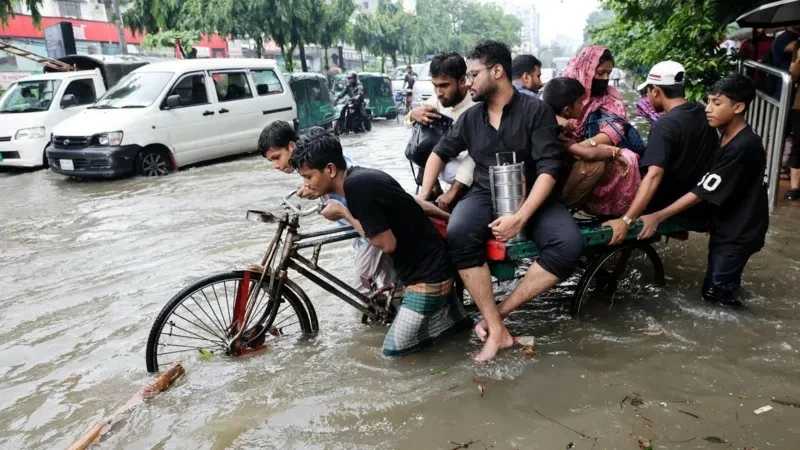
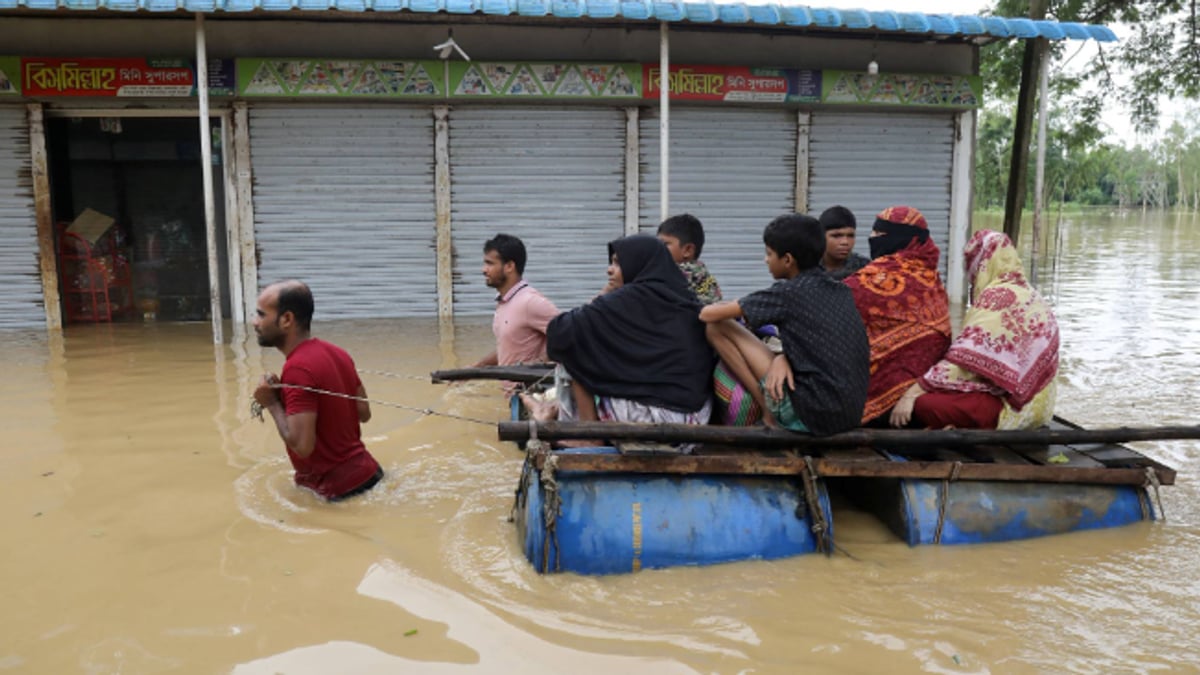
The heavy rains have displaced thousands of families after their homes were destroyed or damaged, while water has submerged vast areas of the country, including the capital Dhaka, where traffic on several main roads was disrupted due to rising water levels, which reached knee-deep in some areas, according to local reports.
The Cox's Bazar district has been the worst hit, recording 28 deaths out of the total fatalities. The area hosts the world's largest Rohingya refugee settlement, with over one million refugees.
Last week, the region witnessed a tragic incident that resulted in the deaths of several students and a teacher after floodwaters engulfed their school.
The rainy spell began more than a week ago and intensified in recent days, prompting authorities to issue flood and landslide warnings and evacuate residents from the most vulnerable areas, along with postponing school examinations in several regions.
Authorities confirmed that thousands of people are currently staying in government shelters, while the number of those affected by the rains has exceeded one million as of Sunday.
Bangladesh is one of the most flood-prone countries due to its low-lying topography and extensive river network, experiencing heavy rainfall annually during the monsoon season. However, climate experts warn that climate change has increased the intensity of rainfall and the frequency of extreme weather events, exacerbating the risk of natural disasters in the country.
In the same context, Sardar Odoi Raihan, an official at the Flood Forecasting and Early Warning Center, explained that conditions in the southeastern part of the country are likely to improve in the coming days, but he also warned of possible further flooding in the northern and northeastern regions as the monsoon effect continues, keeping the risk of the disaster expanding.
At least 51 people have lost their lives, while more than a million others have been affected, due to the heavy monsoon rains that swept across vast areas of Bangladesh in recent days, causing sudden floods and widespread landslides.
The heavy rains have displaced thousands of families after their homes were destroyed or damaged, while large areas of the country, including the capital Dhaka, were flooded, disrupting traffic on several main roads due to rising water levels, which reached knee-deep in some areas, according to local reports.
The Cox's Bazar region has been the hardest hit, recording 28 of the total fatalities, and it is home to the largest concentration of Rohingya refugees in the world, with over a million refugees residing there.
The region witnessed a tragic incident last week that resulted in the deaths of several students and one teacher after floodwaters engulfed their school.
The wave of rain began more than a week ago, intensifying in recent days, prompting authorities to issue flood and landslide warnings and evacuate residents from the most at-risk areas, in addition to postponing school exams in several regions.
Authorities confirmed that thousands of people are currently residing in government shelters, while the number of those affected by the rains has exceeded one million as of (Sunday).
Bangladesh is one of the most flood-prone countries due to its low-lying nature and extensive network of rivers, experiencing heavy rains annually during the monsoon season. However, climate experts warn that climate change has led to increased rainfall intensity and the frequency of extreme weather events, exacerbating the risks of natural disasters in the country.
In this context, Sardar Odoi Raihan, an official at the Flood Forecasting and Early Warning Center, stated that conditions in the southeast of the country are expected to improve in the coming days, but he also warned of the possibility of further flooding in the northern and northeastern regions as the effects of the monsoon continue, keeping the risk of the disaster's expansion present.
Original source: Okaz



Comments (0)
Be the first to comment.