Insects Increasingly Spreading in America.. Climate Change Not the Only Culprit
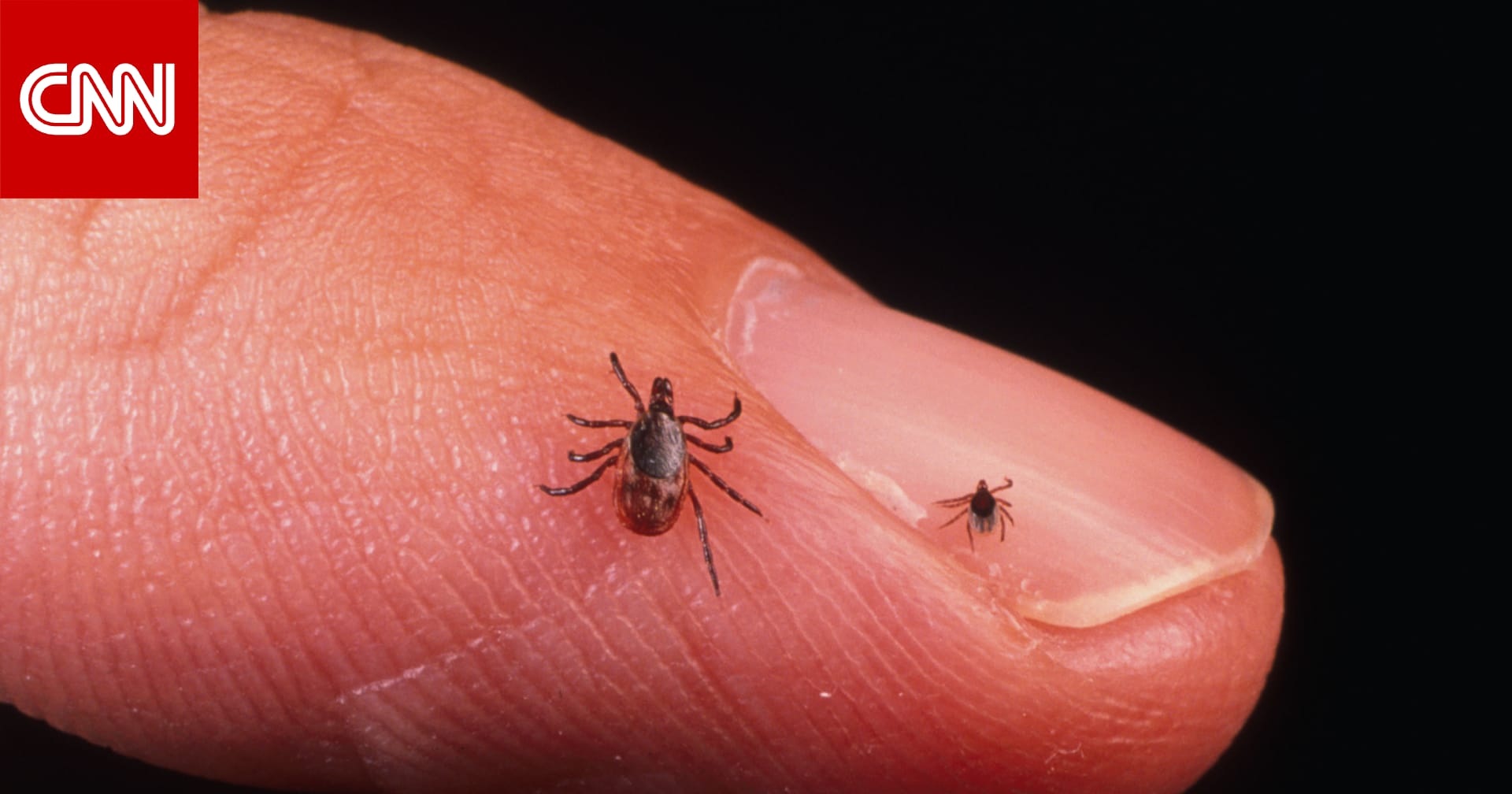
Close-up of an adult female tick and a tick nymph on a fingertip, taken on June 15, 2001. Ticks cause Lyme disease, an acute inflammatory disease characterized by skin changes, arthritis, and flu-like symptoms. Credit: Getty Images
(CNN) -- It's hard to avoid talking about insects right now; they are expanding their range to new areas, appearing in more annoying ways, and increasing the associated health risks.
Houseflies, for example, are not just a nuisance but can be mechanical vectors of diseases, moving between waste and kitchen surfaces, carrying pathogens such as Salmonella and others.
Ticks are also causing growing concern, especially the longhorned tick which first appeared in the United States in 2017, and females can clone themselves producing thousands of copies. In another case that seems like science fiction, the saliva of some tick species can cause a severe allergy to red meat and dairy products, known as alpha-gal syndrome.
The spread of insects is linked to several factors, including climate change, weather fluctuations, acorn abundance, in addition to land-use changes that began since the colonial era. But experts stress that climate change alone does not explain this spread.
Increase in insect-borne diseases
The lone star tick is named for the white spot on the back of adult females, and its bite can cause alpha-gal syndrome, an allergy to mammalian products such as red meat. Credit: Finn Gomez/The Boston Globe/Getty Images
From a public health perspective, insects, ticks, and other disease-carrying organisms have become a growing problem. The number of reported cases of vector-borne diseases doubled between 2005 and 2019, according to CDC data, and scientists continue to discover new pathogens.
Dr. Goudarz Molaei, a tick expert who tracks the spread of these insects and the diseases they carry in Connecticut, said: 'I don't want to raise unnecessary alarm, but I think what we are seeing now is just the tip of the iceberg. Currently, their distribution is mostly limited to coastal areas, but as temperatures continue to rise, they will move from the coasts to inland areas over the coming years.'
Ticks are the leading cause of vector-borne diseases in the United States, while mosquitoes hold that rank globally due to the heavy burden of malaria.
Ticks in the United States can transmit more than 12 diseases, most notably Lyme disease. Estimates based on insurance claims data indicate that up to 476,000 people may be diagnosed and treated for the disease annually, although some cases may go unreported.
Lyme disease can be effectively treated with antibiotics, especially if detected early, but it can lead to long-term problems such as arthritis, severe headaches, and heart rhythm disturbances.
Abundance of acorns is an indicator of Lyme disease risk. Credit: David L. Ryan/The Boston Globe/Getty Images
Dr. Richard Ostfeld, a disease ecologist at the Cary Institute of Ecosystem Studies, said: 'Lyme disease, babesiosis, and anaplasmosis are seeing a significant increase, with no signs of this trend slowing down.'
Babesiosis can cause flu-like symptoms and destruction of red blood cells, while anaplasmosis can cause serious complications including respiratory failure, bleeding problems, organ failure, and death. Powassan virus, though rare, is also increasing and can cause encephalitis.
Emergency department visits in the United States due to tick bites this year have reached their highest levels for this period of the season in the past seven years, according to CDC data.
Dr. Erika Machtinger, assistant professor of entomology at Pennsylvania State University, said: 'Certainly, ticks are now present in places where people grew up without having to worry about them.'
The number of counties where black-legged ticks, which transmit Lyme disease bacteria, babesiosis parasites, and anaplasmosis bacteria, have become established doubled between 1996 and 2015.
Their spread is not solely due to climate change. Machtinger said it is 'complex,' pointing to the role of factors related to changes in the natural landscape of the United States.
Rebounding deer populations contribute to carrying ticks with them. Credit: Matt Stone/MediaNews Group/Boston Herald/Getty Images
Deer, whose numbers increased after declining due to deforestation and overhunting, do not carry Lyme disease bacteria, but they carry ticks. White-footed mice, on the other hand, carry the bacteria that cause the disease, and thrive in areas altered by human activity, such as suburban expansion.
Acorns also play an unexpected role: a high acorn production in a given year leads to an increase in mouse numbers the following year, giving young ticks a greater chance of survival and transmission to humans.
Ostfeld said the best indicator of the expected number of ticks each year is the number of white-footed mice the previous summer, and the best indicator of mouse numbers is the amount of acorns that fell the previous fall.
Spread of mosquitoes and other insects
The spread of insects is not limited to ticks. Aedes mosquitoes, which transmit viruses causing chikungunya, Zika, and yellow fever, have expanded their presence in the United States.
The first Aedes aegypti mosquito was discovered in California in 2013, and was first detected in Idaho in August. This species is estimated to be spreading northward at a rate of about 150 miles (241 km) per year, according to research from the Yale School of the Environment, and climate change may accelerate this expansion in the long term.
Dr. Jim Fredericks, an entomologist and senior vice president of public affairs at the National Pest Management Association, said: 'Pest populations and their biology are closely linked to factors such as temperatures and rainfall.'
Aedes aegypti, also known as the yellow fever mosquito, is characterized by its distinctive striped appearance. It can transmit several dangerous viruses. Credit: Smith Collection/Gado/Getty Images
He added that weather conditions, such as a mild, wet spring and tropical storms, have helped increase mosquito populations in several areas of the United States.
Flies, which transmit diseases indirectly, may also be more widespread this year due to weather patterns. The New World screwworm, which turns into a fly in adulthood, may benefit from climatic conditions as it returns to spread in the United States after a 60-year absence.
The Southwest also faces an expected increase in scorpion numbers, as monsoon rains drive them, along with spiders and other arachnids, into homes.
Facing the insects
Original source: CNN Arabic






Comments (0)
Be the first to comment.