Iran Sends a Message of Defiance to Trump Through Solemn Funeral for Ali Khamenei
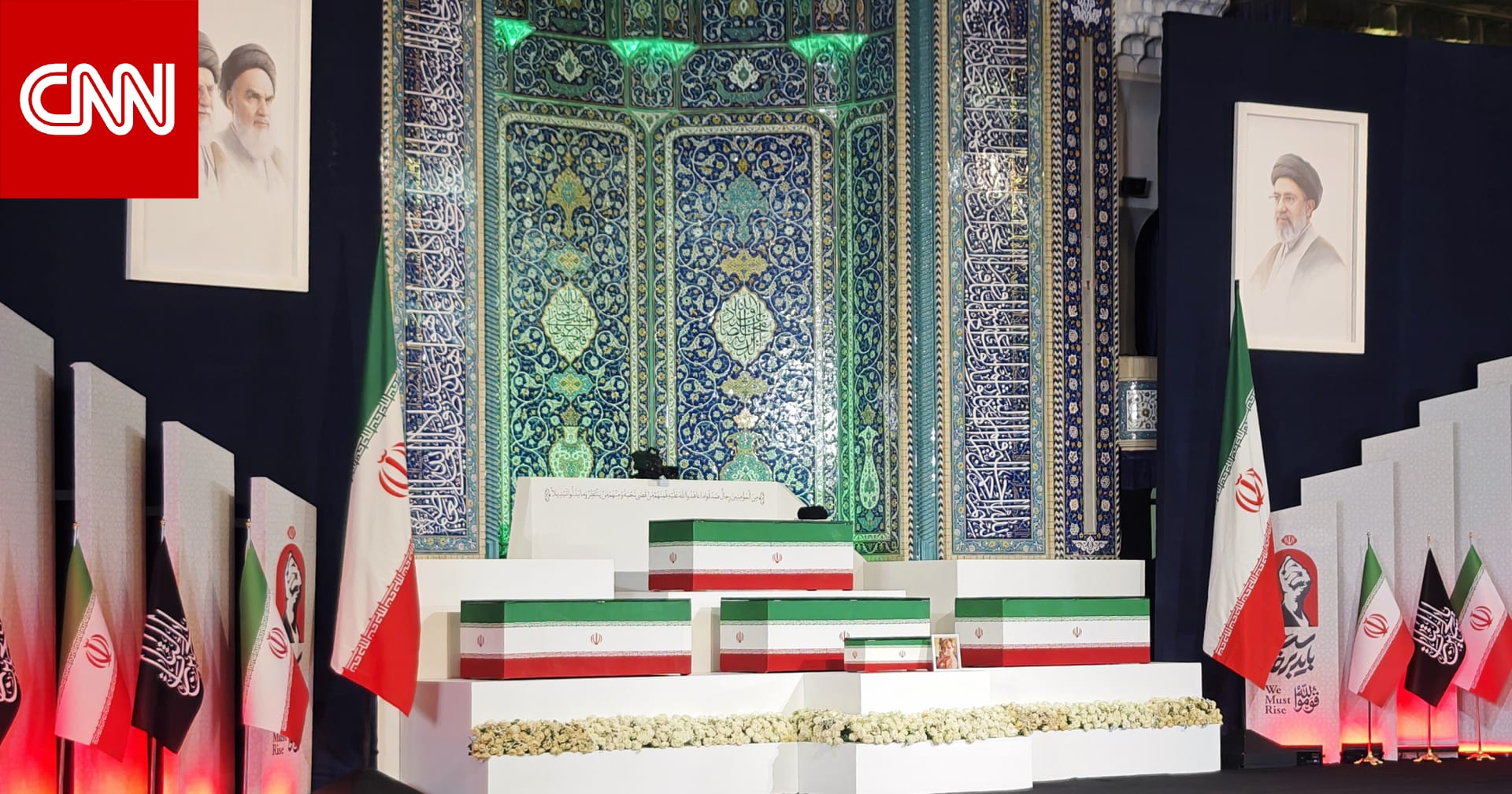
(CNN)-- Four months after his killing at the start of the US-Israeli war on Iran, the funeral of former Iranian Supreme Leader Ali Khamenei is being held in a solemn week-long event spanning five cities across two countries, with millions of mourners expected.
Despite the costly war against two of the world's most powerful armies, and decades of overwhelming economic hardship, Tehran is sparing no expense to organize a grand funeral for Khamenei, marked by symbolic and religious connotations and coinciding with the 250th anniversary of US independence.
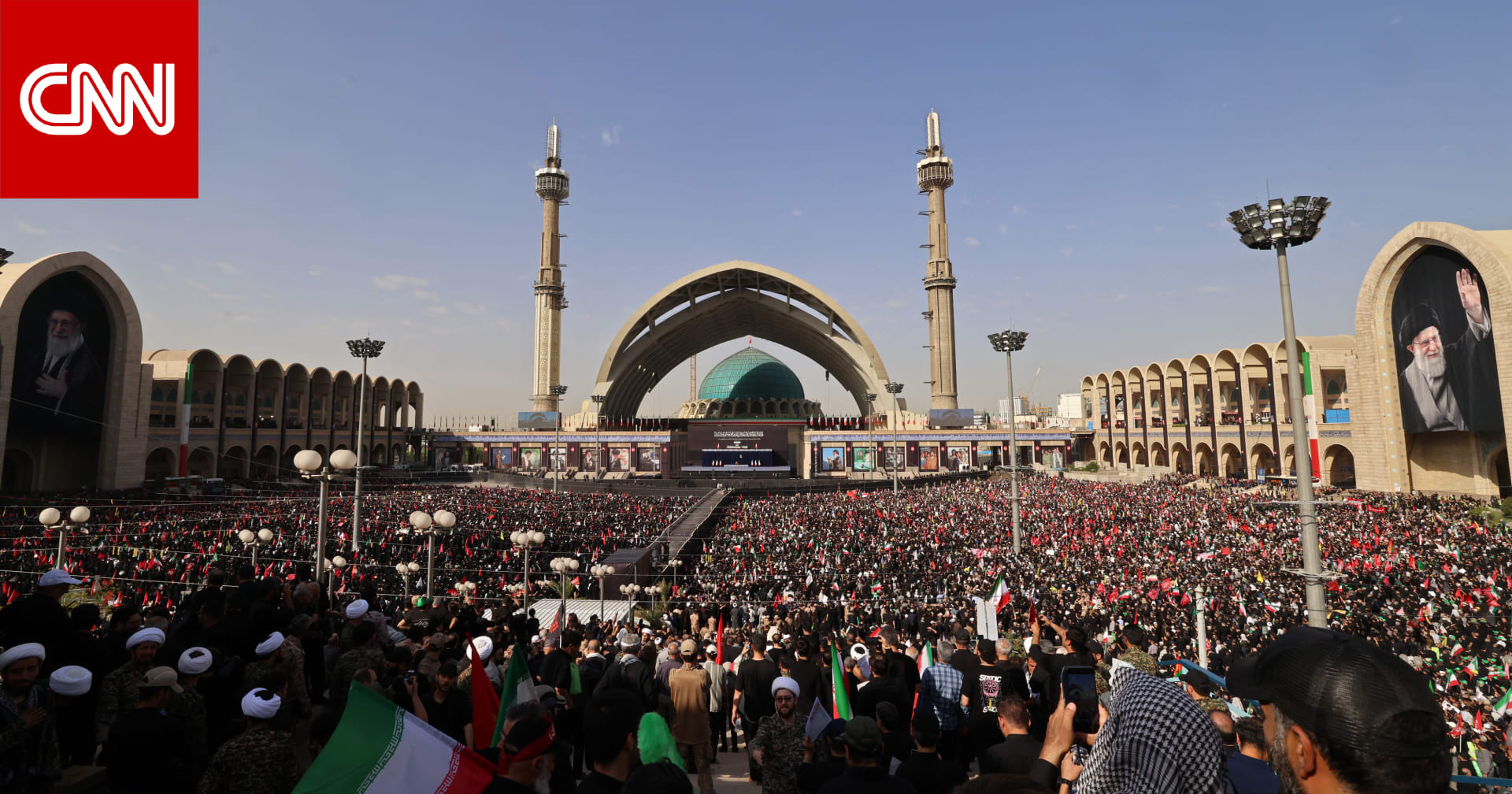
Authorities said they have launched one of the largest logistical efforts in the history of the Islamic Republic, mobilizing government employees, universities, labor unions, firefighters, soldiers, relief workers, and even religious 'mourning processions' to organize the funeral and manage the millions of 'visitors' expected to travel to cities and holy sites across Iran and Iraq to bid farewell to the ayatollah. Authorities in neighboring Iraq, where Shia Muslims form the majority, expect millions of mourners to participate in the funeral rites.
Over more than 10 days, Iran's intense media coverage has increased to this point, with celebratory songs and documentaries about Khamenei's life dominating news that previously featured talks with the United States.
This solemn scene has been designed to send a message to the world and to the enemies of the Islamic Republic: that the regime has not only survived an existential war but will also immortalize its late leader as a symbol of its resilience.
Mohammad Bagher Qalibaf, the powerful parliament speaker who leads Iran's negotiations with the United States, wrote in a letter published by official media on Thursday: 'We must rise and raise our voice to the world demanding retribution for the blood of the nation, so that the world knows that the honorable and proud nation of Iran does not remain silent in the face of injustice... and will not let the blood of its Imam (Khamenei) go in vain.'
He added: 'An epic achievement that will demonstrate the greatness of the nation's spirit to the world.'
It may also mark the moment when the new Iranian Supreme Leader, Mojtaba Khamenei, appears publicly for the first time since his father and family members were killed.
A Scene Overwhelmed by Symbolism
The seemingly deliberate symbolism of the chosen dates should not be lost in the ceremony. Khamenei's body is set to be laid to rest on the 250th US Independence Day, while another important day of the funeral coincides with a major Shia anniversary of the death of a historical religious figure.
The entire scene takes place during the Islamic month of Muharram, a period closely associated in Shia Islam with grief, betrayal, and 'martyrdom' – specifically the 'martyrdom' of Imam Hussein in the 7th century, one of the Shia's revered imams to whom Khamenei traces his lineage.
Khamenei, whose 37-year rule was characterized by stubborn defiance and deep distrust of the West, was killed on the first day of the US-Israeli war on February 28. Nevertheless, his funeral is being organized as a 'victory procession' passing through three Iranian cities and two holy sites in neighboring Iraq, showing supporters that the cleric was never defeated, even after his death.
The leader – whose assassination by the US and Israel bolstered his status – oversaw the suppression of some of the largest anti-regime protests in Iran's history, brutally crushing demonstrators who often chanted for his death, and in the process, empowered the regime's hardline base despite strong domestic and international opposition.
Sina Toossi, a non-resident senior fellow at the Center for International Policy, told CNN: 'The assassination has made Khamenei symbolically more powerful in death than he was in life, as he is now being portrayed as a religious reference (who attained martyrdom), akin to the revered Shia imams who died, with his manner of death validating his worldview.'
50 Million Loaves of Bread
Iran's experience with funerals of this magnitude has previously only occurred at the funeral of Islamic Republic founder Ayatollah Ruhollah Khomeini in 1989 and the funeral of Quds Force commander Qasem Soleimani in 2020. Both processions descended into chaos and ended with deadly stampedes among the crowds.
Khomeini's body – which was displayed at the same site where his successor Khamenei's body is to be buried for two days – had to be transported by helicopter after angry mourners tore the coffin's coverings.
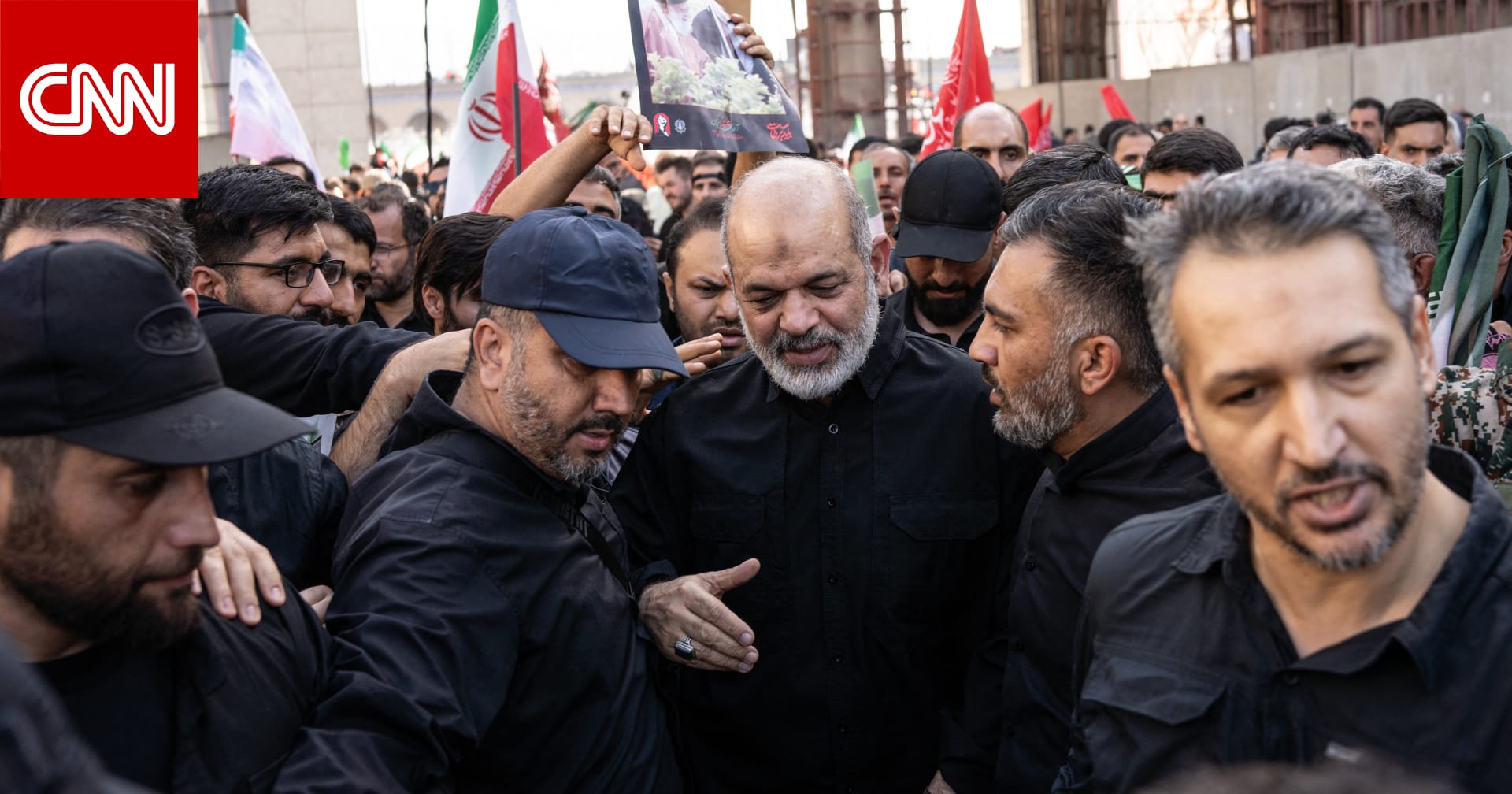
Securing the leader's body, managing crowds of millions of mourners while receiving foreign dignitaries, and organizing major events in five cities across two countries constitute a massive task, requiring an unprecedented security operation for a country that has just emerged from internal unrest and war with the United States.
The first ceremony for displaying the coffin begins at 6 a.m. local time on Saturday, where Khamenei's body will be placed on a raised platform set up inside the Imam Khomeini Prayer Hall in Tehran, a massive complex housing a large mosque. Firefighters have installed more than 6,000 overhead water sprinklers throughout the square to cool the crowds under the scorching July sun.
International and domestic airports in the capital will be closed during the funeral days, and public holidays have been declared in all cities that Khamenei's body will pass through. Tehran, with a population of 17 million, will undergo the largest traffic management operation in its history, with private vehicles banned near the procession, and more than 700 parking lots opened to provide enough space for the millions expected to flock to the city at the same time.
The Basij paramilitary force, according to Iranian media, said that 50 million loaves of bread will be prepared to feed the mourners, with 16 mobile bakeries deployed in the capital.
Tehran and other major cities have been prepared to receive arriving mourners, according to the Red Crescent. Iranian media reported that authorities have mobilized 2,500 ambulances, 21 helicopters, 100 drones, and thousands of rescue forces, in addition to preparing more than 20 hospitals, 500,000 liters of IV fluids, and 20,000 classrooms.
The government has launched a national campaign asking people to volunteer to open their homes to host mourners visiting Tehran, Mashhad, and Qom, while mosques, sports halls, parks, and cultural centers in the capital have also been prepared to accommodate the millions expected to attend the funeral.
A Show of Strength to the World
On the third day, the funeral procession is expected to move from the east of the capital to its western outskirts. Khamenei's body will then be transported for additional ceremonies in the holy city of Qom, before being flown to the Shia holy sites in Najaf and Karbala in Iraq.
After that, the body will be taken to its final resting place at the shrine of Imam Reza in Mashhad, Khamenei's birthplace.
The transfer of the former supreme leader's body to Iraq is symbolic of the image the Islamic Republic projects as a cross-border revolutionary force, a message it is keen to amplify after years of projecting its power in the region.
Original source: CNN Arabic


Comments (0)
Be the first to comment.