Marco Rubio Warns Iran Faces Rising Costs Amid Ongoing US Bombing Campaign

US Secretary of State Marco Rubio stated that Tehran is unprepared for an agreement as the 12-day military conflict persists with fresh explosions and regional diplomatic visits.
Live updates,
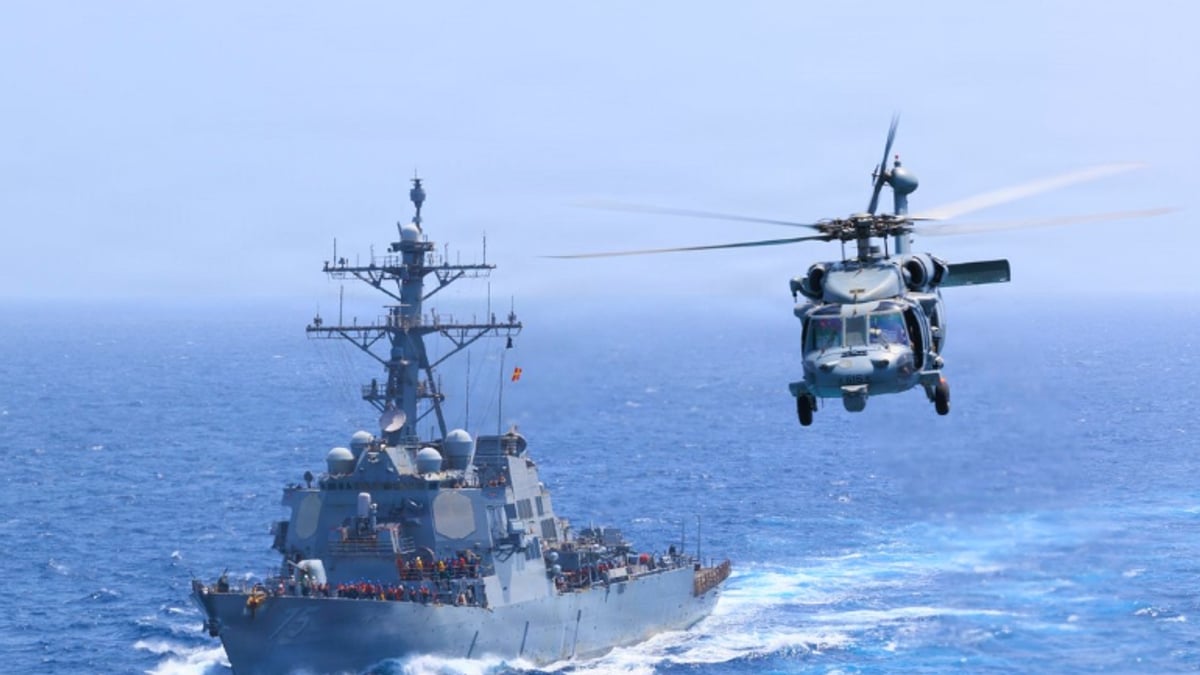
The United States and Iran continued their exchange of attacks on Wednesday, with fresh explosions reported in the Iranian cities of Sirik, Ahvaz, and Bushehr.
The 12-day escalation marks one of the most sustained exchanges between the two countries in recent years.
Published On 23 Jul 2026
- The US bombs Iran for the 12th consecutive night, killing at least two people and wounding 11 others in an attack on the Shalamcheh border crossing with Iraq.
- Iran’s Islamic Revolutionary Guard Corps (IRGC) says a tanker is ablaze in the Strait of Hormuz, while Yemen’s Houthis also claim missile and drone strikes on two Saudi oil tankers in the Red Sea.
55 Updates
6s ago
(08:02 GMT)

‘Price on Iran is getting higher’: Rubio
We are getting more lines from Rubio:
“The price on Iran will get higher every night until they come to their senses,” he said.
Rubio also discussed Yemen, expressing hope that the Houthis would de-escalate, adding, 'They got snookered by Iran.'
2m ago
(08:00 GMT)
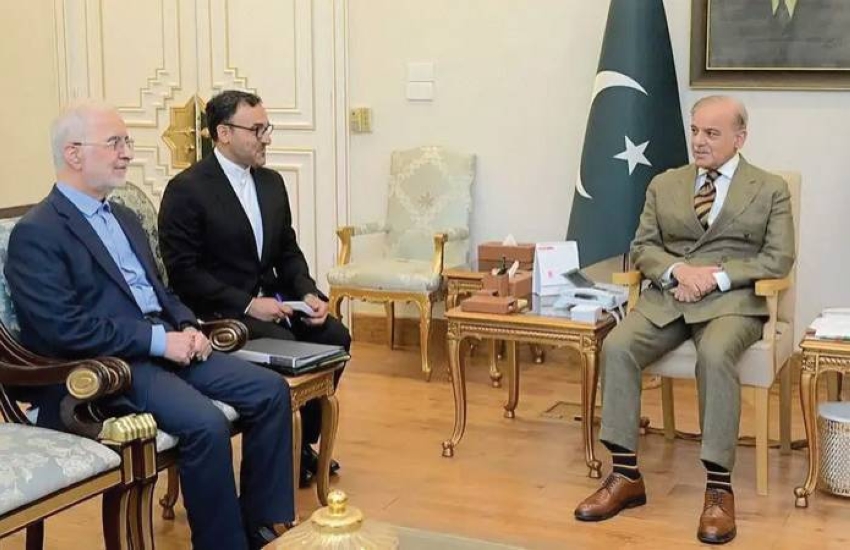
Iraqi PM al-Zaidi heading to Iran for official visit
Prime Minister Ali Faleh al-Zaidi has left Baghdad and is traveling to the Iranian capital.
Iraqi government spokesman Haider al-Aboudi said earlier that natural gas cooperation and regional developments will be on the agenda of the talks in Tehran.
4m ago
(07:58 GMT)
‘Iran is begging for a deal’: Rubio
US Secretary of State Marco Rubio is speaking now on the sidelines of the ASEAN conference in Manila.
“Iran is begging for a deal,” he said. “It looks like Iran is not ready to make a deal, they will pay the price,” he added.
Rubio criticized Iran's past behavior, saying, 'Every time they make a deal they either break it or change it.'
17m ago
(07:45 GMT)
Between hope and fear: Yemenis react to Houthi blockade on Saudi Arabia
Sanaa, Yemen
Ammar Saleh, a 32-year-old teacher in Sanaa, watched on Monday as the Houthi military spokesperson, Yahya Saree, announced a naval blockade on Saudi Arabia.
Then, on Wednesday, the Houthis declared they had attacked two Saudi ships – a declaration that they were serious in their intention to impose a maritime embargo on their northern neighbour. The Houthis accuse Saudi Arabia of conducting its own blockade on rebel-controlled areas of Yemen, therefore justifying the Houthi attacks.
Whatever the arguments, the news has come as a jolt to Yemenis like Ammar, many of whom now believe that a four-year period of relative quiet in the country’s more than decade-long war is about to end.
Ammar believes that Sanaa and other Houthi-controlled Yemeni provinces could once again become a battlefield and could be hit with fuel shortages and a worsening humanitarian crisis.
“Imposing a naval blockade on Saudi Arabia is not a minor move, and we will not be immune from its repercussions,” Ammar told Al Jazeera.
While many civilians are anxious over the fallout of the decision to confront Saudi Arabia, Houthi supporters describe it as a step towards ending what they perceive to be Riyadh’s hegemony in Yemen. Supporters of the Saudi-backed Yemeni government, meanwhile, see the Houthi attacks as evidence of the group’s “obedience to Iran’s orders”.
Read here the full story on how Yemenis feel about what may come next.

Houthi supporters rally against the Saudi-led coalition’s restrictions on Houthi-controlled areas [File: Khaled Abdullah/Reuters] 32m ago
(07:30 GMT)
Thai survivors of ship attack in Hormuz sue owners for ignoring Iranian warnings
Three sailors who survived an attack on the Thai cargo ship Mayuree Naree are suing the vessel’s owners, alleging that Iranian warnings were ignored ahead of the strike.
The ship was hit on March 11 in an attack that killed three crew members.
“The moment I heard the explosion, I thought that was it. I knew something serious had happened. No ordinary explosion would have been that loud – so loud that it completely shocked me,” said Panithi Tumkaew, one of the three sailors.
He said he can no longer face returning to sea and has been forced to leave his job, receiving just $5,000 in back pay.
The case has drawn attention to the risks facing seafarers amid the Hormuz crisis, an aspect of the conflict that has been overshadowed by its impact on energy and fertiliser markets. Tens of thousands of sailors, many stranded for more than six months, have borne the brunt of the disruption.
Southeast Asian crews, from countries including the Philippines, Indonesia, Myanmar and Thailand, form the backbone of global shipping, though many remain reluctant to speak out for fear of losing their jobs.
47m ago
(07:15 GMT)
Iran’s Akraminia says Iranian troops ‘better prepared than in the past’
We have more from the Brigadier General’s interview with the Defence Press news agency:
- “We took full advantage of the ceasefire opportunity to improve our situation and combat capability.
- “Today, we are better prepared than in the past.
- “We do not consider any action by the enemy to be impossible or unlikely; for this reason, we have enhanced our preparations for any scenario.
- “If the enemy invades via land routes, its vulnerability will certainly be much greater than air and missile attacks.
- “Ground operations provide many opportunities to damage and inflict more casualties on the enemy, and our effectiveness and efficiency will certainly be much higher in this area.”
1h ago
(07:00 GMT)
Iran warns of ‘new strategies’ if US attacks on southern infrastructure continue
Brigadier General Amir Mohammad Akraminia, a spokesperson for Iran’s army, has warned that the country’s security forces will “implement new strategies and scenarios to make the war impossible for the aggressors to continue” should US attacks on Iran’s southern infrastructure persist.
“Following the American side’s violation of the memorandum of understanding, we are now witnessing a new phase in the war,” he told Iran’s Defence Press news agency in an interview.
Akraminia said Iran’s armed forces were carrying out retaliatory strikes in response to what he described as US aggression, adding that such operations “will continue as long as US attacks against the country’s infrastructure and coastal areas persist”.
1h ago
(06:45 GMT)
Hundreds of Israeli settlers storm Al-Aqsa Mosque compound
Palestine’s Jerusalem governorate says more than 1,300 settlers have entered the Al-Aqsa Mosque compound since the Jewish holiday of Tisha B’Av began on Wednesday evening.
Under the longstanding status quo arrangement governing the compound – known to Jews as the Temple Mount – only Muslims are permitted to pray there. Al-Aqsa is Islam’s third-holiest site and a symbol of Palestinian national identity as well as Judaism’s holiest place. Tisha B’Av marks the Romans’ destruction of the ancient temple in 70 AD and is observed as a day of Jewish mourning.
According to the governorate, Israeli police allowed settler groups of about 150 people at a time into the compound, where participants donned tefillin, carried out what it described as “epic prostration” in the mosque’s eastern section, prayed and sang loudly.
Israeli forces, meanwhile, imposed tight restrictions at the mosque’s gates and across occupied East Jerusalem’s Old City, barring most Palestinian worshippers from the site. Only a small number were able to attend dawn prayers, the governorate said, before Israeli forces allegedly assaulted several of them.
Sign up for Al Jazeera
Americas Coverage Newsletter
1h ago
(06:35 GMT)
Iran claims more attacks on Jordan
Iran’s Islamic Revolutionary Guard Corps (IRGC) claimed attacks on US assets in Jordan, saying it has “destroyed a radar of the American THAAD missile defense system with lightning strikes”.
It said a “Patriot system and a C-RAM radar were also targeted and destroyed, and the fuel tanks of the American base were set on fire”.
It added that “a large helicopter equipment warehouse and a helicopter repair and maintenance shed were also set on fire and destroyed”.
The IRGC, addressing the Jordanian people, insisted that its actions do not violate Jordanian sovereignty, arguing that US military presence infringes on local authority and that targeting American forces is a legal and necessary response.
There was no immediate comment from Jordan.
Earlier, the IRGC also claimed attacks on US military assets in Kuwait.
1h ago
(06:30 GMT)
Top Jordanian and Saudi diplomats discuss efforts to de-escalate tensions
Foreign Minister Ayman Safadi has held a phone call with Prince Faisal bin Farhan Al Saud and exchanged views on regional developments, according to a statement by the Jordanian Foreign Ministry.
“The two ministers discussed regional developments, the efforts being made to de-escalate tensions and ensure freedom of maritime navigation in the Arabian Gulf and the Red Sea,” the statement said.
They also discussed “coordination and consultation regarding diplomatic efforts aimed at enhancing security and stability in the region”.
1h ago
(06:27 GMT)
Syrian worker wounded by Israeli gunfire in southern Lebanon
A Syrian worker is receiving medical care after being wounded by Israeli fire in the Nabaa Ibl area of Marjayoun district, according to Lebanon’s National News Agency.
It identified the worker as Mondher Al-Balloul and said he was transported by the Lebanese Red Cross to the Marjayoun Governmental Hospital for treatment.
1h ago
(06:15 GMT)
WATCH: Gaza man returns home to family who believed him dead
Hamada Al Banna has reunited with his family more than a year after an explosion that left him in a coma and led to his detention in an Israeli prison.
Al Jazeera’s Ibrahim al-Khalili tells his story and explores the anguish of other families in Gaza still waiting for answers.
Watch below:
2h ago
(06:00 GMT)

‘Pakistan’s reputation will be damaged’ if it joins in Houthi-Saudi conflict
We have more from Sanaa-based journalist Hussain al-Bukhaiti.
He told Al Jazeera that Yemenis do not think Pakistan, which has a mutual defence agreement with Saudi Arabia, will intervene in the conflict between the Houthis and Saudi Arabia.
“If Pakistan inserts itself into the conflict between the Saudis and the Houthis, it’ll prove that Pakistan has decided to side with the oppressors against the oppressed,” al-Bukhaiti said.
“We Yemenis remember when Pakistan’s former Prime Minister Imran Khan [who served from 2018 to 2022] had repeatedly refused Saudi requests to send Pakistani troops to fight against the Houthis,” al-Bukhaiti said.
“The view in Sanaa is, Pakistan’s involvement now, after its agreement with the Saudis, will not make any difference to the final outcome, but Pakistan’s reputation will be damaged forever,” he added.
2h ago
(05:50 GMT)

What is the Shalamcheh border crossing?
As we’ve been reporting, two people have been killed and at least 11 wounded in a US attack near the Shalamcheh border crossing between Iran and Iraq. Here is more about the crossing:
- It connects Iran to southern Iraq and is a key corridor for commerce and pilgrimages to Shia holy sites in Iraq.
- Thousands of people use the crossing daily, and those numbers rise to as many as two million travellers during peak religious months.
- The US attack came as pilgrims began journeys to the holy city of Karbala to participate in Arbaeen, one of the world’s largest annual religious events. This year’s Arbaeen falls in early August.
- A local official quoted by Iran’s Mehr News Agency said pilgrim journeys through the crossing continued after the attack as relief operations were also under way.

Shia Muslims arrive in Iraq from Iran through the Shalamcheh border crossing on July 18, 2026, on their way to Karbala for the Arbaeen pilgrimage [Ali Rahim/AP Photo] 2h ago
(05:40 GMT)
Qatar, Pakistan, Egypt propose truce amid Iranian attacks on Gulf states
By Um-e-Kulsoom Shariff
Reporting from Doha, Qatar
It’s been busy nights and days [in the Gulf] in the past 12 consecutive nights of US attacks.
Iran’s formula is pretty straight. They’ve laid it out, saying, “Eye for an eye”, after the US president said that his forces are going to attack an Iranian bridge or a power plant every time a ship gets attacked in the Strait of Hormuz. Iran says they’re going to play it the same way.
We’ve seen these attacks continue across GCC countries, namely Kuwait and Bahrain, in the past 12 days, and also Jordan. On Wednesday, Jordan’s military said that it shot down four missiles, and Kuwait was also attacked.
So, in all these days, we’ve seen the GCC countries come under attack for a war they did not start, for a war they say they do not support, and if at all, are making efforts to bring back the ceasefire.
The latest on that is we’ve had Qatar, Pakistan and Egypt propose a 10-day ceasefire between Washington and Tehran, so that this does not widen into a regional conflict.
2h ago
(05:25 GMT)
Iraq loses at least $40bn in revenue during US-Israel war on Iran, official says
Muzhar Saleh, financial adviser to Iraq’s prime minister, has told the AFP news agency that the country has suffered a huge hit to its revenues since the US and Israel’s war on Iran began in February.
“For Iraq, due to a 90 percent drop in its oil exports … in addition to the decline in growth rates, … the estimated loss was between $40bn and $45bn up to June 2026,” Saleh said.
That figure could climb to $50bn if the Strait of Hormuz remains closed, he added.
Before hostilities began, Iraq was producing roughly 4 million barrels of oil per day, about 3.5 million of which were exported daily, mostly via the Strait of Hormuz.
Iran’s blockade of the waterway has choked off shipments and forced Iraq to cut its oil production. With the strait closed, Iraq has been able to export only limited volumes to neighbouring Turkiye and Syria.
Iraqi Oil Minister Bassem Mohammed Khudair said in a television interview on Tuesday that his ministry “used to put between $7bn and $8bn a month” into state coffers. “Today, we do not exceed $1.5bn,” he added.
2h ago
(05:10 GMT)
Iraq’s prime minister visits Iran after trip to US
Reporting from Tehran, Iran
There are several important factors behind this visit.
According to official statements from both sides, discussions between [Iraqi Prime Minister Ali al-Zaidi and Iranian President Masoud Pezeshkian] will focus on bilateral relations with several memoranda of understanding scheduled to be signed aimed at improving ties between Iraq and Iran.
Energy is expected to be a critical issue in those talks.
Timing matters here for two reasons. First, the visit comes amid the escalation between the US and Iran, and Iraqi officials have said that helping bring an end to that escalation is part of the purpose of the trip. Second, the sequencing of the prime minister’s travel is significant. He was recently in the United States, is now visiting Iran and will go on to Turkiye with the region’s confrontational scenarios likely to feature in all three stops.
Iraqi officials say the prime minister is not carrying a message from the US but will talk about the Iraqi position alongside the American position that they have been updated about during his recent visit to the United States.
3h ago
(05:00 GMT)
If you’re just joining us
Here’s what happened overnight:
- The US has bombed Iran for a 12th straight night, with Iranian media reporting explosions in cities including Bushehr, Ahvaz, Sirik and Shalamcheh.
- Two people have been killed and 11 others wounded in a US attack on Iran’s Shalamcheh border crossing with Iraq, according to officials.
- Iran’s IRGC has claimed responsibility for additional strikes on US military targets in Kuwait, and said an explosion has set a tanker ablaze in the Strait of Hormuz after it attempted to transit through an unauthorised route.
- Saudi Arabia confirms an attack by the Houthis on the state-owned vessel Encelia in the Red Sea, reporting that a fire broke out at its bow, though all crew members were unharmed.
- Oil prices rise to reach $96 a barrel, marking their highest level since June 8.
3h ago
(04:50 GMT)

IRGC tells Kuwaitis: It is US, not Iran, that violates your sovereignty
We have more from the IRGC statement.
Addressing the Kuwaiti people directly, the IRGC insisted it is the United States, not Iran, that has “violated your territorial integrity and sovereignty”.
It said its attacks are aimed at US bases, territory it described as beyond the control of Kuwait’s own border guards, and where Americans and anyone they want, including prisoners from other countries, enter and leave freely.
“So it is America that has violated your territorial integrity and sovereignty, not us. We are attacking lands occupied by the American army, an army that knows nothing but crime,” it said.
3h ago
(04:45 GMT)
IRGC claims attacks on Kuwait
Iran’s Islamic Revolutionary Guard Corps (IRGC) has claimed more attacks on US military assets in Kuwait, saying the strikes are retaliation against Washington and not the Kuwaiti people.
The IRGC said it had “attacked and destroyed a large warehouse of military equipment, a Patriot missile defence system, and a hangar of American MQ9 drones” at Ali al-Salem airbase.
It also claimed attacks on US forces’ accommodation and two helicopter hangars at the Al-Adiri barracks, saying the attacks caused casualties and inflicted heavy damage on helicopters and drones.
The IRGC added that its fighters “targeted a telecommunications tower in response to US attacks on telecommunications towers in Iran”.
The ongoing hostilities come amid stalled negotiations over Iran's nuclear program and regional influence. Rubio's comments reflect US impatience with Tehran's negotiating stance. The Iraqi prime minister's visit to Iran highlights the complex regional dynamics, with Iraq reliant on Iranian natural gas. The Houthi involvement underscores the broader proxy conflict. Observers note that the US strategy appears to be applying maximum pressure to force Iran to accept a new agreement.
Original source: Al Jazeera



Comments (0)
Be the first to comment.