Iranian and Factional Discontent over al-Zaidi's Visit to Washington
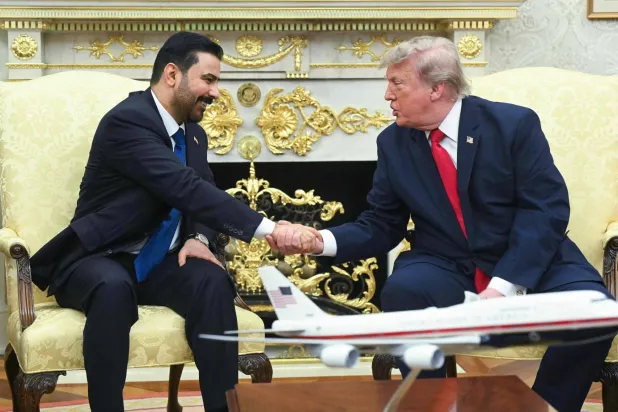
Movements of Iraqi Prime Minister Ali al-Zaidi have drawn criticism from Iran-linked parties, who considered that opening up to US companies represents a shift that needs review.
Iraqi Prime Minister Ali al-Zaidi received a notable reception during his visit to the United States, where he met US President Donald Trump in a visit through which he sought to turn political rapprochement into economic and investment partnerships, relying on his background as a businessman and the language of shared economic interests that he says unite him with the US business sector.
Al-Zaidi told US companies that he has with them a "common language, which is the economy," but he stressed at the same time that he did not come to the United States as a "contractor," but rather to achieve broad developmental transformation in Iraq, a country that he says has missed development opportunities over the past two decades, despite the relations that have linked it with various US administrations.
Al-Zaidi linked the upcoming security and political transition phase in Iraq to opening the door to a new phase of economic cooperation. He said that the end of the mission of the remaining US forces in Iraq after next September 30, according to the agreement signed by the previous Iraqi government headed by Mohammed Shia al-Sudani with the US administration, could pave the way for broader economic and investment partnership.
Al-Zaidi had announced before his visit to Washington that Iraq no longer needs the concept of "resistance" after the end of September, saying that "resistance is not a profession but a need" imposed by the circumstances the country went through.
Al-Zaidi's moves drew criticism from parties linked to Iran and its allies in Iraq, who considered that opening up to US companies represents a political and economic shift that needs review.
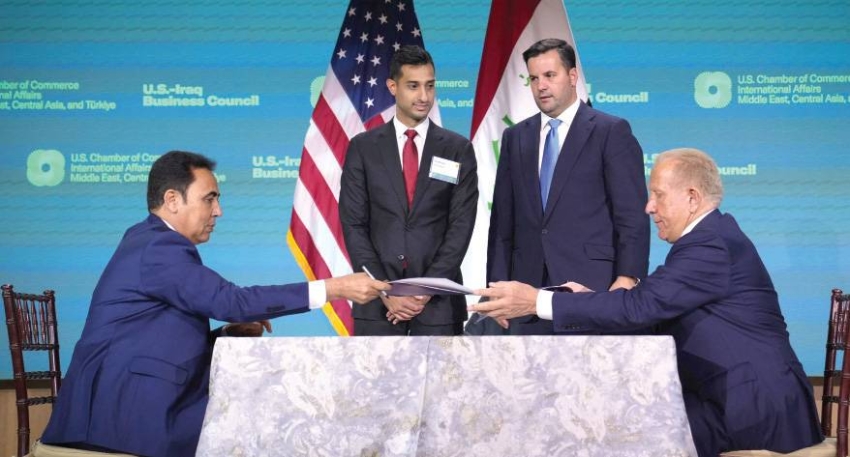
The criticism came simultaneously with Iraq signing about 48 memoranda of understanding and agreements with US companies during the visit, along with other agreements in the energy sector, including an oil agreement via a route that does not pass through the Strait of Hormuz, in addition to a memorandum of understanding with Syria to transport Iraqi oil to the Syrian port of Baniyas.
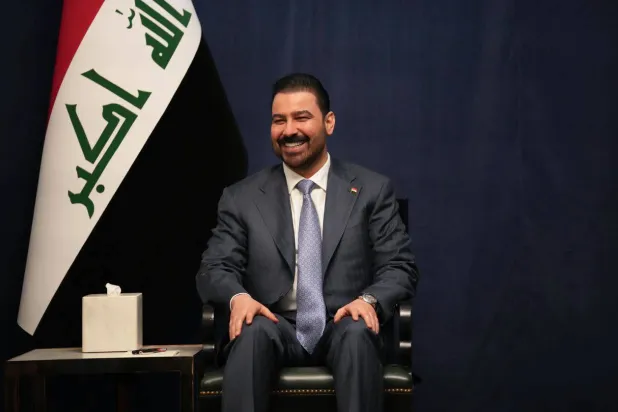
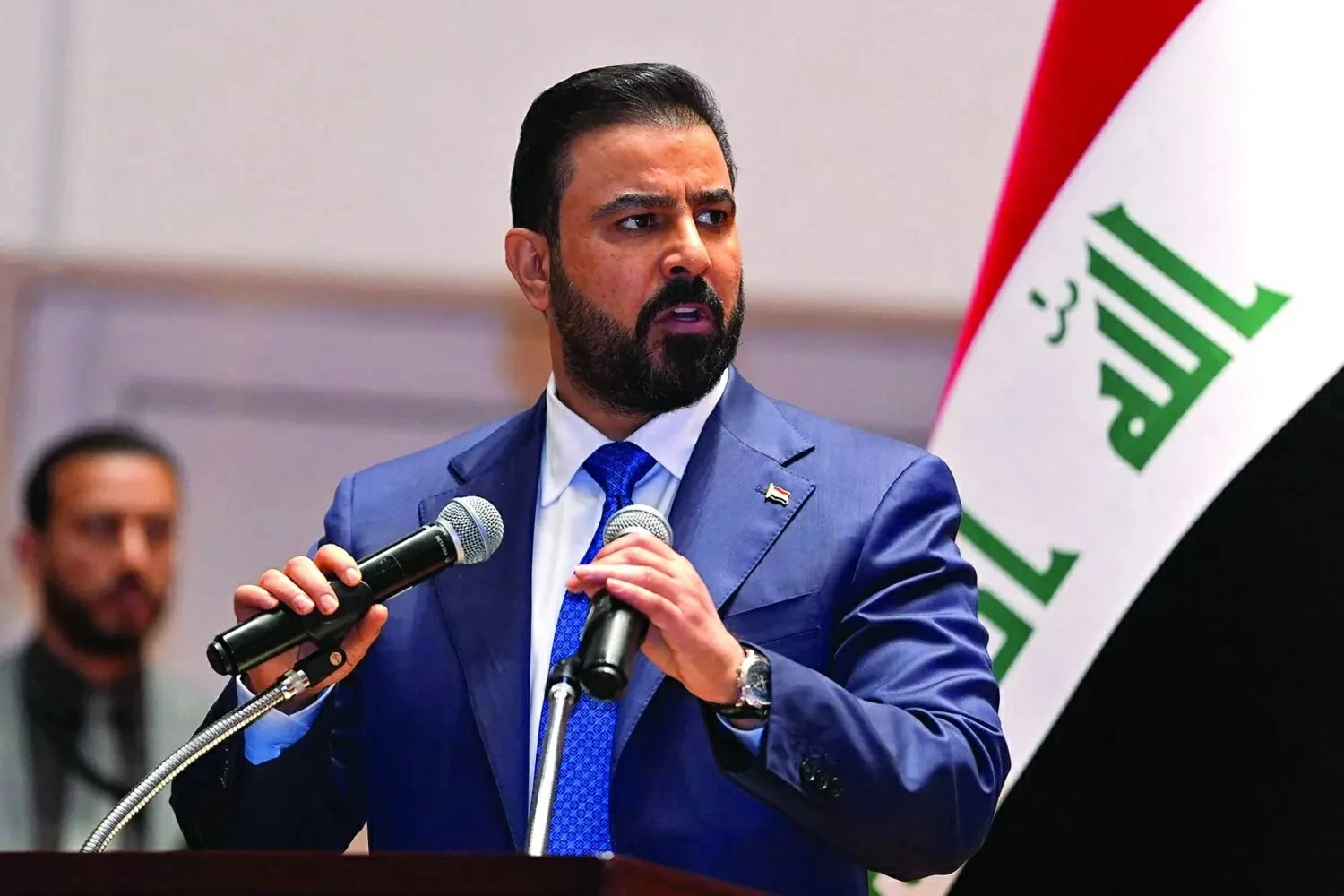
Iraqi Prime Minister Ali al-Zaidi (center) attends the US-Iraq Business Summit on July 17, 2026 in Washington (AP)
Velayati Attacks al-Zaidi
These steps sparked reactions in Tehran, where Ali Akbar Velayati, advisor to Iran's Supreme Leader, criticized al-Zaidi's visit to the United States, describing the Iraqi prime minister as "inexperienced," according to media reports.
Velayati said in a newspaper article published by the newspaper "Farhikhtegan" that the action (of the prime minister during his meeting with the US president) shortly after the funeral of the former Supreme Leader Ali Khamenei constitutes a great disgrace, in his words.
Observers see that these developments reflect the escalating competition over the future of Iraq's relationship with both the United States and Iran, at a time when Baghdad is trying to attract broad foreign investment while maintaining its regional balances.
In this context, the head of the "Kluwatha Center for Studies," Basil Hussein, told Asharq Al-Awsat that Velayati's statement and his criticism of Prime Minister Ali al-Zaidi's visit to the United States, describing it as a "great disgrace," reflects, in his view, "part of the Iranian view prevailing among Iranian decision-makers towards Iraq and its political system."
Hussein added that this view is based on considering Iraq as a "subordinate" and not an independent state possessing its sovereign decision and the right to formulate its foreign policy and make its national decisions in line with its interests.
For his part, analyst Iyad al-Samawi told Asharq Al-Awsat that the most important question after signing about 48 agreements, memoranda of understanding, and partnerships with major US companies is the extent of Iraq's actual readiness to receive these companies and provide a suitable environment for their work.
Al-Samawi added that "global companies do not invest based on emotions, nor do they make decisions by taking risks, but rather build their investments on careful studies of the work environment," explaining that they are not looking for oil only, but for "security, stability of legislation, independence of the judiciary, speed of procedures, clarity of decision, and integrity of institutions."
Al-Samawi pointed out that major US companies operate under strict laws that criminalize bribery and corruption, and that they will not change their standards to suit work environments they consider unstable, adding that the success of the agreements signed in the United States "does not start from the companies but from the Iraqi state itself."
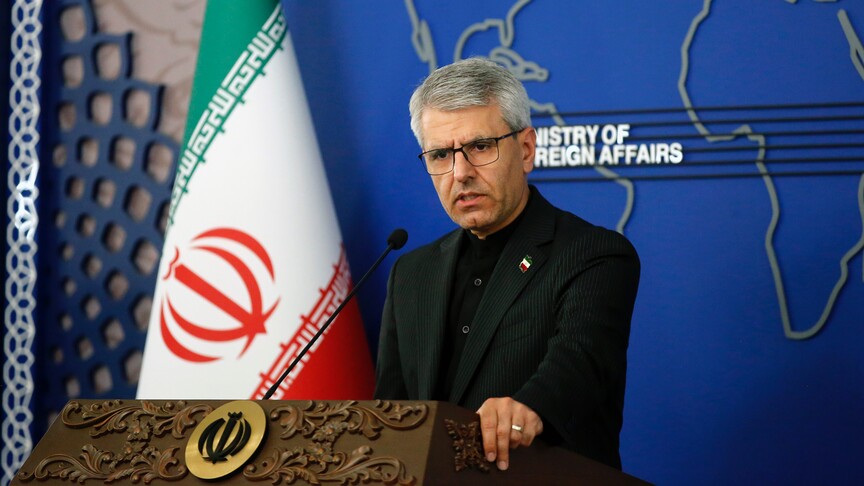
Ali Akbar Velayati, advisor to Iran's Supreme Leader (Archive - Reuters)
Struggle over Investment Environment
In contrast, a former security official told Asharq Al-Awsat that the attack al-Zaidi is facing from Iran and its allies in Iraq is "not just a passing political escalation," considering that the economic and investment openness that the prime minister initiated in Washington faces objections due to fears of creating a more open investment environment for US companies.
The official, who requested anonymity, added that al-Zaidi seeks to transfer his experience as a businessman to his political position through "mixing politics with money and business," considering that this path aims to open the door for major US companies.
He explained that these companies, despite their political and economic influence in the United States, are "not ready to work in Iraq within an environment suffering from political corruption or security instability," in his words.
The official saw that the escalation against al-Zaidi, whether through positions issued by Iran or through Iraqi factions allied with it, serves a goal of putting pressure on the economic openness path adopted by the prime minister.
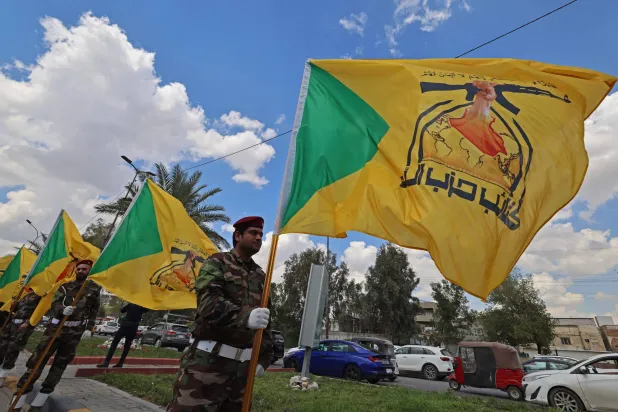
Simultaneously with the Iranian criticism, armed Iraqi factions linked to the Shiite environment began to express opposition to al-Zaidi's visit to the United States, after a period of relative calm, and at a time when some factions had begun, according to reports, steps related to handing over their weapons.
A leader in the "Sayyid al-Shuhada Brigades," one of the armed Shiite factions, said that they have to "prepare the coffins" after al-Zaidi's visit to the United States, in a statement that critics considered a threat linked to the new political path of the Iraqi government.
Opponents of this rhetoric say that using the language of threat increases the intensity of internal division, while faction supporters believe that the government's moves may carry risks to the existing security and political balances.
Read also
Original source: Asharq Al-Awsat
Comments (0)
Be the first to comment.