Israeli Supreme Court Temporarily Freezes Implementation of Broadcast Law Amendments
ISTANBUL / Khalid Youssef / AA
- The court's decision is in effect until a ruling on petitions against the amendments passed by the Knesset last week
- The opposition says the aim of the amendments is to provide financial support to pro-government channels such as Channels 14 and 15
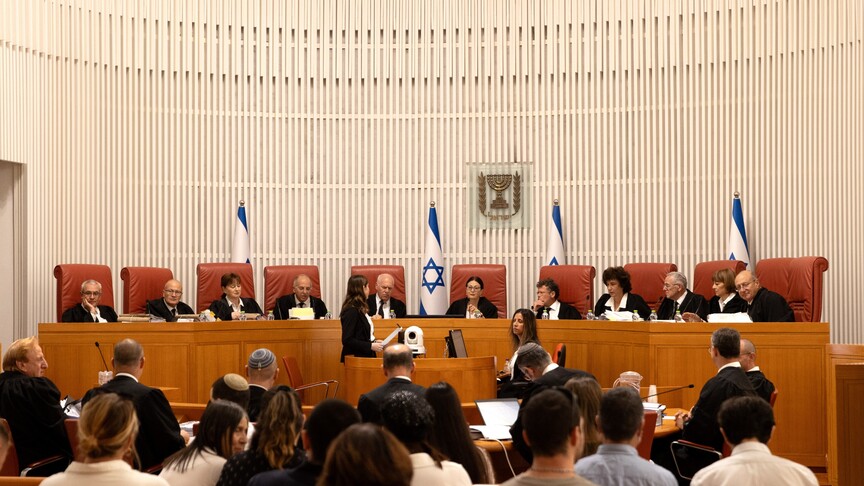
The Israeli Supreme Court on Sunday decided to freeze the implementation of amendments to the broadcast law passed by the Knesset last week.
The Yedioth Ahronoth newspaper reported that the Supreme Court (the highest judicial body) issued a temporary injunction freezing the implementation of the amendments to the broadcast law.
It added that the decision is effective until the court rules on petitions filed against the amendments, which were scheduled to take effect immediately.
Supreme Court Judge Ofer Grosskopf obligated the government, the communications minister, and other relevant parties to submit their responses within a week.
On the pro-amendment side, Israeli Communications Minister Shlomo Karhi denounced the court's decision in a statement to the newspaper.
He said, "The Supreme Court has no authority to freeze or invalidate laws."
He added, "The order issued without legal basis does not have any legal validity."
According to the Hebrew channel i24 News, the court's decision came following a petition submitted by both the head of the "Democrats" faction in the Knesset, MK Efrat Rayten, and former Communications Minister Eitan Ginzburg.
On July 16, the Knesset approved the amendments to the broadcast law by a majority of 53 votes to 48, hours before its dissolution ahead of the upcoming October elections.
The amendments stipulate the establishment of a new audiovisual media authority to replace the "Second Broadcasting Authority" and the "Cable and Satellite Council," with an annual budget of 25 million shekels (about $8 million).
They also include facilities for establishing new news channels, reducing the level of regulatory oversight, and abolishing the structural separation between television channels and their affiliated news companies.
According to Karhi, the amendments aim to liberalize the Israeli media sector, which was regulated, by reducing bureaucracy and enhancing competition.
According to the opposition, the amendments aim to control viewership ratings and advertising budgets, and direct the budgets of the Government Advertising Office to channels supportive of Netanyahu's government, such as Channels 14 and 15.
Netanyahu has been wanted since 2024 to appear before the International Criminal Court on charges of war crimes and crimes against humanity during the Israeli genocidal war that began in the Gaza Strip in 2023.
In 1948, Israel was established on lands seized by armed Zionist militias that committed massacres and displaced at least 750,000 Palestinians. Israel later occupied the rest of the Palestinian territories and refuses to withdraw from them and establish the Palestinian state stipulated in UN resolutions.
Original source: Anadolu Agency



Comments (0)
Be the first to comment.