How did Egypt support the restoration of electricity in Libya?
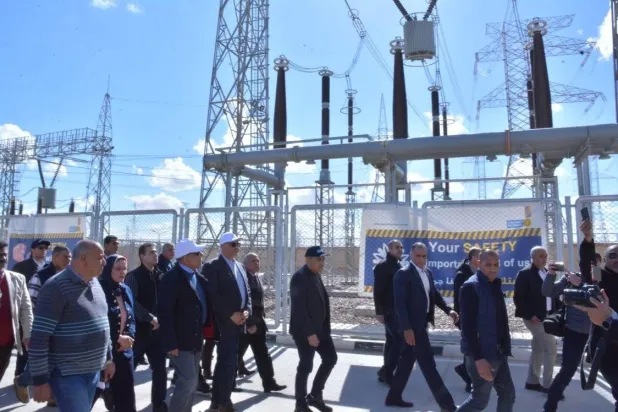
The electrical interconnection between Egypt and Libya goes beyond traditional cooperation protocols, as it proceeds according to understandings between the two neighboring countries, according to Egyptian and Libyan sources who spoke to Asharq Al-Awsat about 'rapid interventions' to resolve emergency crises and integration in energy exchange between the two countries.
On Friday evening, Egypt intervened urgently to address a total power outage crisis in eastern Libya, by pumping quantities of electrical energy through the common 'interconnection lines,' along with providing technical support to quickly restore production at main stations and bring Libyan generation units back into service.
The Egyptian intervention in supplying the Libyan networks with electrical energy contributed to the gradual return of service, according to parliamentarians and specialists in the field of electrical energy in Egypt, who pointed out that 'the state of complete network outage in Libya necessitated the intervention of an external source to restore the operation of the stations again,' and indicated that Egyptian supplies will continue until the network stabilizes inside Libya.
The electrical network collapsed in most parts of Libya on Friday evening, as a result of a 'sudden disconnection in the transmission line linking the Misrata and Khoms stations,' according to the Libyan Ministry of Electricity, which said that this disconnection caused a 'successive shutdown of the main generation units, foremost of which are the Gulf and Misrata stations.'
The spokesman for the Libyan Ministry of Electricity, Rabie Khalifa, told Reuters that the Minister of Electricity, Awad Al-Badri, held contacts with officials in Egypt that resulted in an agreement to use the common electrical interconnection lines between the two countries.
He pointed out that Egypt provided the network with the necessary energy to recharge the main stations and bring the Libyan generation units into service gradually.
The Egyptian Ministry of Electricity did not comment on the details of the agreement with the Libyan side, but a responsible source at the ministry told local newspapers that 'about 70 megawatts were exported to Libya via the electrical interconnection line between the two countries'; adding: 'There is continuous follow-up from the control centers in both countries to ensure operational stability.'
The capacity of the interconnection line between Egypt and Libya is 120 megawatts, according to the former head of the Egyptian Electricity Regulatory Authority, Hafez Selmawi, who told Asharq Al-Awsat: 'In moments of complete power grid outage, as happened in Libya, we need an external source of electrical energy to help quickly restore internal generation and production networks; this is what Egypt did, as the Libyan grid was fed with quantities of electrical energy that help gradually restore work at the main stations.'
Selmawi added that Egyptian support will continue until electricity production stabilizes inside Libya again. He continued: 'There is integration in energy exchange between the two countries, especially since Libya is one of the sources of gas that Egypt imports, while the Egyptian government has high capacities for electricity generation.'
The Egyptian government will continue to supply electricity to the Libyan side until the generation stations return and the internal network stabilizes, according to the Secretary of the Energy Committee of the Egyptian House of Representatives, Mohamed Al-Haddad, who told Asharq Al-Awsat that the Egyptian government 'also provides technical support to the Libyan side to restore the internal networks' production again,' and that technical teams from the Egyptian side are working in coordination with the Libyan side.
Al-Haddad stressed that the modernization process witnessed by the electricity networks in Egypt contributed to the speed of response and support for the Libyan side within hours.
Several sectors in Libya were affected by the power outage, as service was cut off to the well fields in the Sarir and Tazerbo areas, in addition to the water pumping station in the city of Benghazi.
This is not the first time Egypt has intervened to solve the electricity problem inside Libya, according to the former Secretary-General of the Libyan National Committee, Wissam Abdelkebir, who said: 'Egypt has previously intervened to support eastern Libya in emergency cases,' adding: 'The process of intervention and electrical interconnection with Egypt, in times of crises, goes beyond the limits of cooperation protocols, as it takes place according to the understandings and rapprochement between the two neighboring countries.'
Abdelkebir told Asharq Al-Awsat: 'The Egyptian side did not limit itself to pumping quantities of electrical energy, but also contributed technical support until the network stabilizes again.'
Original source: Asharq Al-Awsat



Comments (0)
Be the first to comment.