Letter demanding resignation of imprisoned Abir Moussa shakes her party in Tunisia
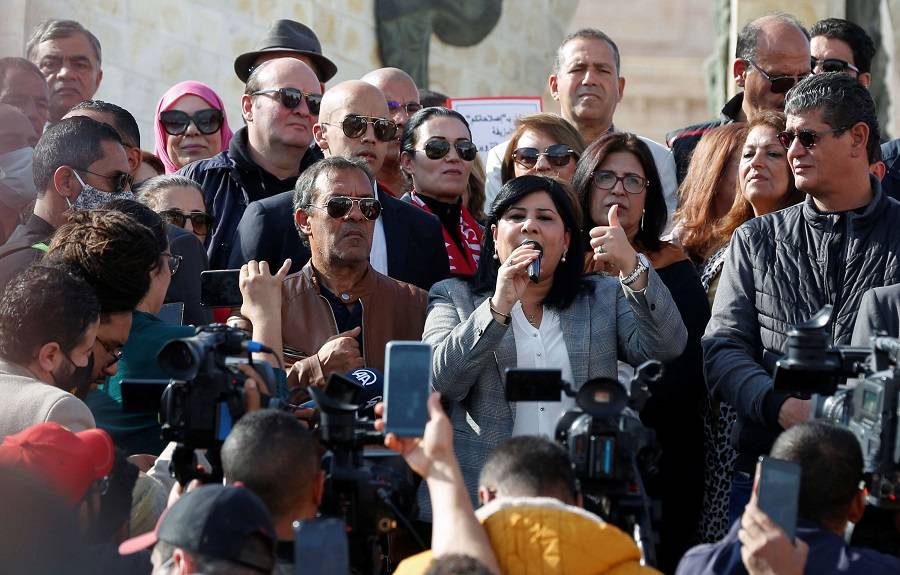
Summary: Bouzidina's letter caused internal debates and accusations against him and other leaders, such as former MP Karim Krifa, of leading a 'conspiracy' aimed at removing Moussa from the presidency of the party, which has been known for its cohesion in recent years.
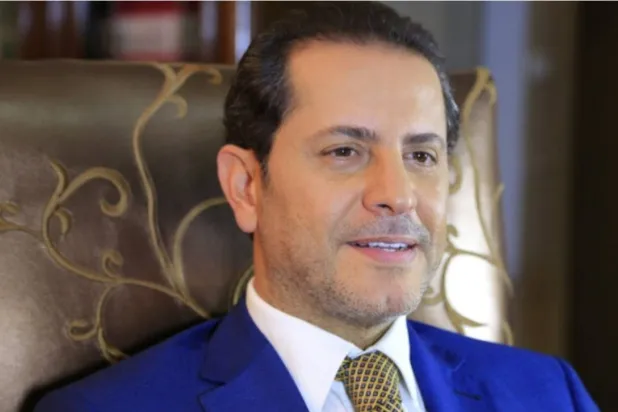
An open letter from prominent leader of the opposition Free Destourian Party in Tunisia, Majdi Bouzidina, demanding the party's president, imprisoned for over two years, step down from her post, has thrown the door wide open to rare divisions within the party, raising serious questions about its future and its impact on the opposition in the country.
Bouzidina's letter came as the Free Destourian Party prepares to hold its general conference, amid talk of Moussa running for a third term, sparking controversy. Bouzidina, a former MP, said that 'organizing the Free Destourian Party's conference at this time and in the absence of Abir Moussa could be a fatal mistake that destroys the party and her.'
These rare divisions within the Free Destourian Party compound the troubles of the Tunisian opposition, which is already divided in the face of President Kais Saied.
The Free Destourian Party was founded in 2013, and it is a party that does not hesitate to declare its allegiance to the regime of late President Zine El Abidine Ben Ali, who was ousted by a popular uprising in January 2011.
Bouzidina's letter caused internal debates and accusations against him and other leaders, such as former MP Karim Krifa, of leading a 'conspiracy' aimed at removing Moussa from the party presidency, which has been known for its cohesion over the past years.
Party leader Samira Sayahi said that 'Bouzidina's letter was interpreted as an attempt to create a rift within the party's leadership and structures, and as Bouzidina expressed in his responses to his own letter, his intention was advice from his perspective, and I believe that Abir Moussa's candidacy for a third term is completely consistent with the party's internal regulations.'
Read more
Electoral apathy threatens political deadlines in Tunisia
Playing under another banner... Tunisia and the flight of champions
Tunisia moves to return its youth to the path of 'national service'
What is the cost of the absence of elected municipal councils in Tunisia?
Sayahi continued to 'Independant Arabia' that 'what happened is a storm in a teacup and an attempt to ignite sedition within the party, nothing more, because the text and articles of the internal regulations are clear regarding its presidency, and thus the next term is considered Moussa's second term, since the Stability Conference held on August 13, 2016 was considered a founding conference, not an electoral one.'
In an attempt to settle the debate, the Free Destourian Party was forced to issue a statement on Friday night, affirming Abir Moussa's right to run for a new term based on Article 11 of the internal regulations.
Sayahi believes that 'in principle and morally, and given the current circumstances of the party president, as she is imprisoned, forcibly removed from the direct management of the party, and in about two months she will have completed three years in her detention here, no one can even think of competing against her candidacy.' She stressed that 'the matter was never raised at all; the issue is purely procedural.'
The meaning of Moussa's stay
Since the January 2011 uprising, Moussa has been known for her fierce criticism of the Islamist Ennahda movement, and after 2021 she began leading a front against President Kais Saied, before she was arrested following an attempt to file a complaint at the office of the presidency.
Tunisian political researcher Mourad Allala considered that 'what is happening in the Free Destourian Party is normal, on the eve of a conference that is ordinary in form but exceptional in its context and implications and what will emerge from it, in addition to the crisis of democratic culture in Tunisian political society in general, which is a deep and long-standing crisis in the Destourian family in particular.'
Allala highlighted in a statement that 'talk of a split within the party is exaggerated, whether considering the political weight of party political bureau member Majdi Bouzidina, whose resignation was not followed by others and whose open letter to the party president did not have a major echo, or considering the real balance of power within the Free Destourian Party. In clearer terms, the party machinery and the majority of the party's prominent figures, at least in appearance, remain loyal to the president. There is nothing in the party's legal regulations preventing her candidacy for a third term. Above all, from an ethical, political, militant legitimacy, and charisma perspective, keeping Abir Moussa at the head of the party is a logical organizational choice in this circumstance that may serve the party and its popularity. But it certainly acknowledges the role of women and gives her a symbolic immunity she needs in this circumstance.'
Potential impact
These developments come at a time when Tunisia is witnessing a rupture between the authorities and the opposition forces, since President Kais Saied dissolved parliament and the government.
Mourad Allala did not rule out the impact of the rifts in the Free Destourian Party on the eve of its conference on the opposition's situation, saying 'Parties are political and ideological projects in many cases, and the mechanisms, constraints, and arrangements of democratic governance cannot be mechanically applied to them. The party leader, founder, or reformer is responsible and concerned with preserving it, bringing it to power, and maintaining it based on democratic equations and conditions. Since legitimacy no longer comes only from the party's base and members but from the people in all its components, therefore a comparison between the party and the state is not permissible.'
He stressed that 'the most important thing in the Free Destourian Party's conference is addressing the democratic issue and involving its forces and cadres in decision-making, because reducing the party to one person has harmed it, and will harm it more if the situation continues as it is.' He pointed out that 'we do not think, under the current political scene, that the party's conference will make a splash or bring about a qualitative shift in the opposition. All we will witness in the coming days is the continuation of intersection and field-based circumstantial convergence mainly on some issues related to freedoms. As for normalization, it is very difficult due to the past, references, and lack of revisions. The Free Destourian Party will remain the main representative of the Destourian family and an opposition figure among the many oppositions inside Tunisia in the absence of a unified opposition.'
Original source: Independent Arabia

Comments (0)
Be the first to comment.