'Invisible' Buildings Hide in the Heart of Namibia's Desert... What's Their Secret?
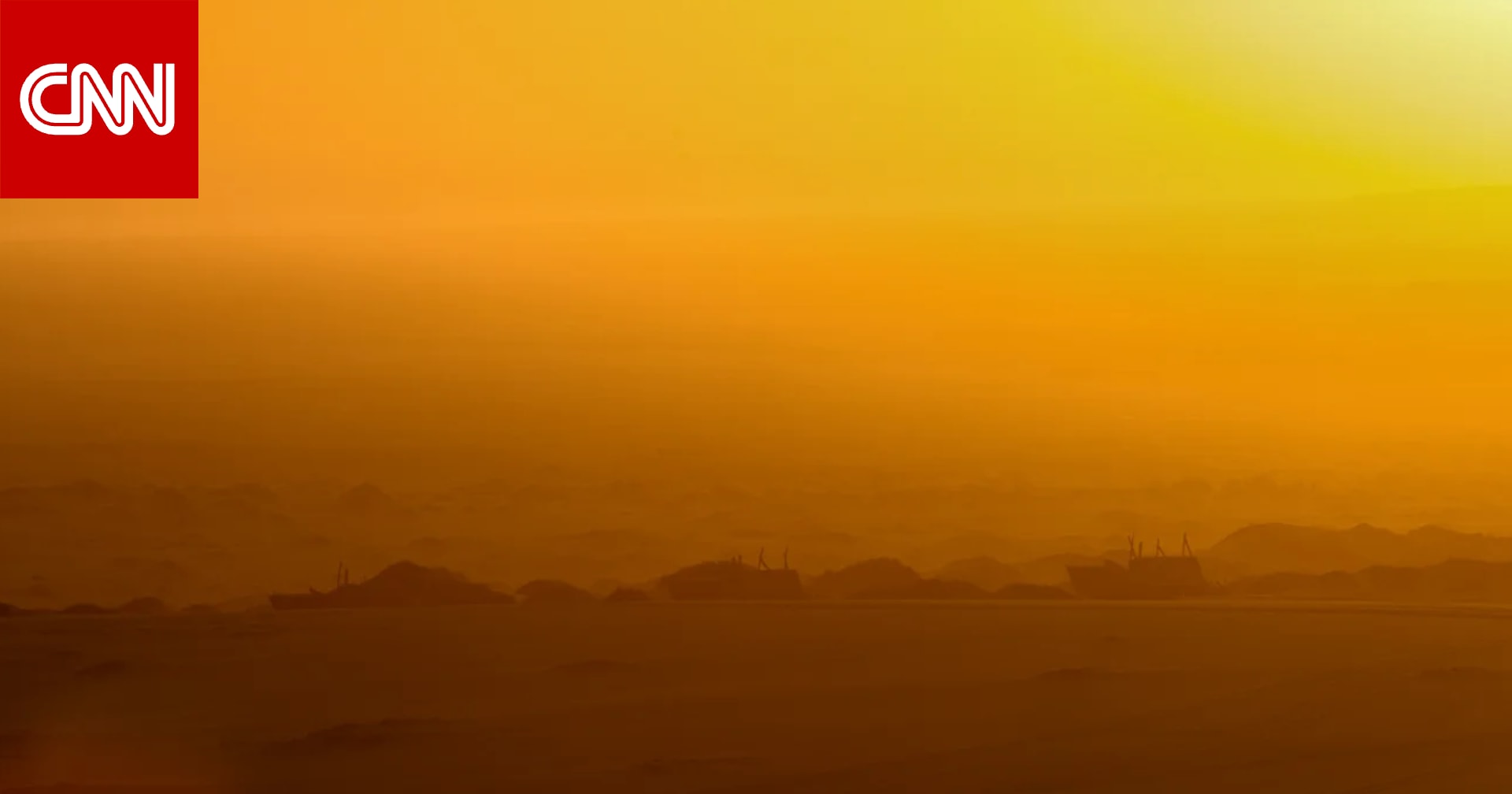
Luxury resorts often catch people's attention with their stunning designs. But in Namibia, the situation is completely different. There, some establishments tend to stay out of sight as much as possible, making them hard to find.
(CNN)-- Luxury resorts often catch people's attention with their stunning designs. But in Namibia, the situation is completely different.
There, some establishments tend to stay out of sight as much as possible, making them hard to find.
This approach is part of what is known as "invisible architecture," where buildings blend seamlessly into some of the most remote environments in the region, providing an exceptional level of privacy.
In Namibia's most isolated areas, luxury resorts are built with an extraordinary goal: to disappear from view. Credit: Courtesy Jason Boswell
The Skeleton Coast, which stretches 310 miles, is among the most isolated places on Earth.
There, sand dunes up to 100 meters high spread out, while rusty shipwrecks on its shores seem like the only sign of human presence at the "Gates of Hell."
But peering through the Atlantic fog, one can see 10 wooden cabins belonging to the Shipwreck Lodge, designed to resemble the wreckage of sunken ships.
Opened in 2018, these structures are the creation of prominent Namibian architect Nina Maritz, who sought to evoke the feeling of sailors seeking shelter after being stranded there centuries ago.
Maritz told CNN: "As soon as you arrive, an overwhelming sense of isolation washes over you; you find yourself truly in the heart of the unknown, at the furthest point one could reach anywhere else on Earth."
The Shipwreck Lodge consists of 10 luxury cabins designed to mimic the many abandoned ships scattered across the area. Credit: Jo Munnik / CNN
These cabins, equipped with large beds, private bathrooms, and internet service, provide more comfortable and luxurious refuges than those the ancient sailors could have built from the wreckage of their ships.
Nevertheless, this design inspired by primitive shelters is just a small part of a more complex visual approach.
Image reflecting an interior design of the wooden cabins. Credit: Jo Munnik / CNN
Maritz believes that buildings in nature should always come second to the surrounding environment.
Therefore, the cabins were built from weathered-looking timber, in a simple manner that allows for easy disassembly. They were also placed in carefully chosen positions so as not to affect the horizon line.
She said: "Unfortunately, architecture today has to some extent become engrossed in the pursuit of aesthetics, ignoring other aspects of buildings."
She added: "I see the aesthetic aspect as just one of the many functions that buildings perform... I am more interested in creating timeless architecture that lasts, rather than designing trends."
Luxury retreats
In the rocky desert plains of the Damaraland region, another exclusive retreat lies hidden from view.
The Onduli Enclyve villa overlooks a granite outcrop on Mount Brandberg, Namibia's highest peak, offering guests an experience that combines isolation with the benefits of luxury accommodation.
It is also nestled within the Doro Nawas Conservancy, an arid area spanning 1,540 square miles, home to only about 1,500 people, yet teeming with wildlife such as black rhinos, leopards, and cheetahs.
The villa consists of a series of interconnected rooms, with stairs leading to an outdoor pizza oven, a designated fire pit, and a swimming pool.
The villa also includes three suites equipped with a temperature control system and glass doors providing panoramic views of nature. It is surrounded by a wooden deck with wood-fired hot tubs and relaxation chairs.
A private villa known as the Onduli Enclyve sits amid the mountainous desert environment of the region. Credit: Courtesy ultimate.earth
Perwald Oezieb is one of the private guides at the resort, and his responsibilities include organizing black rhino tracking tours and helping travelers find a suitable villa.
He said: "When we approach the place and the travelers start to see the building, they are stunned, especially when it seems as if it is literally about to fall off the mountain."
The villa is located within the Doro Nawas Conservancy, which hosts large numbers of black rhinos, elephants, giraffes, leopards, and cheetahs, along with a wide variety of other species. Credit: Courtesy ultimate.earth
Trevor Nott carefully designed the access road to the villa. Before its opening in 2024, he decided to place a herd of metal giraffes as a sign indicating travelers have arrived at their accommodation.
The villa opened in 2024. Credit: Courtesy ultimate.earth
As for the villa itself, biodegradable materials were used in its construction, most of which were sourced locally, such as calcrete and tree trunks from the surrounding forests.
Nott said: "The idea is to use what you find around you, where you can collect materials available on site, then allow the project to take shape and grow naturally."
Original source: CNN Arabic



Comments (0)
Be the first to comment.