US Court Rejects Trump Administration Request to Re-detain Pro-Palestinian Researcher
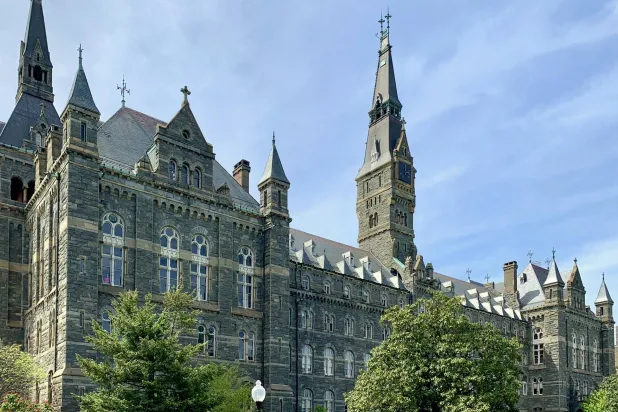
A US appeals court on Thursday rejected an attempt by President Donald Trump's administration to allow immigration authorities to re-detain a Georgetown University researcher who advocated for Palestinian rights and opposed the Israeli war in Gaza.
A three-judge panel of the 4th Circuit Court of Appeals, based in Richmond, Virginia, ruled 2-1 that federal immigration law does not prevent a lower court judge from issuing an order releasing Badar Khan Suri after hearing his argument that his detention violates his rights to due process and free speech under the US Constitution. Immigration authorities arrested the Indian citizen in March 2025 as part of a campaign by the Trump administration to detain and deport foreigners who participated in pro-Palestinian activities on college campuses.
Two other federal appeals courts recently overturned lower court rulings that had led to the release of pro-Palestinian student activists studying at Columbia University, Mahmoud Khalil and Mohsen Mahdawi.
But the 4th Circuit panel disagreed with the conclusions of those two courts that immigration law deprives lower court judges of jurisdiction to consider a matter like Suri's case. It said there is nothing preventing a judge from considering a challenge to a person's detention that is suspected of being unconstitutional, even if it is related to pending deportation proceedings before immigration courts. The Department of Homeland Security, which oversees US Immigration and Customs Enforcement, did not respond to a request for comment.
Suri said in a statement, 'Today reaffirms my belief that an independent judiciary remains the true guardian of liberty, due process, and the rule of law.'
At the time of his arrest, Suri was living in Virginia with his wife, a US citizen of Palestinian origin. After being detained by ICE, he was transferred to Texas, where he was released in May 2025 after a federal judge ordered his release on the grounds that he was likely to succeed in proving that his arrest was retaliation for his constitutionally protected speech.
"); googletag.cmd.push(function() { onDvtagReady(function () { googletag.display('div-gpt-ad-3341368-4'); }); }); }
Original source: Asharq Al-Awsat


Comments (0)
Be the first to comment.