Netanyahu confident that Mamdani cannot arrest him in New York
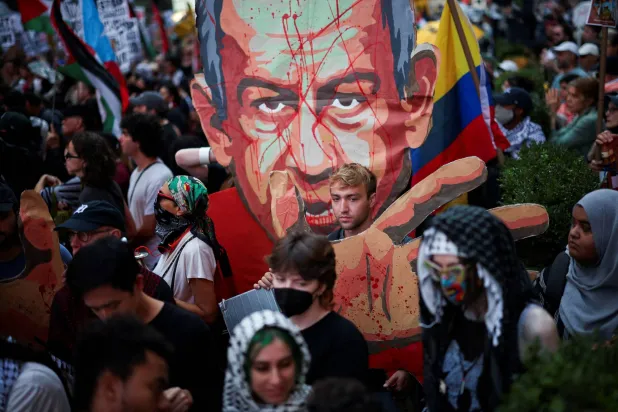
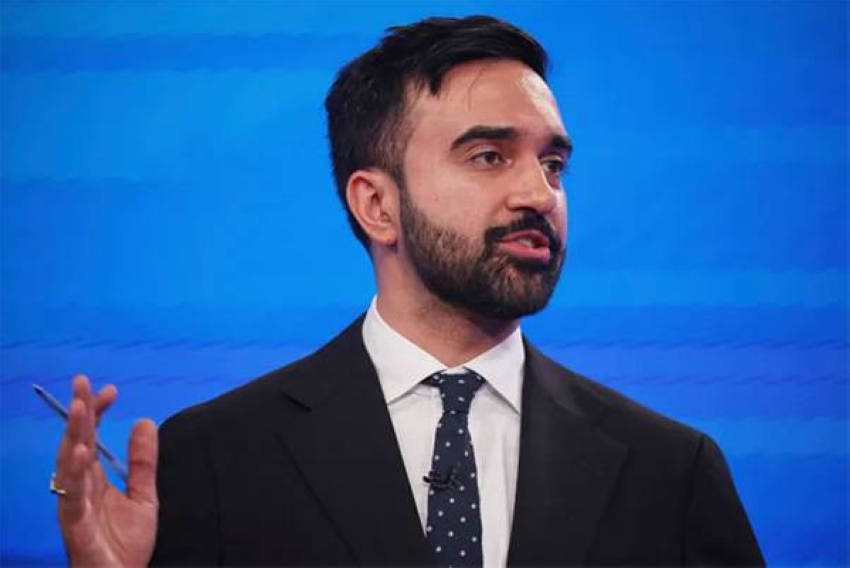
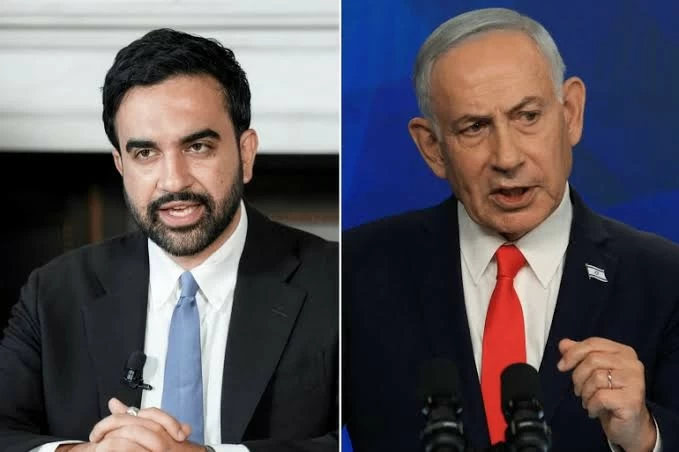
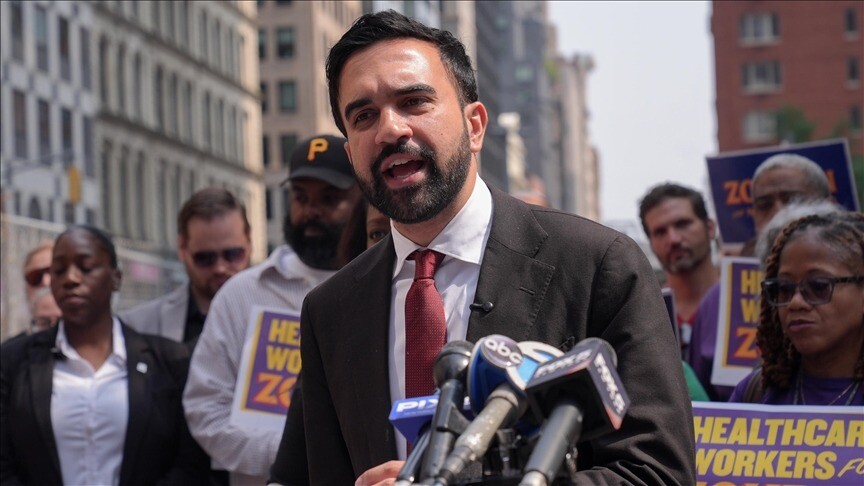
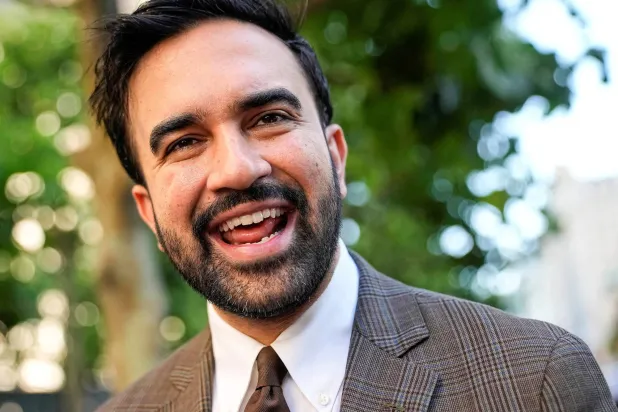
Israeli political sources reported that Prime Minister Benjamin Netanyahu received assurances from American lawyers that reduce the threat of New York Mayor Zahran Mamdani to arrest him.
Iranian Foreign Minister Abbas Araghchi said that the US and Israeli attacks that began on February 28 (February) revealed a 'security gap' at the highest levels of power, which still exists, noting that the breach was not limited to information leaks, but extended to influencing decision-making and directing the psychological climate within governance institutions.
Araghchi said, in a lengthy press interview, that three attacks targeted within seconds the 'Command' complex in Pasteur area, which houses offices and headquarters linked to the Iranian Supreme Leader. He added: 'The breach is not limited to obtaining information, but also exists in decision-making, and in directing the psychological atmosphere.' He said that the bombing of the 'Bayt' complex was carried out through a 'security gap,' and that this gap 'still exists' without providing details.
Araghchi confirmed that he did not meet Mojtaba Khamenei during the war, and that there were no direct contacts between them before it.
This is the first interview Araghchi gives to local media and talks about the recent war, with Javad Moghoyi, a documentary filmmaker close to the Revolutionary Guard. Moghoyi had conducted, after the 12-day war last year, a series of interviews with Iranian officials, some of whom were killed in the war that began in February. His interviews, supported by official media, focused on addressing domestic public opinion and enshrining the Iranian authorities' narrative of the war and its political and military decisions.
Araghchi said: 'Within seconds, three attacks occurred on the command complex,' noting that they simultaneously targeted a meeting of the Deputy Ministers of Intelligence, a meeting of the Strategic Council on Foreign Relations in the office of the Iranian Supreme Leader, and a defense meeting chaired by Ali Shamkhani. The strikes also affected the offices of Mohammad Shirazi, the Supreme Leader's assistant for military affairs, and Ali Asghar Hejazi, assistant for executive affairs.
Araghchi was in Hejazi's office at the start of the attack, to give a report on the Geneva negotiations. He said he was explaining that the atmosphere had turned since the previous night from negotiation to war, 'and suddenly the attack started there.'
Araghchi said that he and Hejazi were pulled out from under the rubble after three consecutive explosions, the last of which occurred adjacent to the building they were in. He added that the strike destroyed the side containing Hejazi's office, while ceilings and walls collapsed over the meeting hall on the other side. Hejazi appeared at the funeral of the Iranian Supreme Leader after conflicting reports about his fate.
Araghchi accompanied by his protection team on a motorcycle on his way to participate in the funeral of former Supreme Leader Ali Khamenei in Tehran (Iranian Foreign Ministry)
He continued that he held Hejazi's hand and they made their way between metal beams and rubble, amid the cries of the wounded, before leaving the building for fear of repeated strikes. He said they did not know at that moment the location of the Iranian Supreme Leader or his fate, and that the entrances of the complex, its security corridors and cars were hit, forcing him to leave the area in a passerby's car and reach the Foreign Ministry 'covered in dust.'
He added: 'They were aware of these meetings being held, and this indicates a security breach, perhaps not fully addressed yet.' He continued that this breach 'is not limited to infiltration and access to information, but also exists in guiding decision-making processes and directing the country's psychological atmosphere.'
Araghchi revealed that the strikes were followed by a widespread communication blackout among senior officials, and he said he remained for about three days almost isolated from the rest of the power centers, and did not know exactly who remained alive and who was killed. He added that he met the Iranian president for the first time three days after the outbreak of war, and Ali Larijani after five days, while the first limited official meeting was not held until the sixth day inside a secure site.
He said that three of those who participated in that meeting were later killed, namely Intelligence Minister Ismail Khatib, Ali Larijani, and another official he named 'Batini.' He added that real-time communication remained available with two centers in the armed forces, but it sometimes took a full day to reach other officials.
The code '110'
Despite saying that the leadership had pre-prepared war scenarios and responses, Araghchi acknowledged that the surprise occurred on the security side and the protection of officials. He said that Iran 'was not surprised strategically,' but it suffered 'tactical surprises,' especially in the protection of senior officials, before losses among them decreased after adopting protective measures he described as 'innovative.'
He explained that the Supreme National Security Council studied multiple scenarios before the war, including a US-only attack, a joint US-Israeli attack, or targeting infrastructure and the Iranian Supreme Leader. He said that the procedures associated with each scenario were written down, then approved and communicated to the relevant authorities, which allowed a organized response to begin immediately after the attack.
Araghchi attributed the renewal of war to what he described as 'miscalculation' by the United States and Israel, starting from the perception that Iran had become weak after developments in Lebanon, the killing of Hassan Nasrallah, and the fall of the Syrian regime, and that it had lost its regional deterrence capability.
He revealed that closing the Strait of Hormuz was part of a plan prepared before the war, and said: 'It had been pre-planned to close the strait immediately if the leadership was targeted.' He added that the scenario of targeting the Iranian Supreme Leader carried the code '110,' and that relevant officials knew what it meant.
Araghchi said he told US envoy Steve Witkoff during the negotiations: 'Have you ever participated in a meeting that could be bombed at any moment? You must speak to us differently; you cannot threaten Iranians, and you cannot tempt them.'
Reasons for the renewal of war
He said that the other side assumed that Tehran might move to compensate for this decline through 'nuclear deterrence,' and therefore decided to prevent it from doing so and destroy its facilities before reaching that stage. He added that Israel saw that 'the time had come to settle the matter,' and entered the 12-day war in June 2025 on this basis.
Araghchi noted that the demand to stop Iranian enrichment was fully on the table before that war. He said: 'In the face of their illegal and unreasonable demand for zero enrichment, we resisted and endured. When they saw they could not achieve their demand through negotiations, they started the war.'
Araghchi refused to say that negotiations led to war, stating that 'the decision to negotiate was not personal, but taken collectively.' He added that the war began when the other side failed to extract the concessions it wanted at the negotiating table, so it resorted to the military option.
He added that Tehran refused to suspend enrichment for several years, despite damage to its nuclear facilities, because it saw that accepting would mean allowing the enemy to fight and then get its demands. He said: 'We endured in negotiations even if the price was war.'
He pointed out that Iran proposed limited arrangements regarding the level of enrichment and use of nuclear materials, while maintaining the original right to enrichment. He said: 'We are ready to take confidence-building measures, but we do not give up our right, and we do not retreat from enrichment.'
Iranian Parliament Speaker Mohammad Baqer Qalibaf and Foreign Minister Abbas Araghchi during their participation in a meeting at the Bürgenstock resort in Switzerland on June 21 last year (EPA)
Original source: Asharq Al-Awsat

Comments (0)
Be the first to comment.