Netanyahu: In Agreement with Trump on Key Iran Issues
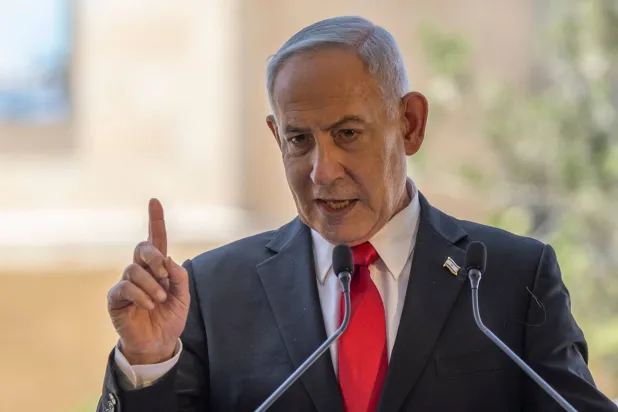
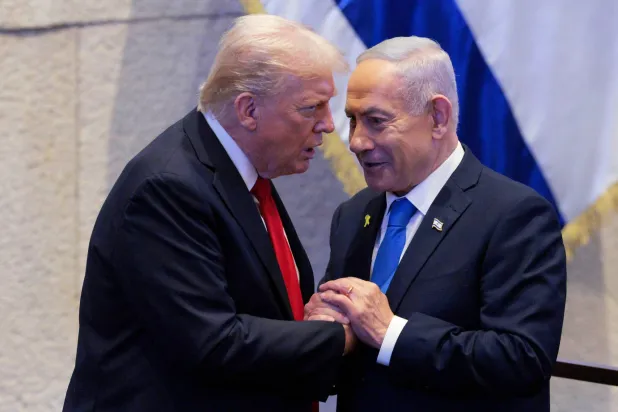
Netanyahu stated Tuesday that despite occasional differences with Trump on Iran, they completely agree on views regarding the main issues.
Months ahead of the general elections expected next October, new concerns emerged about competitiveness, with criticism focusing on "foreign interference" and manipulation through "artificial intelligence."
Israeli State Comptroller Matanyahu Engelman warned in an official report that Israel "does not have a clear national policy to counter foreign influence attempts in the digital space."
Engelman noted that existing gaps leave the Israeli public "exposed to organized campaigns that may target their awareness and trust in institutions and election results," while local opposition forces warned of "right-wing government manipulation of these elections and even falsification using AI tools."
Hebrew media quoted political sources in the Knesset (parliament) as saying that "the campaign machine used by Prime Minister Benjamin Netanyahu, with massive funding from his supporters, controls AI capabilities just like in the United States."
The sources warned that these tools are capable of changing the electoral battle by spreading lies and disinformation on a wide scale.
Electoral rally for Likud supporters at a market in Jerusalem on October 20, 2022 (AFP)
Israeli writer Ran Adelist said in Ma'ariv on Wednesday that "Prime Minister Benjamin Netanyahu's wars are tearing the restraints that protect democracy and social unity... artificial intelligence allows the government to distort reality."
He said there is a "media occupation campaign waged by Bibi (Netanyahu) and those wearing religious hats, aimed at establishing a network that produces fabricated news through smart and continuous brainwashing. Netanyahu has an approach to subjugate the media for his real and imaginary purposes."
Highlighting the external threat
The state comptroller, known to be close to Netanyahu, tried to highlight what he described as the "external threat," thereby covering up the internal threat.
In his new report, he warned that the security and government agencies that are supposed to deal with the external threat "do not work within a unified system, and there is no government body leading the issue, even though the threat has been known in Israel for about nine years," according to his assessment.
Engelman wrote that "hostile entities, including Iran, exploit social networks covertly and systematically to deepen divisions, sow panic, and engineer the perception of reality among the Israeli public."
Likud party leader Benjamin Netanyahu alongside his wife Sara addresses supporters at campaign headquarters in Jerusalem during the 2022 elections (AFP)
The report indicated that the threat escalated significantly after the war on Gaza, presenting several examples it considered indicative of the magnitude of the danger.
It stated that "in September 2024, Iran and Hezbollah sent about 5 million text messages to citizens in Israel, containing a false warning calling for immediate entry into shelters, aiming to cause panic among the public," according to the report text.
The report also referred to an influence campaign named "Esnad," which it said operated hundreds of fake accounts on social networks to influence Israeli public opinion and push it towards ending the war on terms more favorable to Hamas, according to the Israeli narrative.
It also mentioned an "Iranian influence operation" that allegedly "promoted content about 'genocide' in the Gaza Strip, four days after the October 7, 2023 attack."
However, UN experts concluded that the war Israel waged on Gaza involved "genocide," while the International Criminal Court is pursuing Netanyahu over crimes committed in the Strip.
Former Israeli minister Gadi Eisenkot during a protest in Tel Aviv (file - Reuters)
However, the report concluded that the government's handling of this threat remained limited and intermittent. It contained an accusation of negligence, stating that "the sequence of events indicates a recurring pattern of raising the threat to the agenda and taking initiatives for joint handling by various bodies, but these initiatives were neglected and did not move to actual implementation."
Leveling accusations of negligence
According to the report, the Israeli National Security Council determined in 2017 that Israel had become a target for foreign influence operations and directed to examine the issue, but that was not implemented.
In 2023, Prime Minister Netanyahu decided that the Intelligence Ministry would handle the file, but the ministry was abolished in March 2024 without appointing an alternative body to take responsibility.
After October 7, 2023, the National Cyber Security Authority prepared a ministerial action plan to counter foreign influence and sent it to Netanyahu in September 2024, including a budget estimate for its implementation. But the report noted that the plan remained for about a year without being reviewed by the prime minister or his representative.
A protester wearing a mask representing Netanyahu during a rally marking 1,000 days since the October 7, 2023 attack in Tel Aviv on Thursday (AP)
In July 2025, after the State Comptroller's Office intervened, the plan was transferred to the National Security Council. A month later, the Cyber Authority in the Prime Minister's Office announced that it would from then on focus only on foreign influence related to cyberattacks, while the National Security Council decided not to advance the plan that had been referred to it.
The report concluded that "as of August 2025, the National Security Council and the Cyber Authority stopped dealing with the issue."
The report also criticized the preparedness of the Shin Bet security service, responsible for monitoring and thwarting influence attempts. It stated that until February 2025, the service faced "certain challenges in monitoring and thwarting," and some have not been resolved to date.
The report indicated that the Shin Bet informed the state comptroller in mid-2025 that it had not yet begun preparations for the upcoming elections, and only announced in January 2026 that it had started "focused activity" in this regard.
In the same month, the Central Elections Committee and the Shin Bet announced the formation of a special team to counter AI threats and external influences, given the obsolescence of the 1959 election propaganda law and its inadequacy for the AI era.
Engelman said that "the election campaign period is particularly sensitive and forms fertile ground for malicious activity by foreign players," warning of the possibility of reaching "fear of tilting election results and undermining public confidence in the outcomes."
Original source: Asharq Al-Awsat


Comments (0)
Be the first to comment.