Netanyahu Through 4 US Presidents: How Has Israel's Image Been Affected?
Ankara / Yasin Yurganji / Anadolu
Opinion polls show rising negative attitudes in American society toward Israel, especially among younger generations
Political science professor at Columbia University, Richard Betts, in statements to Anadolu: 'US policy toward Israel is not primarily determined by personal relationships between leaders or strategic calculations, but rather is influenced by public opinion trends within the United States.'
After World War II, Americans viewed support for Israel against Arab countries as a 'moral duty,' a sentiment further strengthened after the June 1967 war.
The absence of an influential Arab lobby within US politics also contributed to entrenching pro-Israel positions for decades.
New American generations no longer carry the psychological and political legacy that marked the post-World War II era, which has affected their view of the Palestinian-Israeli conflict.
Recent developments in US-Israeli relations point to a new phase that goes beyond traditional disagreements between governments.
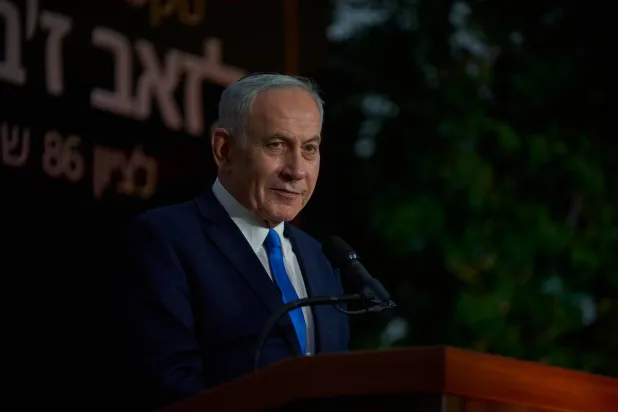
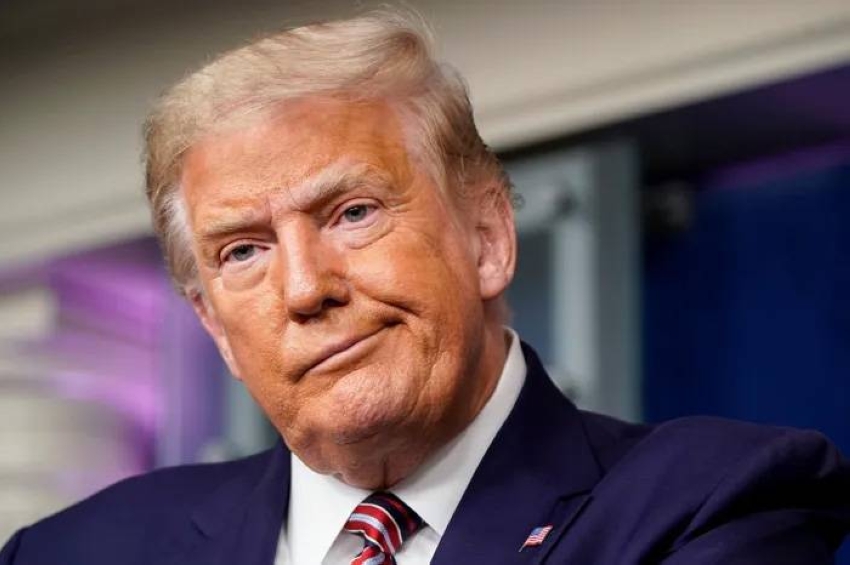
The escalation of tension between Israeli Prime Minister Benjamin Netanyahu and the US administration coincided with a notable shift in American public opinion, especially among younger generations, toward Israel.
After years of repeated disagreements between Netanyahu and four US presidents—Bill Clinton, George W. Bush, Barack Obama, and finally Donald Trump—the relationship between Washington and Tel Aviv today faces new realities, not limited to political differences between leaders but extending to growing changes in the public mood within the United States.
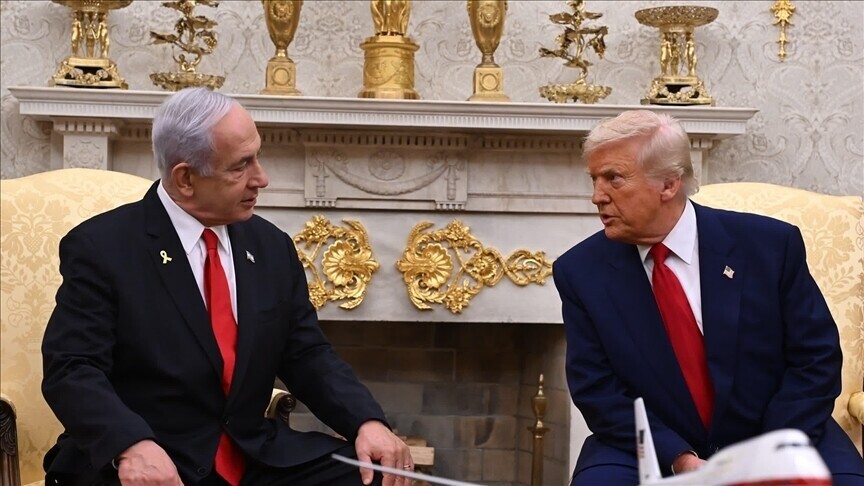
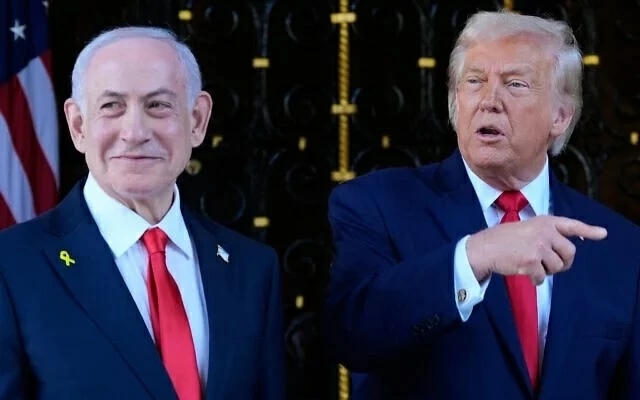
Recently, growing signs of differences in viewpoints between Trump and Netanyahu have emerged, and these disagreements have become a topic of wide discussion in US political and media circles.
The latest manifestation of this tension was Netanyahu's announcement canceling a planned visit to the United States to meet the US president, after making several attempts to arrange the visit without receiving a positive response.
Netanyahu attributed the cancellation to the rescheduling of US Senator Lindsey Graham's funeral to the end of the month, but this move was widely seen as another sign of the ongoing chill in relations between Washington and Tel Aviv.
In parallel, opinion polls show a striking change in Americans' view of Israel.
A poll conducted by the Pew Research Center last April showed that 60% of Americans now hold a negative view of Israel, while the percentage of those expressing a 'very negative' view reached 28%.
These results reflect an upward trend over the past four years, as the percentage of Americans viewing Israel negatively rose from 43% in March 2022 to 53% in April 2025, before continuing to rise later.
These shifts are more pronounced among the youth, as a negative view of Israel has become the dominant attitude among Americans aged 18-49, both within the Democratic and Republican parties.
The poll also showed that 59% of Americans have no confidence or limited confidence in Netanyahu's ability to make correct decisions on international issues.
Public opinion: The most influential factor in Washington's policy toward Israel
Assessing these shifts, political science professor at Columbia University, Richard Betts, said that US policy toward Israel is not primarily determined by personal relationships between leaders or strategic calculations, but rather is influenced by public opinion trends within the United States.
Betts explained to Anadolu that after World War II (1939-1945), Americans viewed support for Israel against Arab countries that fought wars with it as a 'moral duty,' a sentiment that was further strengthened after the June 1967 war.
He added that the absence of an influential Arab lobby within US politics also contributed to entrenching pro-Israel positions for decades.
However, this landscape began to change gradually, according to Betts, who noted that new American generations no longer carry the psychological and political legacy that marked the post-World War II era, which has affected their view of the Palestinian-Israeli conflict.
He believed that what is happening in Gaza has contributed to deepening this shift within American society.
However, he pointed out that political elites in both the Republican and Democratic parties still, to a large extent, lean automatically toward supporting Israel.
He said: 'It is true that some congressional candidates have recently won on platforms criticizing Israel, but no prominent presidential candidate has yet emerged calling for a radical change in US aid or diplomatic support for Israel, or to exert real pressure in defense of Palestinians who are subjected to violations in the West Bank.'
Disagreements did not start with Trump
Although the recent disagreements between Trump and Netanyahu have received wide attention, they are not the first of their kind in the history of relations between Israel's strongman and US administrations.
Over nearly three decades, Netanyahu has engaged in political confrontations with three US presidents before Trump: Bill Clinton (1993-2001), George W. Bush (2001-2009), and Barack Obama (2009-2017), over various issues ranging from the peace process, settlements, the Iranian nuclear program, and the future of Palestinian territories.
Trump's second term (started in January 2025) also witnessed increasing differences between the two sides, especially regarding the war in Gaza, policy toward Iran, and ceasefire negotiations—differences that are no longer confined to closed meetings but are now publicly displayed before public opinion.
The differences over the scope of Israeli military operations in Gaza, along with disagreements over the diplomatic track, have led to renewed questions about the future of relations between Washington and Tel Aviv, despite the continued strategic alliance between the two countries.
Disagreement with Clinton: The Oslo process at the heart of tension
The first station of tension between Netanyahu and US administrations began after his election as prime minister for the first time in 1996, when he entered into early disagreements with President Clinton, centered on the future of the peace process known as the 'Oslo Accords'.
Although Netanyahu ran his election campaign criticizing the Oslo Accords, he did not seek to completely cancel them after coming to power, but he pursued a policy that slowed the implementation of its provisions, especially regarding Israel's withdrawal from parts of the West Bank.
His approval of the establishment of the 'Har Homa' (Jabal Abu Ghunaym) settlement in East Jerusalem, along with his assertion that the Palestine Liberation Organization had not fulfilled its obligations, angered the Clinton administration, which saw these policies as undermining the peace process.
The year 1998 witnessed one of the most prominent points of disagreement, when the US state of Maryland hosted the 'Wye River' summit aimed at advancing Palestinian-Israeli negotiations.
Original source: Anadolu Agency

Comments (0)
Be the first to comment.