Washington Accuses Tehran of Breaking Agreements… Mediators Unable to Stop War
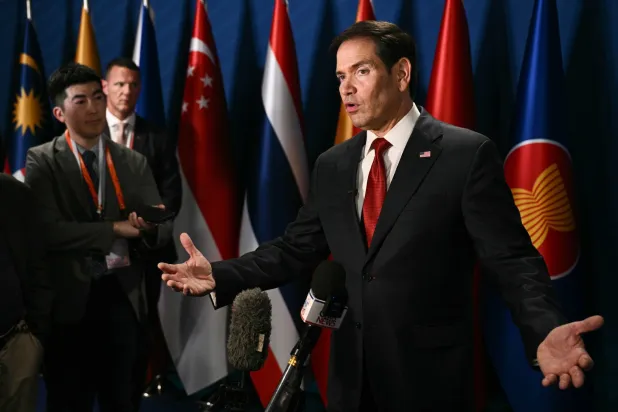
US Secretary of State Marco Rubio accused Iran on Thursday of backing out of agreements it reaches, saying it is 'paying the price' as strikes continue, while regional mediation channels continued to exchange messages between the two sides without achieving a breakthrough leading to a ceasefire.
Rubio said during a visit to Manila that the United States has adhered to the understandings it reached with Iran, while Tehran has repeatedly reneged on them despite the losses it has suffered.
He added: 'They make agreements and then break them almost immediately, or decide to change their terms. That is not how agreements are made.'
He continued: 'So they are paying the price now. And they may change their minds in the next few days as they continue to suffer heavy losses.'
He said the United States is still ready to reach an agreement that ensures Iran does not possess a nuclear weapon, but he believes Iranian officials 'do not seem serious' at present, adding that Tehran 'is not ready to make a deal, or at least one it is willing to adhere to.'
0 seconds of 0 seconds Volume 90%
Press shift question mark to access a list of keyboard shortcuts
00:00
00:00
00:00
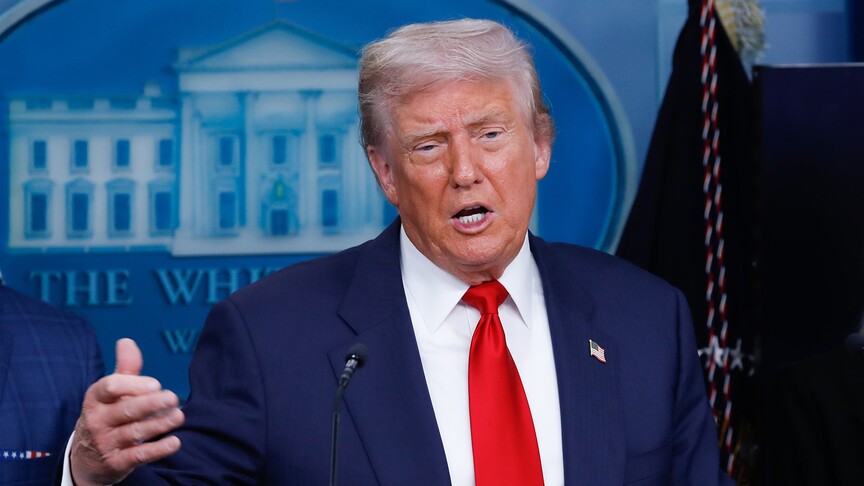
He also said that President Donald Trump's policy is based on the principle of 'an eye for an eye,' and that 'the price Iran will pay will increase every night until they come to their senses.'
Regarding regional escalation, Rubio accused Iran of pushing the Houthis to resume attacks in the Red Sea, after they had 'largely stayed out of the conflict.'
He said the Houthis were 'lured' into attacking ships, expressing hope that they would 'de-escalate,' and adding that he believes Iran 'deceived the Houthis and dragged them into this.'
Messages from Mediators
In contrast, Tehran affirmed that political communications have not stopped despite the continuation of military operations. Iranian Interior Minister Eskandar Momeni held a series of meetings in Pakistan in recent days, as part of efforts to maintain communication channels through one of the most prominent mediators between Washington and Tehran.
Iranian Interior Ministry spokesman Ali Zainivand said that 'diplomacy has not been canceled,' and that messages are still being exchanged through mediators, without revealing their content or the parties conveying them.
It remained unclear whether Momeni's visit carried new proposals to end the war, as the dispute shifted from ceasefire conditions to navigation issues in the Strait of Hormuz and the US naval blockade on Iranian ports.
The Associated Press quoted a regional diplomat, speaking on condition of anonymity, as saying that countries in the region have become more pessimistic about the chances of finding a way out of the crisis, as mutual threats escalate and military operations continue.
He added that regional countries, along with Pakistan and Turkey, continue their efforts to de-escalate and maintain communication channels, but chances of progress remain limited.
The positions of the two sides indicate a continuing political gap despite open communication channels. Washington accuses Tehran of backtracking on previous understandings and lacking seriousness in negotiations, while Iran says the continuation of US strikes and the naval blockade undermine any chance of resuming talks.
Read also
Original source: Asharq Al-Awsat

Comments (0)
Be the first to comment.