Poll: Israeli opposition surpasses Netanyahu bloc, can form government
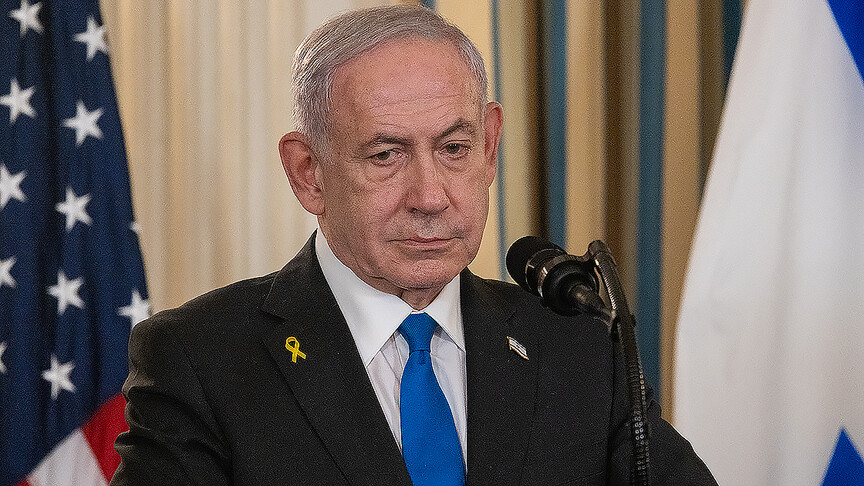
The opposition bloc secured 62 seats, exceeding the 61-seat threshold needed to form a government, compared to 48 seats for Netanyahu's bloc, the first time in 9 months it has achieved this number of seats..
Jerusalem / Anadolu
A public opinion poll in Israel on Friday showed the opposition bloc securing 62 seats in the Knesset, compared to 48 seats for Prime Minister Benjamin Netanyahu's bloc, while Arab parties won 10 seats.
This came according to the results of the poll published by the newspaper 'Maariv' and conducted by the 'Lazar' Institute (private), which included a random sample of 500 Israelis, with a margin of error of 4.4 percent.
The poll said the opposition bloc leads with 62 seats, compared to 48 seats for Netanyahu's bloc and 10 seats for Arab parties.
Thus, the opposition bloc exceeds the 61-seat threshold needed to form a government, the first time in 9 months it has reached this number of seats.
The newspaper 'Maariv' attributed the rise in the opposition bloc's strength to the 'Yesodot Yisrael' list headed by Hili Tropper and Yoaz Hendel gaining 4 seats.
According to the poll, Likud under Netanyahu won 22 seats, United Torah Judaism 8 seats, Otzma Yehudit under Itamar Ben-Gvir 7 seats, Shas 7 seats, and Religious Zionism under Bezalel Smotrich 4 seats.
In the opposition bloc, Yashar party headed by Gadi Eisenkot won 22 seats, Together list headed by Naftali Bennett won 16 seats, Democrats party headed by Yair Golan won 11 seats, Yisrael Beitenu headed by Avigdor Lieberman won 9 seats, and Yesodot Yisrael list won 4 seats.
The Democratic Front for Peace and Equality and Arab Movement for Change won 5 seats, and the United Arab List won 5 seats.
The poll showed that 83 percent of opposition party voters oppose including the Haredi religious parties in the next governing coalition, compared to 8 percent who support it.
It also showed that 70 percent of Arab party voters support an Arab party joining the next coalition, compared to 10 percent opposed, while 16 percent said it does not concern them, and 4 percent did not specify.
The poll also indicated that 55 percent of Israelis doubt the government's ability to make the right decisions until the election date, compared to 38 percent who believe it can, while 7 percent expressed no opinion.
The poll comes hours after the Knesset approved dissolving itself in preparation for early general elections on October 27, 2026, amid ongoing political instability in Israel.+
The upcoming elections will be the first since 1988 to be held on schedule, after the current Knesset completed a full four-year term.
The current Knesset is the 25th since the establishment of Israel in 1948 on lands occupied by armed Zionist gangs that committed massacres and displaced at least 750,000 Palestinians.
Later, Tel Aviv occupied the rest of the Palestinian territories and refuses to withdraw from them and establish the Palestinian state stipulated in relevant UN resolutions.
Original source: Anadolu Agency





Comments (0)
Be the first to comment.