Qatar Emir, Syrian President Discuss Efforts to De-escalate Tensions in Region
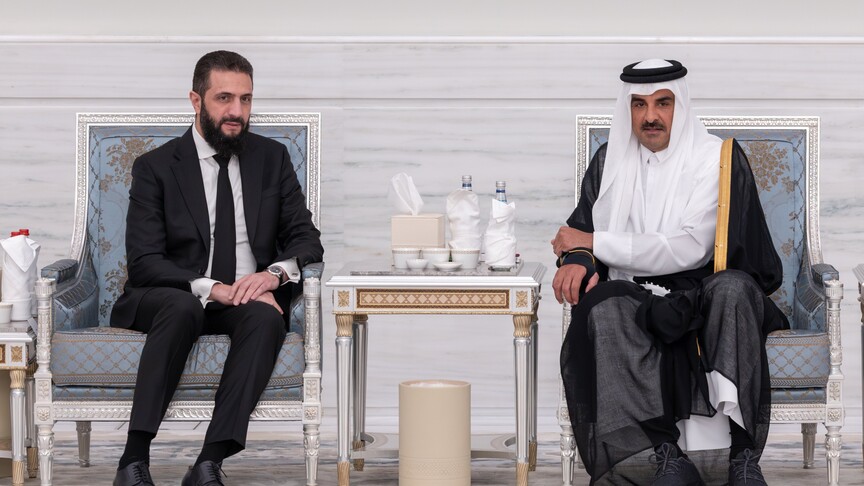
During a phone call received by Emir Tamim from President Ahmad al-Shara, according to a statement from the Qatari Amiri Diwan.
ISTANBUL / Laith al-Junaidi / Anadolu Agency
Qatar's Emir Sheikh Tamim bin Hamad Al Thani and Syrian President Ahmad al-Shara discussed on Wednesday efforts to calm and de-escalate tensions in the region.
The Qatari Amiri Diwan said in a statement that Emir Tamim received a phone call from President al-Shara, during which they reviewed the fraternal relations between the two brotherly countries and ways to support and develop them.
The two sides also discussed the most prominent regional and international developments, foremost among them the evolving situation in the Middle East.
In this context, the Syrian president praised, according to the statement, the role of Qatar and its efforts in calming the situation and enhancing regional and international security.
Both sides stressed the importance of intensifying regional and international efforts to de-escalate, and prioritizing political solutions and dialogue, which contributes to consolidating stability in the region and sparing its peoples further tensions.
They also emphasized the importance of advancing the settlement of differences through diplomatic means, and reaching a comprehensive agreement that achieves sustainable peace in the region.
The United States has been launching successive waves of strikes on sites inside Iran for days, while Tehran responds with missile and drone attacks on military bases, installations, and sites it says are linked to Washington in regional countries.
This escalation comes despite Washington and Tehran signing a memorandum of understanding last June that included a cessation of hostilities and the start of negotiations to reach a broader agreement.
However, US President Donald Trump announced on July 8 of this month the end of the ceasefire, after tankers in the Strait of Hormuz were attacked, which Washington accused Tehran of being behind, leading the United States to resume its strikes inside Iran amid escalating Iranian responses in the region.
Washington demands that Tehran stop attacking ships and ensure freedom of navigation in the Strait of Hormuz, while Iran insists on subjecting ship passage to a mechanism it regulates through the waterway overlooking its coasts, exacerbating fears of disruption to oil and gas exports from the region.
Original source: Anadolu Agency



Comments (0)
Be the first to comment.