Rubio: Iran Will Continue to Pay the Price Unless an Agreement is Reached
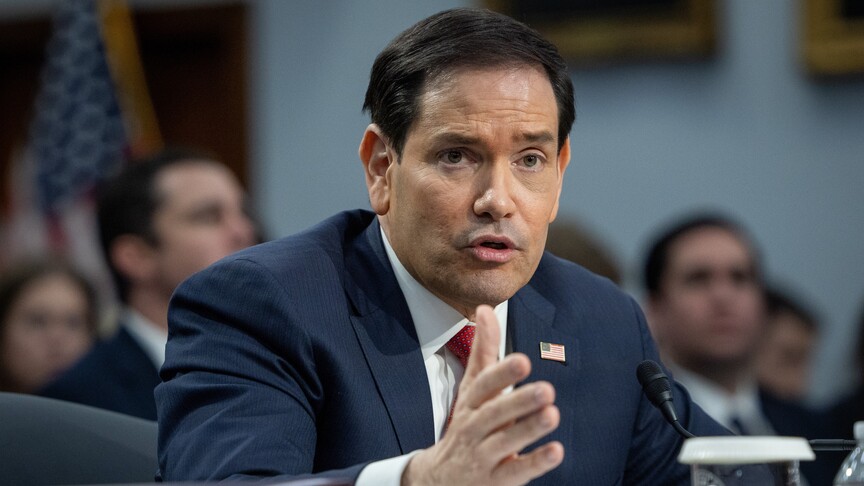
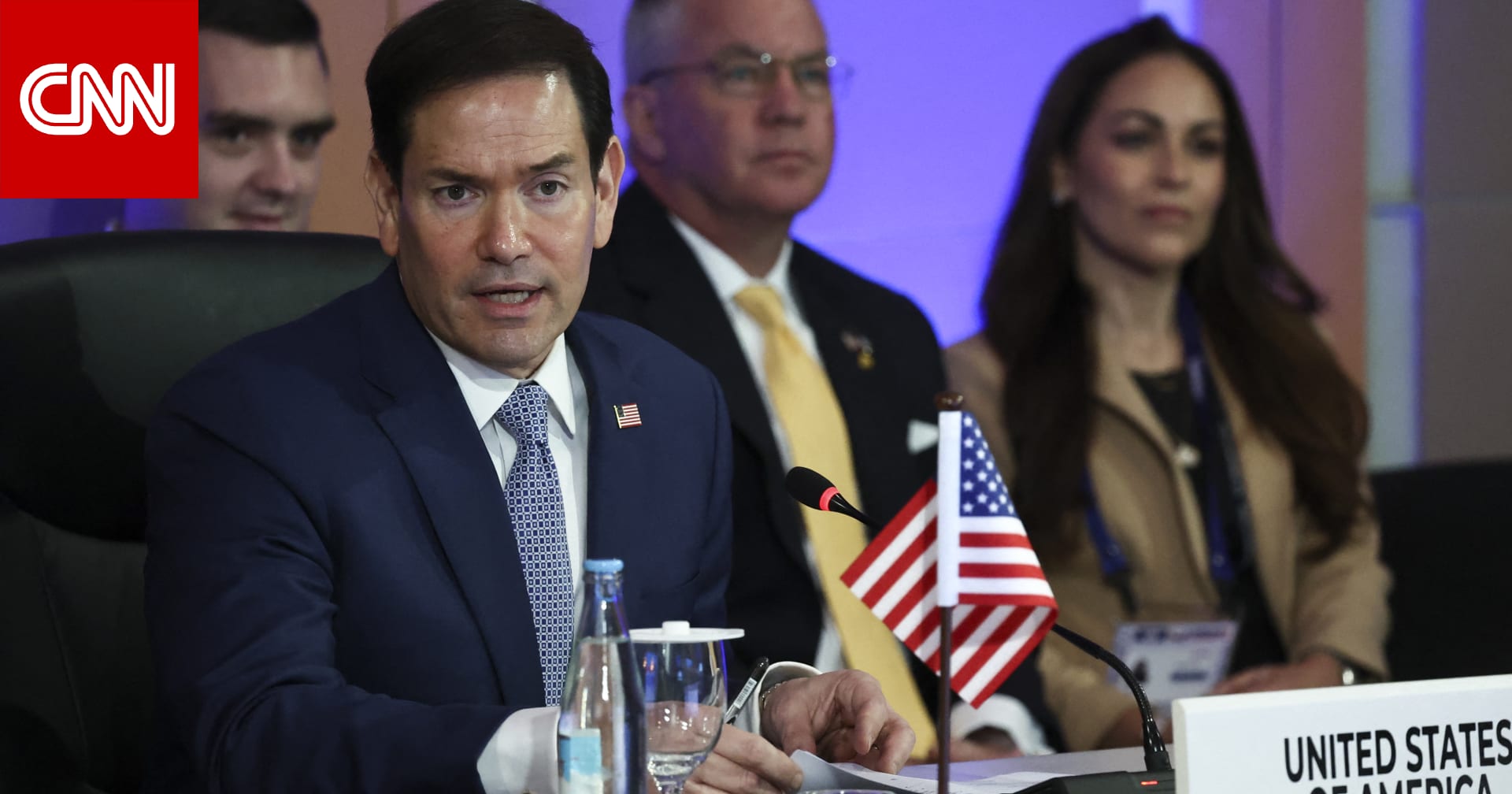
Press conference by US Secretary of State Marco Rubio in the Philippines on the sidelines of the 59th ASEAN Foreign Ministers' Meeting..
Ankara / Anadolu
US Secretary of State Marco Rubio issued stark warnings on Thursday that Tehran will "continue to pay an increasingly heavy price" unless a settlement is reached with the US administration.
These remarks come at a time when bilateral relations and the regional situation are witnessing escalating tensions and mutual clashes.
During a press conference held in the Philippines on the sidelines of the 59th ASEAN Foreign Ministers' Meeting, Rubio claimed that Iran has "begged" directly and indirectly to reach an agreement with the United States.
He pointed out that the dilemma of negotiating with Tehran is that its officials tend to violate concluded agreements or attempt to modify them, reflecting a lack of seriousness in reaching genuine understandings.
He added: 'They will continue to pay the price, and every night the price increases more and more, and that is exactly what is happening now.'
Commenting on the repercussions of US military operations, he stated that Iran's defense industry infrastructure has been destroyed, along with the daily loss of radars and missile launchers, amid massive financial losses and severe economic collapse.
He added that Iran, despite this, 'contacts them daily and begs for an agreement,' sending messages to the United States and other countries.
Rubio accused the Iranian leadership of squandering their country's wealth, which could have made it a leading economy in the Middle East, noting that funds are spent on groups such as Hezbollah, Hamas, and Ansar Allah (Houthis), sponsoring international armed activities, as well as developing drones, missiles, and the nuclear program.
In response to a question about whether Washington wants to change the regime in Iran, Rubio said: 'We want to denuclearize Iran.'
For about two weeks, Washington has been launching daily attacks on Iran, and Tehran responds with attacks targeting 'US military facilities and equipment' in Arab countries, particularly Jordan, Kuwait, and Bahrain.
US President Donald Trump announced on July 8 that the ceasefire stipulated in the memorandum of understanding signed with Iran on June 18 had ended.
Trump's announcement came after Iran targeted three commercial vessels in the Strait of Hormuz, as Tehran insists on imposing a mechanism to regulate the passage of ships through the waterway overlooking its coasts, while Washington demands 'ensuring freedom of navigation and its security in the strait.'
The escalation has disrupted navigation through the Strait of Hormuz and threatened aviation and energy supplies, amid intermittent closures of airspace and warnings of targeting US facilities and interests outside the Middle East.
- Netanyahu arrest warrant
Rubio said the United States is not a member of the International Criminal Court, adding that the court 'claims it has the right to prosecute non-members of the agreement and arrest heads of state and others.'
He added: 'They must understand that if people want to join that ridiculous organization and be part of it, that is their choice, but we will not be part of it, and they will not be able to exercise jurisdiction over Americans.'
Recently, US President Donald Trump confirmed that Israeli Prime Minister Benjamin Netanyahu 'will not be arrested in any way or under any circumstances' if he visits the United States.
On November 21, 2024, the International Criminal Court issued an arrest warrant for Israeli Prime Minister Benjamin Netanyahu, citing reasonable grounds to believe he is responsible for war crimes and crimes against humanity committed against Palestinians in the Gaza Strip.
The charges include using starvation of civilians as a method of warfare, as well as murder, persecution, and other inhumane acts.
Netanyahu is expected to visit New York next September to participate in the United Nations General Assembly meetings.
- Relations with China and Russia
Regarding the Russian-Ukrainian war, Rubio said the United States wants to reach a peace agreement and end the war, affirming Washington's readiness to play 'a positive role in every possible way,' but stressed the need to reach a solution acceptable to both Russia and Ukraine.
On China, Rubio said the United States 'needs to establish good relations with it,' noting that the two countries represent 'the two strongest economies, the two largest militaries, and the two nuclear powers in the world.'
He added that Washington wants the relationship with Beijing to be 'as positive as possible,' but not at the expense of US allies and partners or its presence in the region.
- Nuclear cooperation with Saudi Arabia
Rubio noted that Saudi Arabia is a strategic partner of the United States, explaining that Washington is not the only country offering nuclear technology, but it prefers that countries wishing to develop peaceful and civilian nuclear programs cooperate with it.
He added that any civilian nuclear agreement signed by the United States with any country will include security procedures and guarantees to ensure that these programs are not converted into weapons programs in any way.
Yesterday, Wednesday, the official Saudi Press Agency 'SPA' reported that the governments of Saudi Arabia and the United States signed an agreement on cooperation in the peaceful uses of nuclear energy between the two countries, as part of the strategic partnership that binds the two friendly nations.
- Cuba
Regarding Cuba, Rubio said change there will be difficult but necessary for a better future, considering that the Cuban people 'deserve better than the current government.'
On April 13, US President Donald Trump said Washington would move from the Iranian file to the Cuba file, explaining that 'Cuba is a different story; it has been very poorly managed for years, and after Iran we will look into this file.'
These developments coincide with a campaign of daily attacks by the United States for about two weeks, met by Iranian military responses targeting US military facilities and equipment in several Arab countries including Jordan, Kuwait, and Bahrain. This escalation follows US President Donald Trump's announcement on July 8 that the ceasefire stipulated in the memorandum of understanding signed with Tehran on June 18 had ended. Attention remains focused on the extent to which diplomatic efforts and economic and military pressures can break the current deadlock between the two sides.
Original source: Anadolu Agency

Comments (0)
Be the first to comment.