Searching for closure: Venezuela families refuse to give up after quakes

Weeks after earthquakes, relatives are still searching for bodies of loved ones who disappeared beneath the rubble.
By Ahmad Jarrar
Published on 21 July 2026.
The devastating twin earthquakes struck northern Venezuela on June 24, leaving thousands dead and many more missing.
La Guaira, Venezuela – For nearly three weeks, Ivan Chino has barely slept.
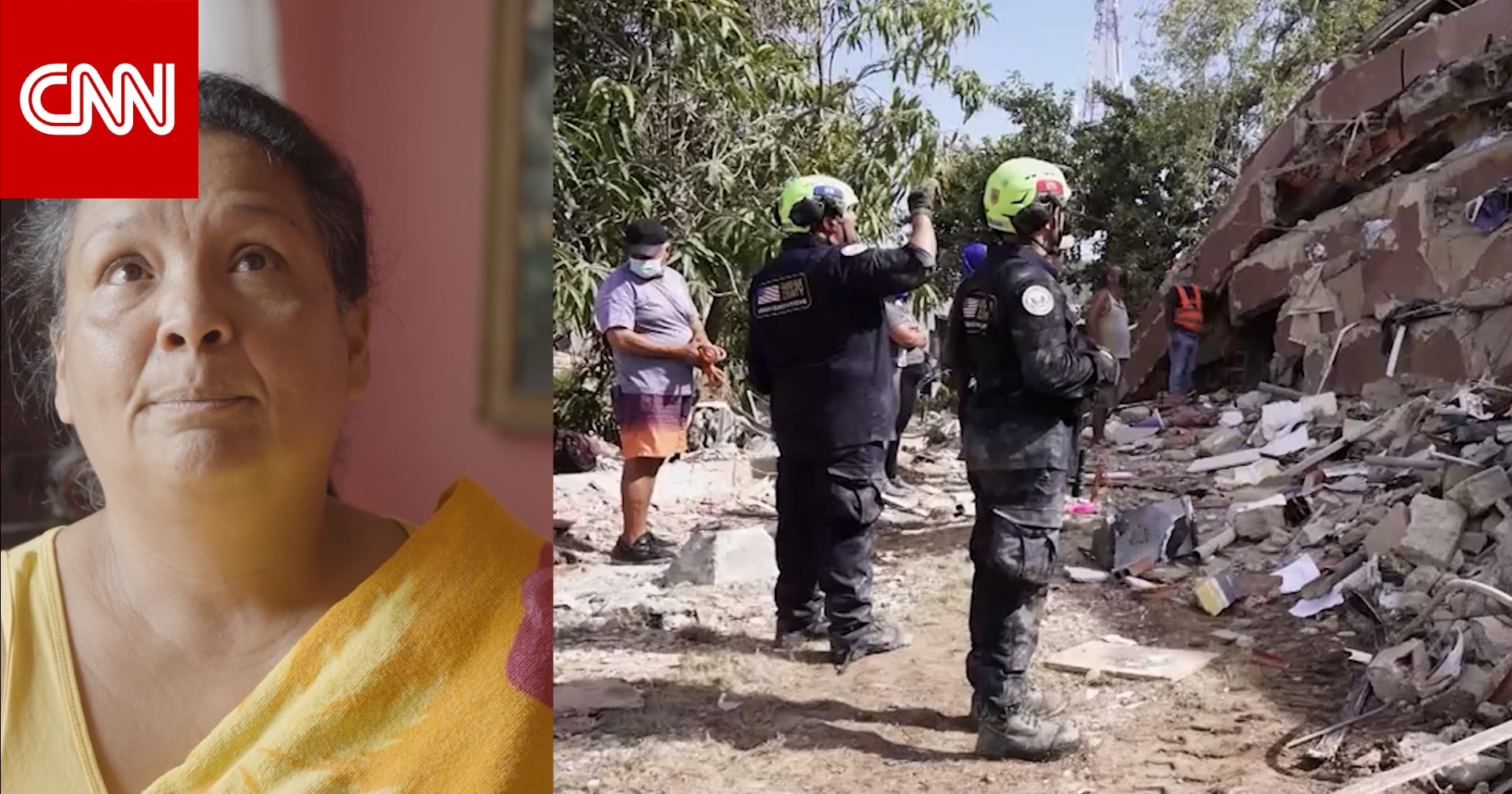
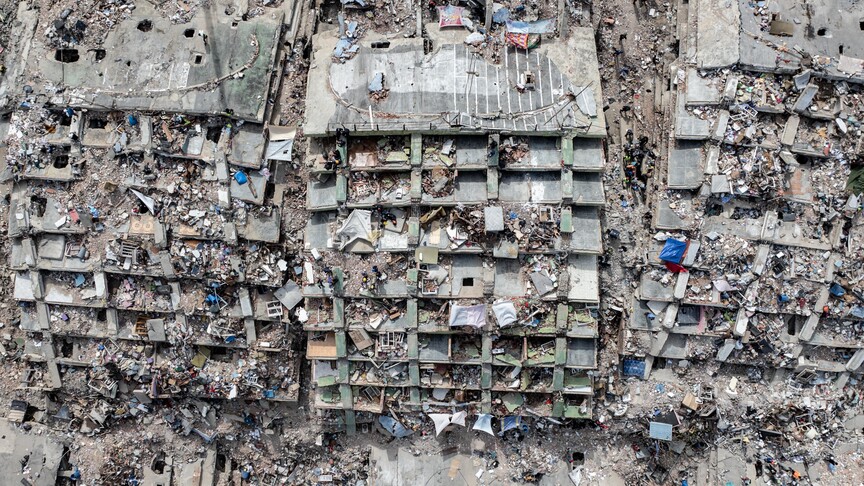
Each day, Ivan Chino returns to the ruins of his La Guaira neighborhood, sifting through shattered concrete from the June 24 earthquakes—magnitudes 7.2 and 7.5—no longer searching for survivors but for the remains of seven family members.
Chino’s parents, his grandson, two nieces and other relatives disappeared beneath the rubble when their apartment building collapsed. His wife and children survived.
Armed with little more than shovels, pickaxes and determination, Chino spends hours every day alongside relatives and volunteers, hoping that one small discovery will finally bring an end to weeks of agonising uncertainty.
“Nothing will stop us,” he said. “We will keep searching with our hands, our fingernails, shovels, hammers – whatever we have. We owe it to our families. This is our pain.”
Chino's ordeal is a tragically familiar scenario for many families in La Guaira.
Although the official death toll has risen to more than 5,000, thousands of families are still searching for answers about relatives who disappeared beneath collapsed buildings. Between the confirmed deaths and the unknown fate of the missing lies an emotional limbo that has become one of the earthquake’s deepest scars.

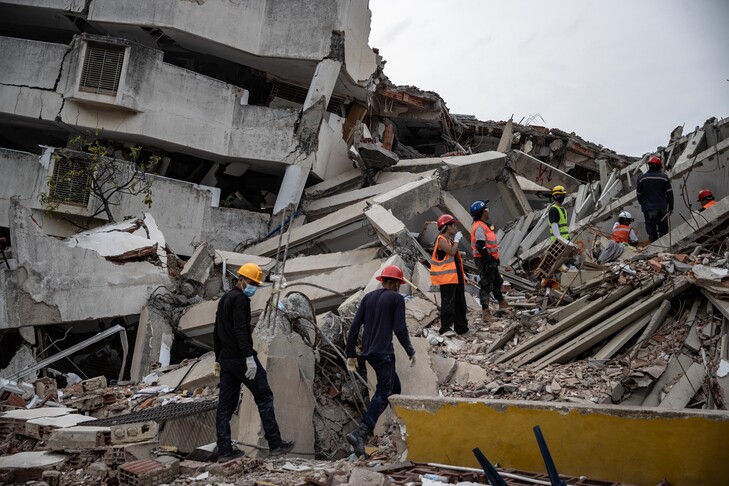
Across the city, excavators continue removing debris from residential blocks reduced to mountains of concrete. Yet for families, every slab lifted carries the hope that their loved ones might finally be found.
The greatest challenge, Chino said, is not the determination to continue searching, but the shortage of heavy machinery capable of safely moving enormous concrete blocks. Many families believe that faster access to specialised equipment could accelerate recovery efforts, while authorities continue coordinating debris removal across the worst-affected neighbourhoods.
As the days pass, the search for the missing moves beyond the ruins.
In temporary field offices established by the authorities, families submit reports, photographs and personal details of missing relatives. Officials review information, cross-check records and work to identify those recovered from the rubble.
For grieving families, these offices represent another stage of the search – one conducted with paperwork rather than rescue tools, but driven by the same hope of finally learning what happened to those they lost.
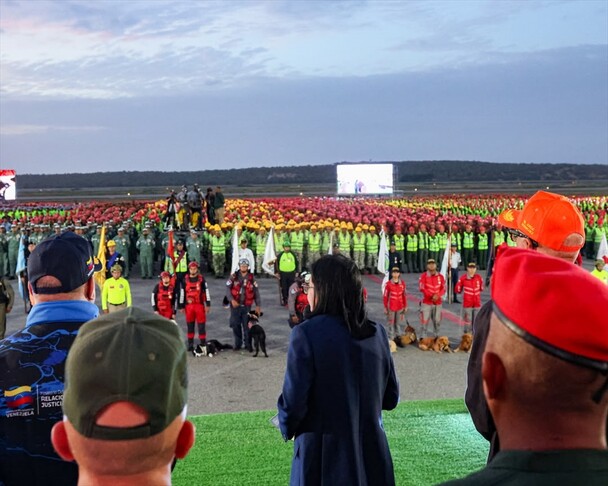
Search and recovery teams insist their work is far from over.
“We rescued around 280 people alive and recovered nearly 477 bodies,” said Dani Herrera, one of the search coordinators in La Guaira. “Even today, we continue recovering victims and clearing debris.”
His words reflect how the disaster has evolved.
In the first days after the earthquakes, rescuers raced against time to find survivors trapped beneath collapsed buildings. Weeks later, the mission has shifted from rescue to recovery – retrieving the dead, clearing devastated neighbourhoods and helping families find long-awaited answers.
For many residents, the uncertainty has become the hardest burden to bear.
Without knowing the fate of a missing relative, there can be no funeral, no grave and no chance to begin mourning.
In La Guaira, the scale of the tragedy is no longer measured only by collapsed buildings or casualty figures. It is measured by parents waiting for children who never returned, by husbands searching for wives, and by grandparents hoping that someone, somewhere, will recognise the name of a missing loved one.
For Chino, giving up has never been an option.
Every day he returns to the same ruins, convinced that finding his relatives is about more than recovering bodies. It is about restoring dignity to those whose lives ended beneath the rubble.
Weeks after the twin earthquakes, most families are no longer hoping for miracles.
What they seek now is certainty; the chance to know where their loved ones are, to bury them with dignity, and to ensure they are remembered not as numbers on a missing persons list, but as people whose lives mattered.
The emotional toll of uncertainty compounds the physical destruction. With heavy machinery in short supply, families face an agonizing wait for closure. The search continues, driven by the hope of finally laying loved ones to rest.
Original source: Al Jazeera

Comments (0)
Be the first to comment.