Sisi: No Popular Normalization Without Just Peace Ending Occupation
Calls for preventing failure of Gaza and Iran agreements, directs to revitalize party life and finalize preparations for local council elections...
Cairo / Anadolu
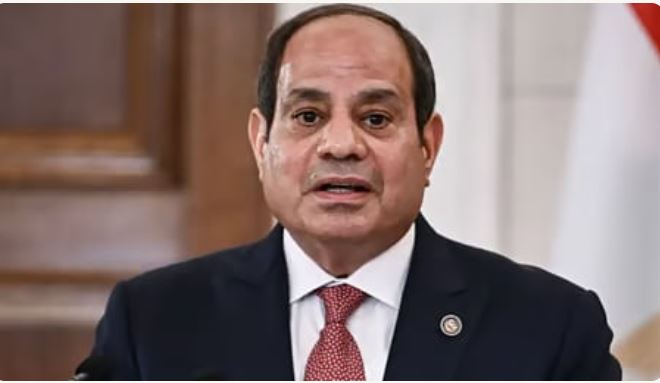
Egyptian President Abdel Fattah el-Sisi said there is "no popular normalization" with Israel without a just peace that ends the occupation and supports the establishment of a Palestinian state.
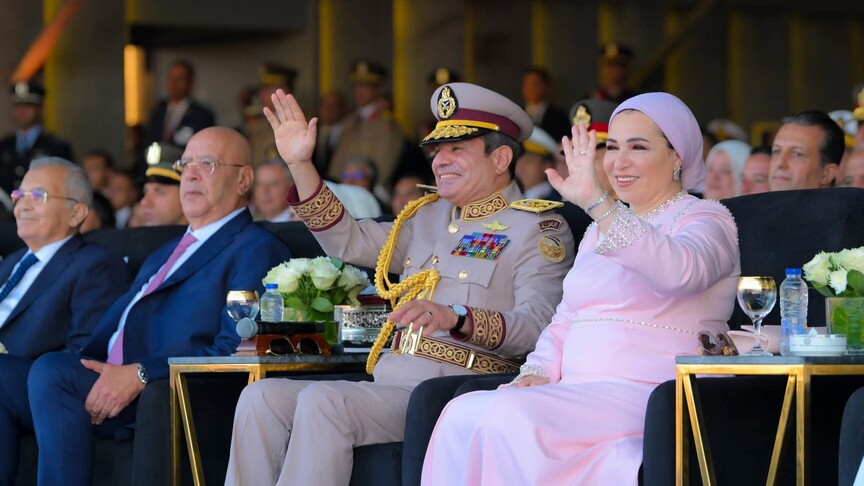
This came in a speech on Saturday evening during the inauguration ceremony of the state's strategic command in the new capital east of Cairo, according to a statement from the Egyptian presidency.
Regarding the Palestinian issue, el-Sisi said that Egypt, as the first to sign a peace agreement with Israel in 1979, affirms that the radical solution to Middle East conflicts lies in reaching a comprehensive and just peace agreement that ends the Palestinian issue and establishes a Palestinian state with East Jerusalem as its capital, in accordance with international legitimacy resolutions.
He added: "No lasting peace, no real stability, no popular normalization, except with a just peace that ends the occupation, stops injustice and aggression, restores rights to their owners, and provides security for all."
He considered that a just peace grants the peoples of the region "an opportunity to live in stability and prosperity, and launches a new era of cooperation and prosperity, and a better future that our peoples deserve."
In 1948, Israel was established on lands occupied by armed Zionist gangs that committed massacres and displaced at least 750,000 Palestinians. Then Tel Aviv occupied the rest of the Palestinian territories, and it refuses to withdraw and to allow the establishment of a Palestinian state stipulated in UN resolutions.
Gaza and Iran agreements
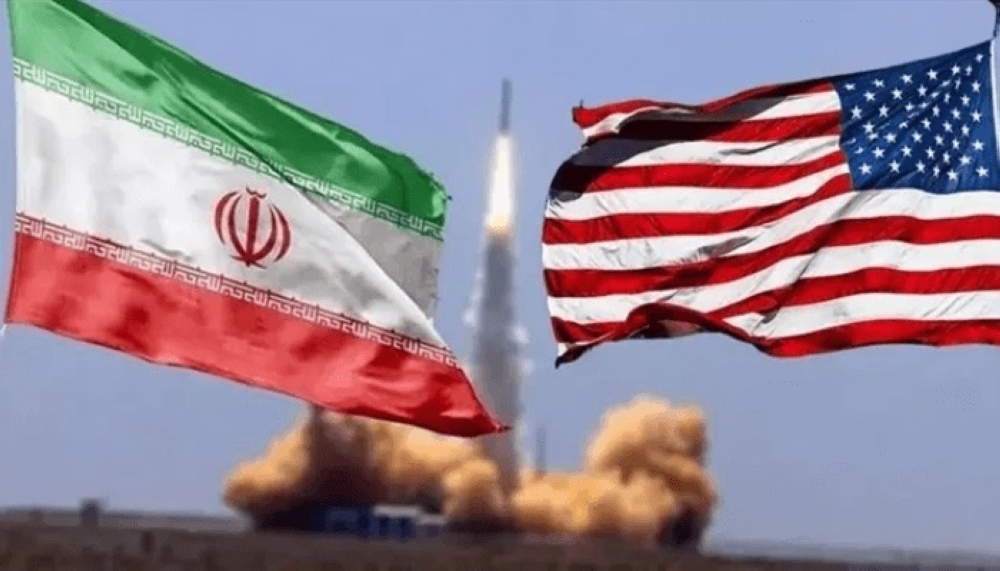
El-Sisi also called for supporting the ceasefire agreement in the Gaza Strip and the agreement to stop the war between the United States and Iran, and preventing any attempts to thwart, circumvent, or undermine them.
On October 8, 2023, Israel, with US support, began its genocidal war in Gaza, which lasted two years and left over 73,000 martyrs and more than 173,000 wounded Palestinians, most of them children and women.
Despite the ceasefire agreement announced on October 10, 2025, Israel continues the genocide through daily bombings that have resulted in the martyrdom of more than 1,050 Palestinians and the injury of over 3,400, most of them children and women.
Meanwhile, Washington and Tehran signed a memorandum of understanding on June 18 last year, and are engaged in negotiations to end the war that the United States and Israel started against Iran on February 28 last year.
Strategic Command Headquarters
Regarding the state's strategic command, el-Sisi said it represents "a qualitative leap in the system of command, control, and operations management, possessing an advanced technological infrastructure, secure communication systems, and superior capabilities for collecting and analyzing information, and linking leadership and executive levels in one framework."
He added: "This command is not only concerned with managing military situations, but is a fundamental pillar in the state's ability to face challenges and exceptional circumstances."
He continued that it "embodies a firm doctrine that protecting homelands is a responsibility that cannot tolerate negligence, and that deterring anyone who dares to infringe on Egypt's security and sovereignty is a sacred duty, and that Egypt's borders are a red line protected by the will of its people and guarded by the men of its armed forces."
He stressed that "the state will never allow encroachment on the capabilities of its people, while adhering to peace for those who want peace, and will bow only to God Almighty."
Exceptional crises
El-Sisi touched on what he described as "successive exceptional crises" faced by Egypt, starting from the repercussions of events in the country between 2011 and 2014, passing through the "war on terror," then the COVID-19 pandemic in 2020, the repercussions of the Ukraine war in 2022, reaching the Israeli genocidal war in Gaza in 2023, and finally the war related to Iran at the end of last February.
He said that these crises resulted in "heavy losses," including the loss of more than ten billion dollars in Suez Canal revenues as a result of attacks on ships in the Bab el-Mandeb strait.
He added that they also included rising energy and food prices, disruption of supply chains, along with waves of displacement of millions of people to Egypt.
El-Sisi expressed his appreciation to his US counterpart Donald Trump, saying that his efforts resulted in reaching the "Sharm el-Sheikh agreement" to stop the war in Gaza in October 2025, and then the agreement to stop the war between Washington and Tehran.
He stressed "the need to support these agreements, insist on their full implementation, and prevent any attempts to thwart, circumvent, or undermine them."
Local elections
On the domestic front, el-Sisi recalled the events of 2011, saying that God "saved Egypt," and that countries have gone through circumstances since that year "that they are still suffering from to this day."
He added: "In 2011, the dollar price was six pounds, now it is 50 pounds, and the state lost 450 billion dollars, the price of which we all pay."
In 2011, popular protests began in Egypt that toppled the regime of then-President Hosni Mubarak (1981-2011).
El-Sisi announced that he directed the government to "open the door for objective media dialogue that includes opinion and counter-opinion."
He called on Minister of State for Information Diaa Rashwan to hold an annual meeting, initially on December 3 of each year, to discuss the state of Egyptian media, associated challenges and opportunities, and to come up with practical recommendations for its continuous development.
He also directed to "work on revitalizing party life, qualifying political and youth cadres, and completing the necessary preparations for holding local council elections, thereby entrenching popular participation and enhancing its role in local administration."
No local elections have been held in Egypt since 2008, and a judicial ruling was issued in 2011 dissolving all local councils, and Egypt has since been without elected local councils, pending parliament's approval of the "Local Administration Law."
Local councils monitor government agencies in the regions and work to improve services.
Original source: Anadolu Agency



Comments (0)
Be the first to comment.