Sudan Between Flame Throwers and Aid Corridors
SummaryA successful ceasefire cannot be crafted without a decisive international stance on arms flows to the parties of the conflict, and that requires imposing smart and strict sanctions targeting networks of companies and cross-border economic entities that supply the warring parties with fuel, weapons, and military technology, thereby raising the cost of continuing the war option and making engagement with diplomacy the rational choice.
Cairo is witnessing intensive diplomatic moves, mostly conducted away from the spotlight, culminating in an unannounced meeting between First Lieutenant General Shams al-Din al-Kabashi, Deputy Commander-in-Chief of the Sudanese Armed Forces, and Masad Boulos, the US envoy and adviser assigned to regional files. This strategic move comes at a time when the Sudanese war has reached a critical stage of military intransigence and political deadlock, as field frontlines intertwine with fundamental changes in the calculations of regional and international balances.
This meeting reflects the desire of international parties to find a way out of the worsening humanitarian catastrophe, while the moves of the Sudanese military leadership express a strategy based on hedging and political maneuvering aimed at improving the field and negotiating conditions for the military institution, and preventing the collapse of national state authority in the face of the expansion of non-state armed actors.
While Cairo is keen to support the legitimacy of Sudanese state institutions and its territorial integrity and rejects the rise of armed militias on its southern borders, it is simultaneously aware of the exorbitant economic and security cost of a prolonged war of attrition that would result in the influx of millions of refugees and deepen regional instability. Accordingly, Egyptian diplomacy seeks to facilitate direct communication channels that ensure reaching a formula of security balance that protects the Sudanese state from disintegration and alleviates humanitarian and political pressures on the region.
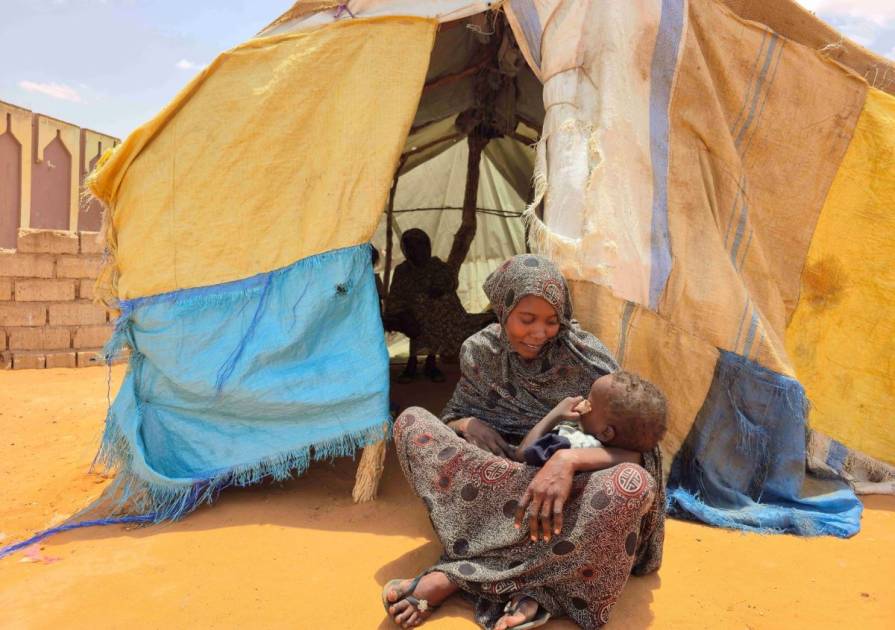
From the American side, the moves of envoy Masad Boulos are driven by the US administration's desire to achieve a tangible breakthrough in the Sudanese file, which has become the world's largest displacement and humanitarian catastrophe. Previous American approaches faced structural obstacles due to the divergence of agendas among regional powers and the rigidity of the political and military positions of the two warring parties.
Therefore, Washington has adopted a back-channel strategy, through direct communication with military leaders who have the ability to make decisions and wider margins for political maneuver within the Sudanese Sovereignty Council. In Western circles, Lieutenant General Shams al-Din al-Kabashi is seen as a pivotal figure capable of leading a realistic trend within the armed forces and balancing the more radical wings that reject flexible political solutions.
Similarly, the US side and regional mediators seek to support the leadership of the Sudanese army to open safe and sustainable humanitarian corridors across frontlines, specifically in the regions of Kordofan, Khartoum, and Al Jazirah, while providing mutual guarantees to halt strategic aerial and artillery bombardment during periods of aid flow, and allowing international organizations to operate without bureaucratic or security obstacles. This equation aims to transform the humanitarian file from a tool of military pressure into a space for building strategic trust between the warring parties under direct international supervision.
In return, the Sudanese Armed Forces, which face field challenges and continuous logistical pressures on multiple fronts, view the proposed humanitarian ceasefire from a tactical military and complex political perspective. The army leadership aims, through responding to Boulos's proposals, to achieve a set of strategic objectives, including testing the extent of the Rapid Support Forces' commitments.
Naturally, there are reservations about the current approach from Sudanese civilian forces, which believe that managing negotiations through secret or bilateral meetings in regional capitals, away from Sudanese civilian forces, perpetuates the equation of legitimizing warlords. Adherents of this view believe that any humanitarian ceasefire formulated in this way will not lead to ending the war, but will grant the two warring parties international recognition as de facto authorities, and entrench the current geographical control boundaries, thereby paving the way for the actual division of the country into permanent military zones of influence, and excluding the democratic and civilian option from Sudan's future.
Regardless of current assessments regarding the implementation of any humanitarian ceasefire or ceasefire in the Sudanese environment, this approach collides with the nature of hybrid threats and the overlap of complex security sectors, which render traditional peacekeeping tools ineffective on the ground. This is due to several reasons, including that control over relief routes is a tool of geo-economic and military conflict between the two sides. The armed forces leadership insists that all international aid pass through ports and airports under its control, such as Port Sudan port and Dongola airport, to ensure it undergoes sovereign inspection and prevent any logistical support, fuel, or advanced medical equipment from leaking to the Rapid Support Forces. In contrast, the Rapid Support Forces control vital overland road networks in the west, center, and Khartoum, and engage in extortion and detention of aid convoys, turning humanitarian assistance into a hostage of military competition and the imposition of mutual conditions.
Moreover, the war is no longer confined to two regular and semi-regular parties; the Sudanese arena has seen an intense entry of regional armed struggle movements, such as the Darfur and Kordofan movements, alongside local militias and popular resistance of an ethnic and tribal nature. This military fragmentation means that many field commanders have their own local agendas and security calculations, increasing the likelihood of random violations of any declared ceasefire.
Based on that, four future scenarios can be identified for the course of current diplomatic efforts regarding the ceasefire and the Sudanese crisis: one is that the track to reach an agreement imposing local and temporary ceasefires linked to specific timetables for opening specific humanitarian corridors (such as the Adre crossing or the Al-Daba'a-Fasher routes) succeeds.
This scenario does not lead to a comprehensive halt to the war or a political settlement, but rather produces a regionally low-stability, highly fluid system, as military operations and rounds of field attrition continue on some fronts, while the rhythm of conflict is controlled on other fronts to prevent complete humanitarian collapse and secure the minimum flow of aid.
If that track fails due to the Rapid Support Forces committing major and strategic field violations (such as attempting to invade new states in eastern or northern Sudan) to impose a new geographical reality before the agreement matures, this would lead to closing the chapter on current diplomatic efforts and returning to the zero-sum military confrontation. Indicators of this scenario are evident in the escalation of military decisiveness rhetoric in the media, and increasing flows of external military support to both sides, encouraging the adoption of field resolution options.
Original source: Independent Arabia




Comments (0)
Be the first to comment.