They fled the war, but return hindered them... The tragedy of Sudanese refugees
Summary: Chad is the largest host country for Sudanese refugees fleeing the war, but at the same time it has become a complex station for those wishing to return to their homes, particularly to the Darfur states.
For many, the journey back was not the end of the ordeal of asylum, but rather an extension of it in different forms. The road that Sudanese crossed fleeing the war has today become a road fraught with new obstacles, from the closure of crossings, disruption of transportation, high travel costs, lack of humanitarian support, to the continued security risks on some border routes.
Over more than three years, the war turned the lives of millions of Sudanese into an open refugee journey, forcing them to leave their cities and villages under the impact of battles, the widening scope of destruction, and the near-total collapse of basic services. Families took long and arduous overland routes to neighboring countries, including Egypt, Chad, South Sudan, Libya, Uganda, Ethiopia, and others, in one of the largest refugee waves in the world.
For many, the journey back was not the end of the ordeal of asylum (Getty)
With the Sudanese Armed Forces regaining control of the capital Khartoum, Gezira State, and large parts of the central states since late 2024 and during 2025, following the withdrawal of the Rapid Support Forces (RSF), the outlines of a new phase in the Sudanese crisis have begun to emerge. These field developments, along with the economic deterioration in countries of asylum, have pushed increasing numbers of Sudanese to decide to voluntarily return to their homeland, despite continued fighting in Darfur and parts of Kordofan, and the poor humanitarian conditions in many return areas. The United Nations indicates that hundreds of thousands of Sudanese have already returned to their areas or have begun the journey back, while stressing that the conditions necessary for a large-scale and sustainable return have not yet been met.
For many, the journey back was not the end of the ordeal of asylum, but rather an extension of it in different forms. The road that Sudanese crossed fleeing the war has today become a road fraught with new obstacles, from the closure of crossings, disruption of transportation, high travel costs, lack of humanitarian support, to continued security risks on some border routes. Between state borders, crossing points, and reception centers, hundreds of returnees found themselves trapped in a dire humanitarian situation, unable to settle in asylum countries or reach their homes.
In a notable statement, UN High Commissioner for Refugees Filippo Grandi described the Sudan crisis as 'a crisis that does not get the attention it deserves despite being the largest displacement crisis in the world,' warning that the decline in international funding not only threatens the conditions of refugees in neighboring countries, but also undermines opportunities for safe and voluntary return, and pushes families to make return decisions driven by economic despair rather than improved conditions inside Sudan.
Chad... a complex station
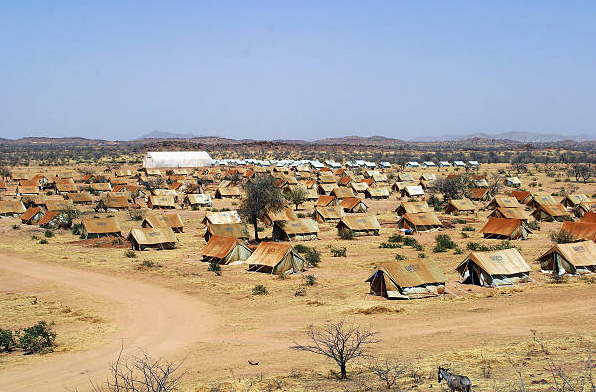
Chad is the largest host country for Sudanese refugees fleeing the war, but at the same time it has become a complex station for those wishing to return to their homes, especially to the Darfur states. Since the beginning of the war, more than one million people have crossed into Chad through dozens of border crossings in the regions of Wadi Fira, Sila, and Ennedi East, including hundreds of thousands of Sudanese refugees who settled in camps and temporary shelter sites along the border strip. Data from the UN High Commissioner for Refugees indicates a continued flow of those fleeing Sudan, along with an increase in the number of those wishing to return to areas that have seen relative calm, but the conditions for return remain extremely complex.
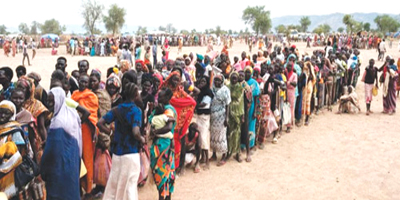
Despite the desire of many families to return, thousands of refugees face a reality that leaves them stuck between the country of asylum and the country of origin (Getty)
And despite the desire of many families to return, thousands of refugees face a reality that leaves them stuck between the country of asylum and the country of origin. The continued fighting in large parts of Darfur, shifting control lines, and insecurity on border roads push many to postpone their journey or stop in transit areas waiting for conditions to improve. This hinders the ability of international organizations to organize return operations or provide adequate support to returnees, at a time when Chadian camps are already suffering from increasing pressure on basic services.
UN reports indicate that families leaving the camps face many dangers during the journey, including long desert distances, scarcity of water and food, and difficulty accessing healthcare, while many returnees discover upon arrival in Sudan that their villages have been destroyed or that basic services are still absent, forcing some to stop in border towns or reception centers before continuing the journey, or even to consider seeking asylum again. Relief agencies stress that safe and sustainable return from Chad requires, above all, improved security conditions in Darfur, opening safe humanitarian corridors, and increasing international funding for transportation, reception, and reintegration programs, so that thousands of families do not remain stuck between refugee camps and their homeland's borders.
For its part, the UN High Commissioner for Refugees warned that the continued insecurity in Darfur makes any collective return from Chad premature, stressing that many refugees show a strong desire to return, but they back down after receiving information from relatives inside Sudan about ongoing clashes or lack of services, leaving thousands of families in a state of 'forced waiting' between asylum and return.
Libya... a stumbling point
Libya was also one of the most prominent asylum and transit stations for Sudanese fleeing the war, before it recently turned into a stumbling point for a number of refugees wishing to return to their country. This return encountered administrative and security obstacles that led to the detention of dozens of returnees at the Sirte gate, where their journey towards eastern Libya and then the Kufra crossing to Sudan was halted, turning the return journey into an open humanitarian crisis.
The crisis of Sudanese refugees in Libya coincided with the implementation of a decision by the Libyan government appointed by the House of Representatives banning the entry of nationals of Sudan, Eritrea, Ethiopia, and Somalia into Libya through all ports (Getty)
More than 60 people, including five families with women and children, remained stranded for days in exposed desert areas, without adequate shelter, sufficient food and water supplies, or healthcare, amid high temperatures and difficulty communicating with their families.
The crisis coincided with the implementation of a decision by the Libyan government appointed by the House of Representatives banning the entry of nationals of Sudan, Eritrea, Ethiopia, and Somalia into Libya through all ports, but the implementation of the decision practically extended to include Sudanese already inside Libyan territory seeking to leave, even though the decision concerns regulating entry, not preventing transit or exit, raising legal questions about the legality of preventing people trying to leave the country and return to their homeland. The lack of coordination between authorities in western and eastern Libya led to the sudden closure of the usual transit route through Kufra, while new groups of Sudanese continued to arrive at the Sirte gate believing the road was still open.
Original source: Independent Arabia


Comments (0)
Be the first to comment.