Taiwan Crisis on the Horizon for China and the US

There are developments that portend danger in the western Pacific, and the United States is not ready for them.
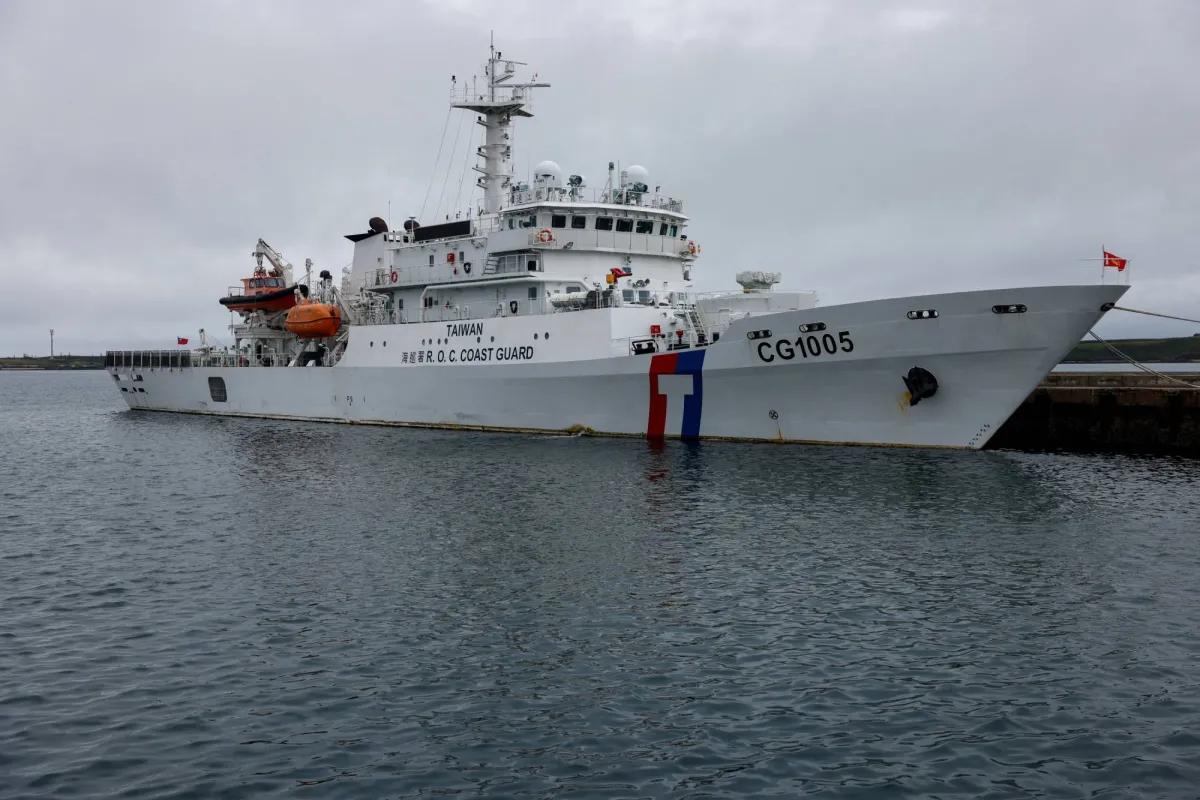
Earlier this month, the Chinese coast guard, with three ships, continued operating in international waters off Taiwan's east coast, demanding that the vessels disclose their ports of origin and destinations. China did not stop these ships, but it was asserting its right to monitor maritime traffic near Taiwan, and perhaps foreshadowing a major crisis that may be only a year or two away.
Many China watchers are worried about the outbreak of a Taiwan crisis next year. According to US intelligence findings, Chinese President Xi Jinping has ordered the People's Liberation Army to be ready to move on Taiwan by 2027. However, the pivotal moment may be in January 2028, the date of the next Taiwan presidential election, when Xi may decide to settle the matter.
True, the scene appears calm on the surface. The last major crisis related to Taiwan occurred about four years ago, when then-House Speaker Nancy Pelosi visited the island. US-China relations seem in a temporary truce, as Presidents Xi and Trump committed to 'constructive strategic stability' in their meeting last May in Beijing.
But don't be fooled by the apparent calm.
China continues to amass the military force necessary to subdue Taiwan and force it to unite with China, with a constant escalation of daily pressure through actions below the threshold of direct war. Taiwan is continuously surrounded by Chinese naval vessels, and China conducts surprise exercises simulating invasion or blockade. Beijing relentlessly bombards Taiwan with cyberattacks, disinformation campaigns, and espionage operations. The scene only appears calm because Xi has succeeded in normalizing this multi-front psychological war.
China's goal is victory without fighting, while keeping the military hammer raised if necessary.
Chinese propaganda describes Taiwan President Lai Ching-te as an extremist seeking independence. Xi will not stand idly by if his party's base, the Democratic Progressive Party, makes strong statements about Taiwan sovereignty. Xi may resort to influencing the election course through more coercive measures, such as missile tests and major military exercises that cause panic, in a message that Lai's victory would bring four more years of danger.
However, since 2016, this pressure has driven Taiwanese voters away from candidates favored by Beijing. Hence a second possibility emerges: that Xi may mishandle his response to an election result he does not like.
Xi's preferred candidate is Cheng Li-won, chairwoman of the opposition Kuomintang party, who traveled to Beijing this spring to strengthen ties with the mainland. However, Cheng won her position in a closed vote limited to party members.
Cheng's policies may alienate moderate voters who already distrust the Kuomintang on security issues. Lai - despite his low popularity, though gradually improving - may narrowly win a second term. Or perhaps the Kuomintang could win by abandoning Cheng in favor of a more sober and strategically aware candidate.
In either case, Taiwan will have a government that will not pursue the path of unification with the same degree or speed that Xi wants. The resulting frustration may lead to further escalation of pressure.
This would not necessarily require a military invasion. Based on recent Chinese coast guard moves, Xi may instead impose a 'customs blockade'. Beijing may selectively harass air and sea movement to and from Taiwan, and require ships bound for Taiwan to first pass through customs on the mainland. The goal of all this is to shock the Taiwanese system by revealing how easily China can strangle the island, and how difficult it is for the US to counter.
Breaking such a blockade would be difficult under any circumstances, requiring the US to exert counter-pressure on Beijing - perhaps combining trade, financial, and technological sanctions, international diplomatic condemnation, and preparations to break the blockade by military force if necessary - without leading to uncontrolled escalation. Worse, Trump's retreat in the tariff war he ignited last year suggested to Beijing that Washington would not risk a coercion battle.
Trump has already indicated he has little appetite for a Taiwan crisis, and he is delaying weapons deals to avoid spoiling his upcoming meeting with Xi, scheduled for September. Moreover, the Pentagon's focus is on the invasion threat more than on a blockade scenario or other non-decisive scenarios. By early 2028, the US will be absorbed in its own electoral contest. Xi may press hard in hopes of forcing Taiwan to its knees while Washington's attention is elsewhere.
There are steps the US should take to prepare for this possibility. Trump should complete the planned $14 billion arms deal with Taipei, to show he will not appease Xi at the expense of Taiwan's security. The US should formulate options to pressure China's economic pain points, such as tightening restrictions on its access to jet engine components and advanced semiconductors. It should intensify preparations with Japan and other partners to support Taiwan in any potential crisis.
The Trump administration is credited with expanding this military cooperation through more ambitious multilateral exercises and deployment of missiles and other advanced capabilities, and so on. While maintaining close relations with the Lai government, Washington should also dissuade it from provocative statements during the election campaign.
Firm deterrence and sober diplomacy are both necessary if 'constructive strategic stability' is to turn into the next major Taiwan crisis by 2028.
* In coordination with Bloomberg
Original source: Asharq Al-Awsat




Comments (0)
Be the first to comment.