Terror Invades Sudan's Banks.. Crocodiles 'Rebel' and Devour Farmers

شهدت مناطق على ضفاف نهر النيل في السودان انتشاراً كثيفاً للتماسيح، ما أسفر عن مقتل مزارع جراء هجوم تمساح ضخم. وتواصل حملات الصيد وسط تحذيرات من شرطة الحياة البرية.
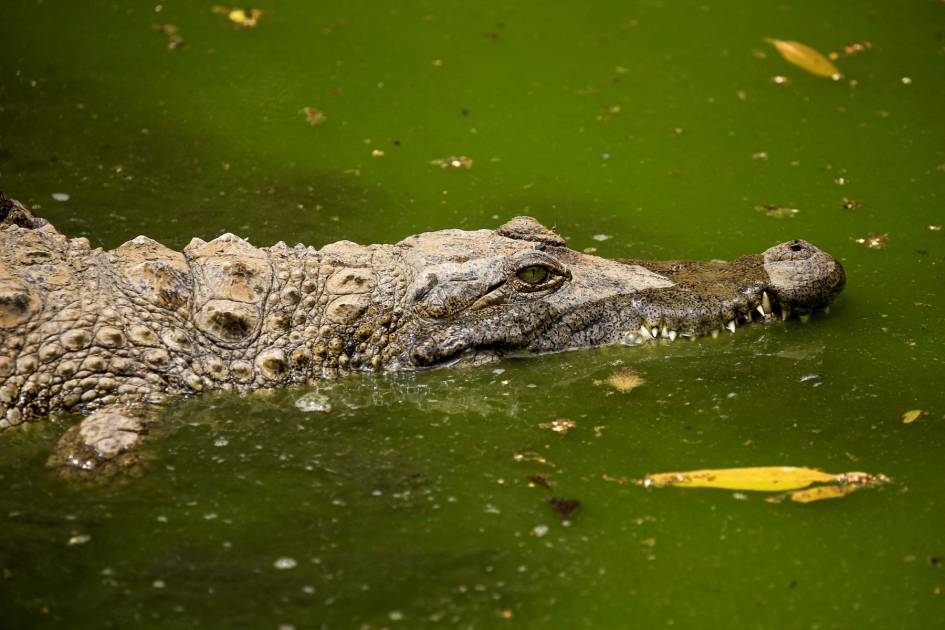
The sudden spread of dozens of crocodiles in several villages and areas near the banks of the Nile River in Sudan has caused severe terror among residents of those areas.
Fears increased further after a huge crocodile devoured a farmer while he was working on the banks of the Nile on the island of 'Sai' in northern Sudan.
In front of the residents' eyes and ears, the crocodile grabbed the farmer and dragged him into the river, flailing him until it swallowed him entirely.
It was not limited to northern Sudan only, but a number of crocodiles appeared in the 'Al Kalakla' suburb south of the capital Khartoum.
Although crocodiles have appeared in the Nile River for more than 200 years, the current appearance seems different, as a larger number than usual has been recorded in several areas.
Related news
Real terror
Groups of young people from villages along the Nile banks have begun carrying out extensive campaigns to avert the danger.
Activists on social media have posted photos and videos of young people conducting a campaign to hunt these crocodiles, but the wildlife police warned of the risks that may accompany this campaign.
Mohamed Nasr, a resident of one of the villages in the Dongola area in the north of the country, said the situation has become dangerous. He added: 'We have recently noticed a dense spread of crocodiles on the banks of several towns in the region bordering the Nile.'
He explained that farmers and their children face a real danger, especially in the morning periods when farming, fishing, and water fetching activities intensify, which also coincide with increased crocodile movement.
Reasons for the rebellion
Dr. Mohamed Al-Mekki Ali Al-Badawi, professor of wildlife at Sudan's Sennar University, summarizes the main factors that increase the aggressiveness of crocodiles in losing their traditional basking areas due to agricultural expansion and noise from increased use of water pumps.
Al-Badawi points to the lack of accurate statistics on the number of crocodiles, their reproduction rate, and distribution areas.
According to Al-Badawi, the sudden rise in water leads to flooding of vegetation and increases crocodile movement toward the shore, while the receding water, exposure of roots, and expansion of sand areas help crocodiles reproduce.
While crocodiles are characterized by their superior ability to stalk, they also benefit from the lack of visibility caused by water turbidity during the autumn season.
Related news
Important warnings
The Sudanese police's wildlife protection forces have warned of the danger of swimming in rivers during the current period, and urged residents of coastal areas to stay away from the Nile banks and adhere to preventive guidelines to reduce risks and protect lives.
It confirmed that its forces are combing the islands and banks of the Nile River, and intensifying awareness of the danger of Nile crocodiles, especially during this period which sees the appearance of large numbers of baby crocodiles.
It pointed out that the 'Nile crocodile' is one of the natural symbols associated with the Nile River, stressing the need to spread awareness of the importance of safe coexistence with it, while seeking to benefit from it in the future through investment projects for crocodile farming, contributing to creating economic value.
The Nile, a lifeline for Sudan, has become a stage for an escalating confrontation between humans and the river's most terrifying reptile. The rising water levels and machine noises have revealed a deep environmental imbalance, turning crocodiles into 'sniper' predators with a ferocious nature on the banks.
According to wildlife specialists' warnings, the radical solution remains contingent on curbing agricultural encroachments, spreading awareness, and scientific investment in breeding these reptiles, before the Nile's banks and islands turn into deadly trap zones.
unmute
Crocodile returns a child's body to his family
Original source: Sky News Arabia

Comments (0)
Be the first to comment.