Trump Confuses Israeli Security Agencies
While some security bodies expect that Israel will not be brought into the range of Iranian missiles at this stage at least, another Israeli security report sees the Iranian decision, so far, not to launch missiles towards Israel as stemming from deterrence and the realization that attacking the Israeli home front would lead to targeting Iranian infrastructure and carrying out targeted assassinations.
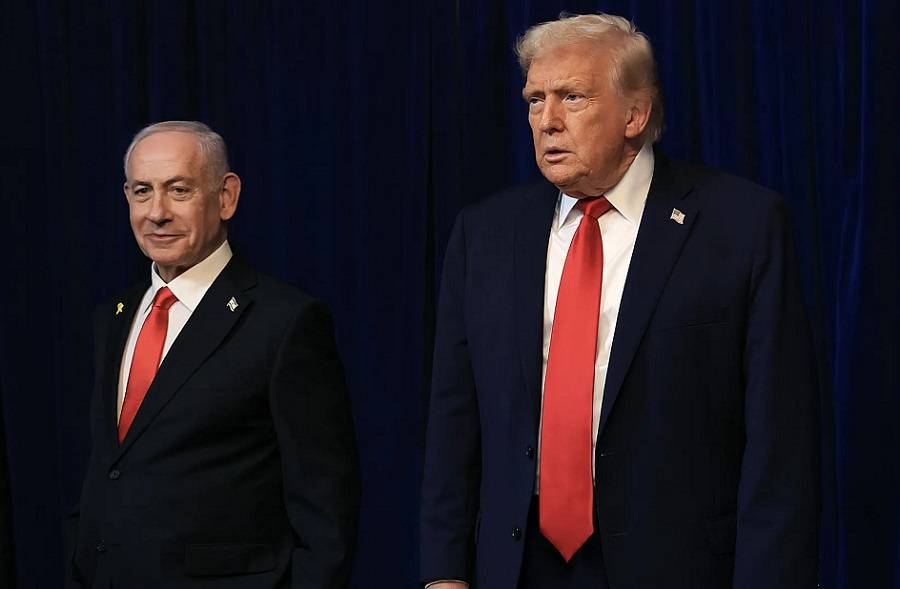
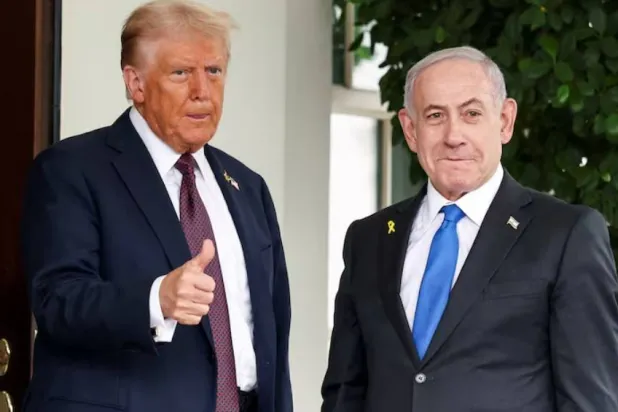
While the contradiction between Tel Aviv and Washington over an upcoming meeting of US President Donald Trump with Israeli Prime Minister Benjamin Netanyahu keeps the visit under a big question mark, the Israeli security establishment faces difficulty understanding President Trump's intentions and plans towards Iran after he decided to return the aerial refueling aircraft to Ben Gurion Airport in Tel Aviv. It discussed in more than one session whether the US president's approach is towards a broad move, or if it is part of a media move aimed only at pressuring the Iranians, in order to restart negotiations from a better starting point on the nuclear file and the Strait of Hormuz.
These circumstances come amid a deepening crisis between Washington and Tel Aviv, specifically with the Israeli government and its Prime Minister Netanyahu, as quoted by more than one US official, which was reflected in the statements regarding the meeting between Trump and Netanyahu. While Netanyahu's office announced the postponement of the agreed meeting between Netanyahu and Trump following the postponement of the funeral of US Senator Lindsey Graham, Channel 12 reporter Barak Ravid quoted senior White House officials saying that no meeting had been set between Netanyahu and Trump. Among the US claims is that Trump was angered by Netanyahu's statement against the F-35 aircraft deal with Turkey, in addition to the rejection of the Israeli withdrawal from Lebanon and Syria.
According to the Americans, Trump did agree to receive Netanyahu, but after two weeks no meeting has been set yet. On top of that, Netanyahu is not particularly popular in the United States lately, according to what Ravid reported, adding, quoting White House officials, that they were very surprised 'by the claims that leaked in recent days to the media in Israel, as if a meeting between Netanyahu and Trump is expected on Monday at the White House.' Two senior officials stressed that at no point in recent days was a meeting with Netanyahu set on the US president's agenda for next week.
The two officials continued saying that when Trump saw this interview, he did not like it at all and was angry, because he did not understand why Netanyahu opposes an arms deal between the United States and Turkey. A senior White House official stressed that Trump believes that Netanyahu has no right to intervene in this matter.
And among these reasons, Ravid points out that Netanyahu has become an unwanted figure in Washington these days 'neither among Democrats nor within the administration itself. And we have seen evidence of that in the vote in the House of Representatives, when 100 Democratic members of Congress, half of the Democratic caucus in the House, voted against providing aid to Israel.'
Ravid noted that US officials confirmed that the vote was not against providing aid to Israel, 'but was the result of a referendum conducted by Democrats on Netanyahu.' On the other hand, US Vice President JD Vance came out of the Republican camp against the Israeli government, considering that it practically undermines the Trump administration's policy on Iran, and even tries to push towards renewing war and opposing the agreement with Iran.
In contrast, coordination between Tel Aviv and Washington remains at a high pace regarding the Iran file. Israeli security assessments indicate that US military attacks on Iran do not worry the Revolutionary Guard, and while some security bodies expect that Israel will not be brought into the range of Iranian missiles at this stage at least, another Israeli security report sees the Iranian decision, so far, not to launch missiles towards Israel as stemming from deterrence and the realization that attacking the Israeli home front would lead to targeting Iranian infrastructure and carrying out targeted assassinations. According to what was quoted from security officials, it would be very difficult for the United States, in such a situation, to stop Israel.
The news site Walla! reported in a report quoting a senior Israeli source that what fuels the atmosphere of escalation is not only the collapse of negotiations and the double game of the Iranian regime, but also the statements of senior regime officials. According to him, the possibility of a broad escalation could occur within a few days.
According to the report, the Americans do not aim to carry out one broad operation in order to bring the Iranians back to effective negotiations from their point of view, but rather to carry out a series of military operations. The senior source added, 'They will advance another degree. Now everything can develop, and the Israeli army must be prepared for that.'
Read more
Israel Updates Its Target Bank in Iran and Prepares for a New Confrontation
"Axios": Trump Asked Netanyahu to Withdraw Forces from Lebanon and Syria
US House of Representatives Rejects Attempt to Stop Aid to Israel
Reports: Israeli Warning Regarding a 'Specific' Iranian Plot to Assassinate Trump
The Israeli army, for its part, continues its preparations on various fronts for the possibility of an Iranian decision to target Israel. The Air Force and air defense systems announced the completion of readiness and preparedness for any sudden escalation, and military and security officials stressed the need for Israel to be prepared 'for a scenario in which the Iranians claim they are attacking Israel because the Americans are using Israel as a logistical base.' A security official said, 'This was the pretext used by the Iranians to attack neighboring countries,' while Defense Minister Israel Katz ordered the army to prepare for what he called 'the everything scenario,' based on the realization that 'we will quickly be dragged again into a confrontation with Iran.'
Between the Two Fronts
Among the expectations discussed by security agencies in Israel is that Iran, fearing a major security escalation in Lebanon, refrains from attacking Israel so far, which leaves room for the army to continue implementing its goals and operations in Lebanon. While awaiting the start of the Israeli withdrawal from the two experimental zones for the Lebanese army to take over, Israel continues its threats rejecting any proposed party to participate in monitoring how the Lebanese army implements its tasks, and revealed a proposal to deploy Italian soldiers in the area to supervise the clearing of weapons and Hezbollah fighters. Additionally, during the Rome talks, it was suggested that the Italian army take over the monitoring and supervision of the Lebanese army in carrying out its mission after the Israeli withdrawal.
Israel, for its part, insists that the Israeli army inspect the model experiment in which the Lebanese army will deploy its forces to the areas from which the Israeli army will withdraw. In contrast, those in Lebanon wanted the Lebanese army to be responsible for the area and the inspection process as well, and after Israel's rejection of UNIFIL, the Italian proposal came, but it has not been decided yet. Security officials said the proposal is under study by the parties.
Original source: Independent Arabia



Comments (0)
Be the first to comment.