Trump Threatens to Bomb Iranian Facilities for Each Attack in Hormuz
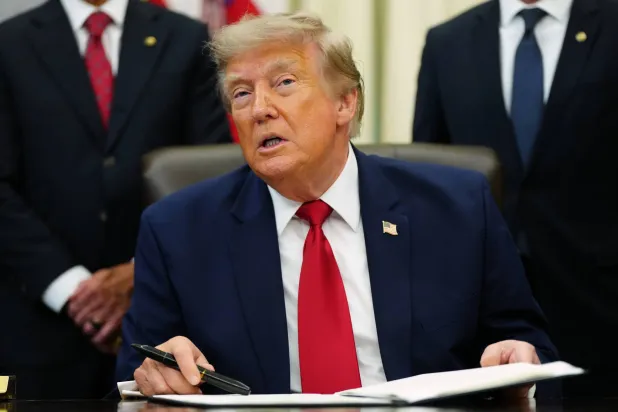
U.S. President Donald Trump on Wednesday threatened to bomb a bridge or power plant inside Iran each time Iranian forces target a ship in the Strait of Hormuz.
U.S. President Donald Trump on Wednesday threatened to destroy a bridge or power plant in Iran for every new attack on a ship in the Strait of Hormuz, a week after U.S. strikes targeted land supply routes to the strait.
Trump said in a post on his Truth Social platform: 'From this moment on, every time the Islamic Republic of Iran fires on a ship in the Strait of Hormuz, whether by missile, projectile, drone, or any other tool or weapon, the United States will bomb and destroy one bridge or one power plant, including those located near Tehran or inside the capital.'
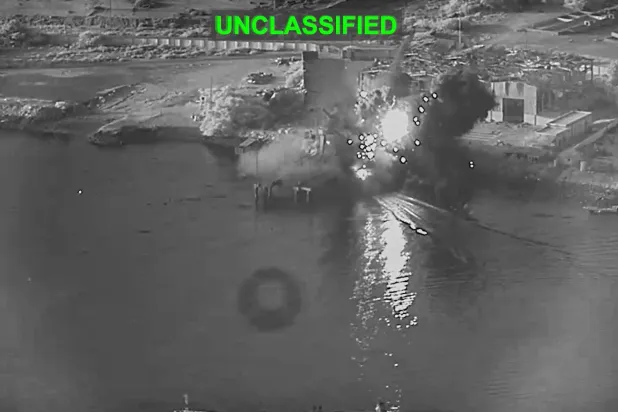
Trump's threat to target Iranian infrastructure was not the first of its kind, nor were bridges new targets in the U.S. campaign. Strikes over the past week have targeted bridges and transport hubs on the road to the southern coast, as part of U.S. operations to cut supply lines to the Strait of Hormuz.
Every operational success in the Middle East begins and ends with service members focused on their missions, including the U.S. blockade against Iran. As of July 21, U.S. forces have redirected 8 commercial vessels and disabled 1 to fully enforce the blockade. pic.twitter.com/e9020BcaCQ
— U.S. Central Command (@CENTCOM) July 21, 2026
Isolating the Strait's Axis
Thus, Trump set a formula for retaliation, stipulating targeting a bridge or power plant inside Iran for each attack on a ship in the Strait of Hormuz.
There was no immediate Iranian response to the threat. Tehran had warned that expanding U.S. attacks on its infrastructure would widen the war, while Iranian forces vowed to continue responding to the United States and its allies.
U.S. strikes in recent days have targeted roads, bridges, and military installations along an axis from Bandar Abbas to Sirik and Jask, as part of operations to cut supply lines to Iranian positions near the strait.
Hours before Trump's threat, U.S. Central Command (CENTCOM) announced the conclusion of the 11th round of strikes, saying they targeted operations centers, naval capabilities, aircraft hangars, drone storage facilities, and military logistics infrastructure linked to the navigation threat.
Alongside the raids inside Iran, the United States continued to enforce a naval blockade on Tehran, another prong of the campaign aimed at imposing transit rules in the strait and curbing Iranian oil trade.
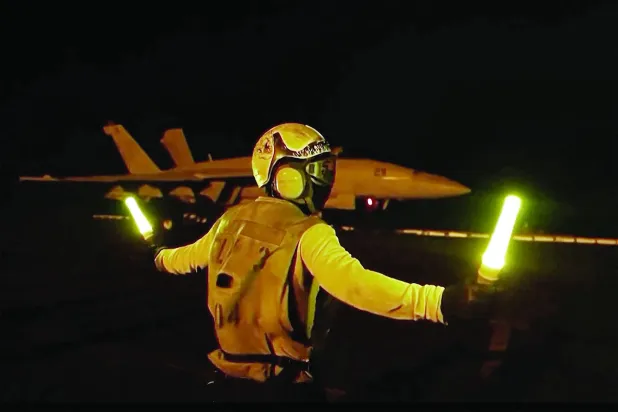
U.S. sailors guide an F/A-18E Super Hornet fighter on the deck of the aircraft carrier USS George H.W. Bush while sailing in the Arabian Sea (CENTCOM)
CENTCOM said U.S. forces had redirected eight commercial vessels and disabled one as of July 21, without clarifying the nature of the action that led to the disablement or the location of the operation.
Washington says the blockade targets vessels involved in Iranian trade, while presenting naval escort operations as a means to protect other commercial ships and ensure continued transit.
CENTCOM reported that its forces had assisted the passage of about 900 commercial vessels carrying about 450 million barrels of crude oil since the beginning of May.
It added that the strait remains open to ships, despite Iranian attacks and disruptions to navigation.
But passage is no longer normal. Ship movements have remained largely limited, with tankers waiting in safer areas, delaying voyages, or relying on escort and transit arrangements determined by forces in the region.
More than 30 ships
CENTCOM said Iran has attacked more than 30 commercial vessels transiting the waterway over the past three months, and that those attacks endangered hundreds of sailors' lives and undermined freedom of navigation.
A tanker was struck off the coast of Oman on Tuesday, forcing its crew to abandon it. The United Kingdom Maritime Trade Operations said an 'unknown projectile' hit the ship.
In a separate statement, the Revolutionary Guard's naval force said two oil tankers were hit after attempting to transit the strait 'illegally'.
It was unclear whether the Iranian statement referred to the same incident or two other attacks, nor was independent information available to determine the number of ships targeted or who carried out each strike.
Iran insists that ships wishing to pass must adhere to the routes and times it specifies, and submit requests to the Iranian authority responsible for managing the waterway.
In response, Washington refuses to grant Tehran sole authority over an international waterway, saying the United States will ensure freedom of transit by force if necessary.
In Manila, U.S. Secretary of State Marco Rubio said allowing a country to control an international passage and impose fees on ships or attack them for non-compliance would set a 'dangerous precedent' that could be repeated in other parts of the world.
0 seconds of 0 secondsVolume 90%
Press shift question mark to access a list of keyboard shortcuts
00:00
00:00
00:00
Possibility of Limited Operations
Targeting bridges and transport hubs adds a new dimension to the U.S. campaign to secure navigation in the Strait of Hormuz, while the possibility of expanding operations to include limited ground maneuvers remains on the table.
U.S. reports before the April ceasefire indicated that the Defense Department had studied deploying additional units, including a brigade of about 3,000 soldiers from the 82nd Airborne Division, as part of preparations for operations that could last weeks.
The reports quoted U.S. officials as saying the options under consideration do not include a full-scale invasion of Iran, but could involve raids by special operations forces or limited infantry units against specific targets.
Strikes on bridges and roads could help cut supplies to Iranian units deployed on the coast and reduce their ability to respond if Washington conducts short operations against missile batteries or naval facilities near the strait.
However, the United States has not yet announced ground operations inside Iranian territory, and presented the movement of additional troops as a precautionary measure that expands the options available to the military command.
Iranian officials warned that the U.S. buildup could pave the way for incursion attempts, saying Iranian forces are preparing to confront any ground entry. Some argued that ground war would be more costly for Washington than the air strike campaign.
Some circles in Tehran speculated that the brandishing of ground forces is a means of pressure or deception, not a decisive sign of a U.S. decision to begin an incursion.
Struggle over Transit Rules
Iranian attacks on ships in the Strait of Hormuz have led to the collapse of temporary transit arrangements, turning the strait once again into the focus of war between Washington and Tehran as the United States resumed strikes and the naval blockade.
0 seconds of 0 secondsVolume 90%
Press shift question mark to access a list of keyboard shortcuts
00:00
00:00
00:00
Original source: Asharq Al-Awsat


Comments (0)
Be the first to comment.