US sanctions against Sudan take effect as Khartoum demands evidence
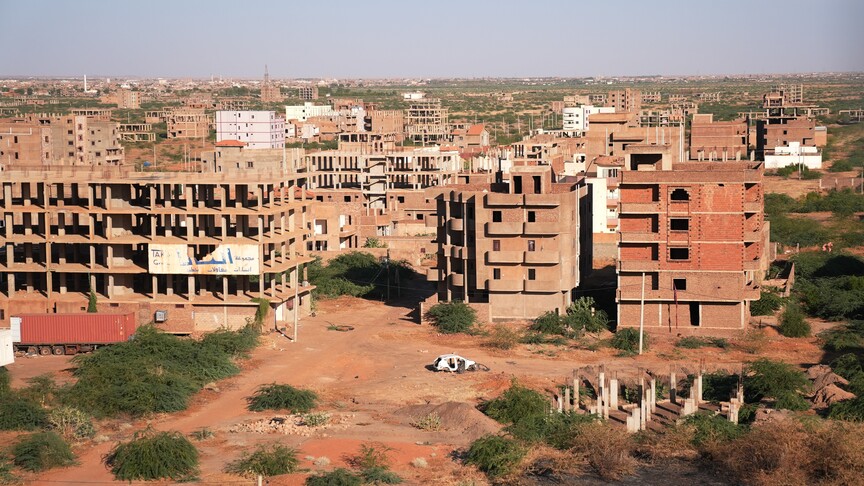
US sanctions took effect on July 20 based on accusations that the Sudanese army used chemical weapons, while Khartoum denied the allegations and demanded the presentation of evidence.
Sudan / Adel Abdel Rahim / Anadolu
** Sudan denies US accusations, affirms its commitment to the Chemical Weapons Convention, and demands Washington provide evidence for its claims
* Sudanese political analyst Osman Fadlallah to Anadolu:
- The military impact of the sanctions is limited, while their economic and diplomatic repercussions are broader
- The sanctions add a new dimension to Sudan's isolation, and the restrictions may weaken financing and investment opportunities
- For the first time, the Armed Forces are facing direct sanctions as an institution
The standoff between the United States and Sudan over accusations of "using chemical weapons" has entered a new phase with the entry into force of additional US sanctions targeting economic and commercial sectors, while Khartoum rejects the allegations, describing the measures as "unilateral and illegal" and based on claims lacking evidence.
Sudanese political analyst Osman Fadlallah believes that the direct military impact of the sanctions may be limited given the ongoing war and multiple sources of armament, but their economic and diplomatic repercussions will be more pronounced through tightened restrictions on technical cooperation, financing, and investment, as well as increased international isolation for Khartoum.
The US measures are based on accusations that the Sudanese Armed Forces used chemical weapons during their war with the Rapid Support Forces, which Khartoum denies, stressing that it does not produce, possess, or use this type of weapon.
Khartoum also affirms its commitment to the Chemical Weapons Convention and its readiness to cooperate with relevant international bodies to verify the accusations, demanding that Washington provide the information and evidence on which it based its decisions.
The new sanctions come at a time when Sudan is facing the repercussions of a war that broke out in April 2023 between the army and the Rapid Support Forces, resulting in the deaths of tens of thousands, the displacement and refuge of millions of Sudanese, and extensive damage to the economy and infrastructure.
** Sudanese rejection
The Sudanese Ministry of Foreign Affairs rejected the new US sanctions, considering them to be based on "baseless claims" regarding the Armed Forces' use of chemical weapons during the war.
In a statement, the ministry said that Khartoum "categorically rejects the unilateral and illegal sanctions announced by the United States against Sudan."
It added that Washington based its decision on accusations that the Sudanese government had previously refuted, pointing out that these claims began to surface in the media based on anonymous sources.
The Foreign Ministry stressed that Sudan "does not produce, possess, or use chemical weapons" and that it is committed to submitting the required periodic notifications under the Chemical Weapons Convention.
It explained that the government handled the US accusations "with seriousness and transparency" and engaged in technical communication channels with the US side in order to review the information and data upon which Washington relied.
It also affirmed its readiness to cooperate with the Organisation for the Prohibition of Chemical Weapons and other relevant international bodies to verify the allegations through approved legal and technical frameworks.
** Sanctions take effect
Additional US sanctions against Sudan went into effect on July 20, 2026, after its government was accused of failing to meet the conditions stipulated in the Chemical Weapons and Biological Weapons Control Act within a three-month deadline.
The measures include restrictions on providing loans, as well as financial and technical assistance to Sudan through international financial institutions, while exempting humanitarian and food aid.
They also include broad restrictions on the export of most US goods and technologies to Sudan, subjecting products with security or military uses to strict review based on a policy that presumes the denial of export licenses.
The sanctions are scheduled to last for at least a year unless the US administration decides that Sudan has met the legal conditions required for their removal.
These restrictions raise concerns about increasing Sudan's financial and commercial isolation and weakening its access to funding, technology, and foreign investment amid an economic crisis exacerbated by the ongoing war.
** How did the issue begin?
The issue dates back to May 2025, when the United States announced sanctions on Sudan after accusing the Armed Forces of using chemical weapons during their war with the Rapid Support Forces in 2024.
At that time, the measures included restrictions on US exports to Sudan, alongside restricting the Sudanese government's access to US government lines of credit.
On May 29, 2025, the President of the Transitional Sovereignty Council, Abdel Fattah al-Burhan, issued a decree forming a national committee to investigate the US allegations, comprising representatives from the Ministries of Foreign Affairs and Defense and the General Intelligence Service, tasked with conducting an investigation and submitting a prompt report on the accusations.
On July 10, 2025, Sudan affirmed, during its participation in the 109th session of the Executive Council of the Organisation for the Prohibition of Chemical Weapons in The Hague, that it handled the US allegations with seriousness and transparency.
The Sudanese Foreign Ministry stated at the time that the government gave the accusations the attention commensurate with its legal and ethical responsibilities, and initiated practical measures to address them.
According to the ministry, the US side expressed readiness at the time to provide Sudan with the necessary information and details during the subsequent period.
However, technical contacts between the two sides did not end the dispute, as escalation continued leading to the entry into force of additional measures in July 2026, prompting Khartoum to renew its rejection of the sanctions and demand the provision of evidence through relevant international mechanisms.
** Repercussions beyond the military
Political analyst Osman Fadlallah believes that the US sanctions represent a "very important and dangerous" political and legal development because they "add a new dimension to the international isolation facing the authorities in Sudan."
Fadlallah told Anadolu: "Perhaps this is the first time that the Armed Forces, as an institution, are facing direct sanctions, whereas previous sanctions targeted individuals or the ruling regime."
He added that the direct military impact of the sanctions may be limited in light of the ongoing war and the parties' multiple sources for acquiring weapons.
He noted, however: "Although their direct military impact may be limited, their economic and diplomatic effects will be more pronounced, through tightened restrictions on military and technical cooperation and the weakening of opportunities to obtain funding and investment."
Fadlallah points out that the sanctions may increase international pressures demanding independent investigations into accusations of chemical weapons use and the accountability of those responsible if proven.
He also believes they further "complicate the Sudanese government's efforts to restore its external relations and alleviate its international isolation" at a time when the country needs funding and investments to address the effects of war and reconstruction.
The new measures place Khartoum under increasing economic and diplomatic pressure, while the core of the dispute with Washington remains related to the evidence upon which the US accusations are based and the appropriate legal and technical mechanism to verify them.
Original source: Anadolu Agency

Comments (0)
Be the first to comment.