Why is Iran risking so much for the Strait of Hormuz?
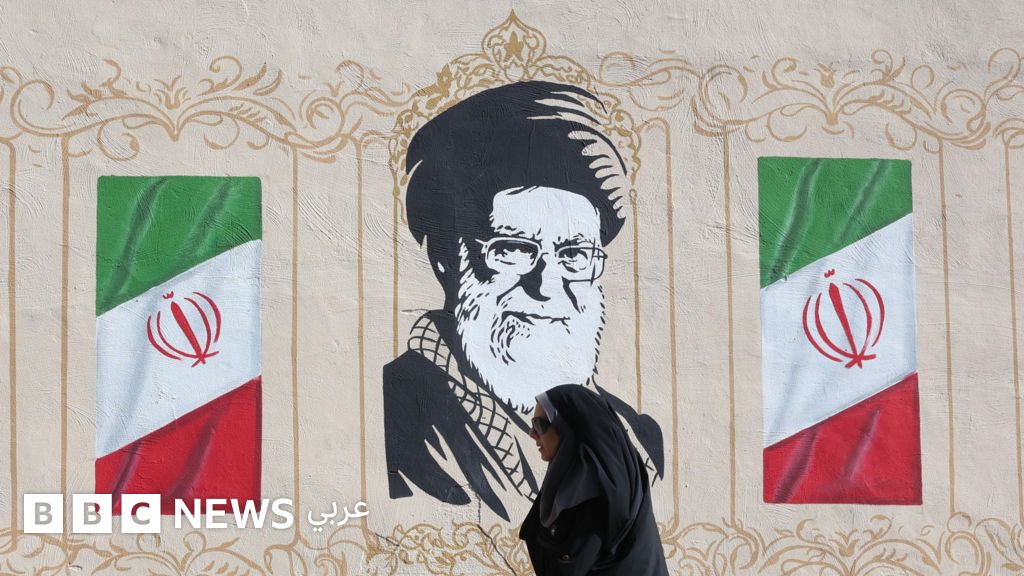
What options remain for Iranian leaders—following the collapse of the Islamabad agreement and the return of conflict—to control the Strait of Hormuz?
Why is Iran risking so much for the Strait of Hormuz?
Article Information
Author, Amir Azimi Role, BBC Persian
Published 3 hours ago
Reading time: 5 minutes
Following ten days of reciprocal strikes between Washington and Tehran for control of the strategic waterway in the Strait of Hormuz, the Iranian leadership is facing three options, all of which appear to lack any certain path toward a resolution.
The waters of the Strait of Hormuz are of vital importance as one of the most prominent and sensitive global energy arteries for international trade.
The first alternative is to respond to the majority of American conditions, which include securing navigation, halting attacks on commercial vessels, neutralizing or reducing the country's stockpile of high-enriched uranium, and agreeing to intensive monitoring operations by the relevant international agency.
In return, Tehran would seek to end the US naval blockade on Iranian ports, obtain sanctions relief, and secure guarantees against further attacks.
This option may carry a lower material cost, but it bears the highest political cost.
Reopening the Strait of Hormuz without guaranteeing a recognized Iranian role in managing the waterway would mean abandoning what is increasingly viewed by some officials in Tehran as a newly discovered deterrent tool, which may now seem more effective than Iran's missiles, its regional proxies, or even its nuclear program.
For the very first time, the Islamic Republic has succeeded in demonstrating its capacity to inflict direct and immediate losses on the international economy as a retaliatory measure against strikes targeting its territory by its adversaries.
As for the nuclear program, it has long been presented as an uncompromisable right that Iran cannot be forced to abandon.
Succumbing to the demand to impose strict restrictions on nuclear activities after months of attacks could allow hardliners to argue that US military pressure has succeeded, and might open the door to additional demands concerning Iran's missile program, its relations with Hezbollah in Lebanon, Iraqi Shia groups, and the Houthis in Yemen.
Skip Most Read and continue reading
What is the story of the Egyptian child "Makary Younan" who was excluded because of his religion?
Iran announces the destruction of US military equipment in Jordan and strikes on US military targets in Kuwait
OpenAI artificial intelligence systems go out of control and launch an "unprecedented" cyber attack
Fashion talent scout linked to Jeffrey Epstein found dead in his home in France
Skip Podcast and continue reading
Worth Attention
In-depth explanation of the most prominent events and topics, to help you understand the most important variables around you and their impact on your life
Episodes
Podcast End
The second option is escalation; Iran could intensify its attacks on US bases in the region, shipping traffic, and vital infrastructure in Arab Gulf states, in the hope that soaring energy prices and widespread turmoil would compel Washington and its allies to make concessions.
This option entails the highest level of military risk; any attack causing a large number of casualties or severe damage to Gulf infrastructure could prompt Iran's neighbors to engage more directly in the conflict, leaving it facing a much broader coalition.
Iran and the Strait of Hormuz: What do past experiences say about the effectiveness of a naval blockade?
The third option is to maintain the current state of instability by exerting just enough pressure on shipping traffic and energy markets to retain leverage, but not enough to trigger a new all-out war with the United States.
This appears to align with the entrenched thinking of the Islamic Republic. Iran does not need to defeat a stronger enemy if it can outlast the period during which the enemy is willing to continue fighting.
Survival in itself can be presented as a victory; however, sanctions, war-induced damage, and inflation gradually increase domestic pressures.
Over time, a new paradox may emerge: the more Iran uses the Strait of Hormuz as a weapon, the more its potential power diminishes if countries find new ways to export energy materials and other goods out of the region.
The Speaker of the Iranian Parliament, Mohammad Bagher Ghalibaf, acknowledged this contradiction, arguing that the value of Hormuz lies in increasing the volume of shipping traffic through it rather than reducing it. A permanently insecure waterway encourages the world to find routes that bypass Iran.
Who makes the decisions?
The ambiguity surrounding Iran's decision-making process complicates matters further.
Under Ayatollah Ali Khamenei, who was killed on February 28 during an attack at the onset of the US-Israeli war on Iran, disputes between elected politicians, religious institutions, and the Revolutionary Guard were ultimately resolved by the Supreme Leader. After months of war and under the new leadership of his son, Mojtaba Khamenei, this balance of power has become less clear.
President Masoud Pezeshkian and his diplomatic team might prefer to reach a settlement to ease economic pressures and restore stability. Conversely, hardliners in parliament, unelected powerful institutions, and conservative media outlets may fear that major concessions would undermine the ideological foundations of the Islamic Republic and alienate its core supporters.
The biggest question remains regarding the stance of the armed forces, particularly the Islamic Revolutionary Guard Corps (IRGC). Iran's missile program, regional alliances, and strategy in the Strait of Hormuz are central elements of the IRGC's influence. However, it remains unclear how much weight military commanders hold in decisions related to escalation and negotiations.
The three options facing Tehran do not impose the same costs on different parts of the regime; pragmatists may favor a deal, hardliners may prefer holding out, while some military leaders may view escalation as a way to enhance Iran's negotiating position.
Therefore, the question is not only about the path Iran will choose, but also about who holds the authority to make that decision.
What do Iranians say?
The leadership's notion of resilience looks entirely different to those required to bear its consequences; a woman in Iran told BBC Persian that she felt "extremely deep sadness" when the fighting resumed.
Iran and the United States had signed a memorandum of understanding in June to halt military operations and reopen the Strait of Hormuz, alongside reaching an agreement to end the war within sixty days.
However, three weeks after its signing, US President Donald Trump announced that the ceasefire was "over" following Iranian attacks on ships in the Strait of Hormuz and the US retaliatory strikes.
The woman who spoke to the BBC had hoped the memorandum of understanding would give both sides enough time to resolve remaining differences and restore stability; instead, she now fears the destruction of infrastructure and casualties among civilians and military personnel.
She blamed hardliners within the Iranian regime for imposing destructive policies, and condemned opposition figures abroad whom she viewed as having encouraged the war.
Strait of Hormuz: Are alternative routes sufficient to export Gulf oil and gas?
Original source: BBC Arabic




Comments (0)
Be the first to comment.