Air Conditioning Accounts for 70% of Electricity Bill
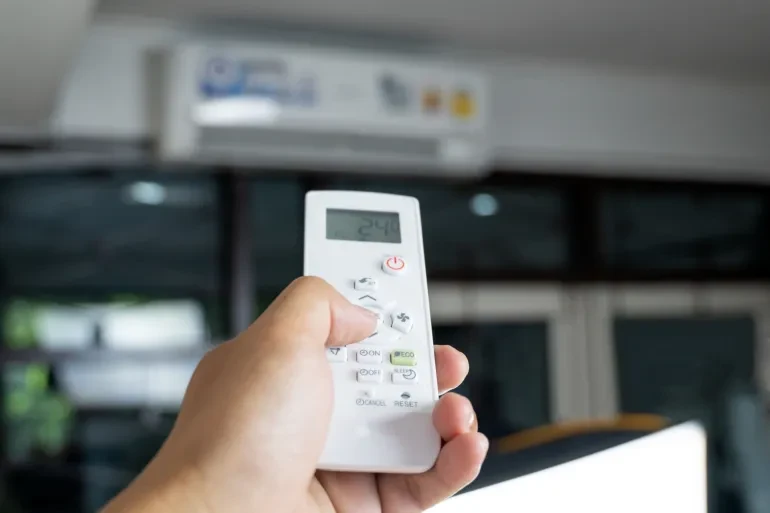
Air conditioning units account for approximately 70% of household electricity bills, according to data from the Saudi Energy Efficiency Program (Kafa'ah) and the Saudi Standards, Metrology and Quality Organization (SASO), making air conditioning the largest electricity consumer in the Kingdom, far ahead of any other appliance in the home.
Economic reports indicate that the building sector accounts for over 80% of the country's total electricity generation, and air conditioning alone is responsible for about 70% of this consumption, meaning nearly half of the total electrical energy produced nationally is used solely to run air conditioners.
Updated data released at the beginning of 2026 confirms that this percentage remains between 60% and 70% of household consumption, especially during the summer months. Meanwhile, the Saudi Energy Efficiency Center launched a six-week awareness campaign last June titled 'Air Conditioning Campaign 2026,' urging families to set thermostats at 24 degrees Celsius and adhere to regular device maintenance.
Reasons for the High Consumption
Authorities attribute the high share of air conditioning in the bill to a combination of climatic, structural, and behavioral factors. Climatically, temperatures in most parts of the Kingdom exceed 45 and 50 degrees Celsius in summer, turning air conditioning from a seasonal luxury into a nearly permanent operational necessity for long months of the year.
Structurally, data from the Saudi Energy Efficiency Center indicates that about 70% of existing buildings in the Kingdom are not adequately thermally insulated, leading to continuous leakage of cool air to the outside and entry of hot air inside, forcing the unit to work harder to compensate for this loss.
Added to this is the reliance of a large segment of consumers on old or low-efficiency devices. The number of air conditioners currently installed in the Kingdom is estimated at between 25 and 30 million units, with an annual growth rate of about 12%. Window-type air conditioners, which are less efficient, still account for a significant share. The monthly electricity savings difference between them and split-type units can reach about 250 riyals in favor of the latter.
Authorities also do not overlook the impact of consumer behavior itself, from running air conditioning at very low temperatures, to neglecting regular filter cleaning, and leaving devices operating in unused rooms.
Official Efforts to Reduce the Bill
In the face of this high consumption, the Kingdom, as part of Vision 2030 objectives, is banking on a set of policies to reduce the national air conditioning bill. The Saudi Energy Efficiency Center has established policies and regulations governing energy efficiency in the building sector, while SASO has issued mandatory minimum energy efficiency specifications for air conditioners and a classification label ranging from the most efficient level A to the least efficient level G. Consumers can verify this before purchase via the 'Taakkad' application by scanning a QR code.
The Saudi Building Code also mandates that new buildings meet thermal insulation, window, and air conditioning system standards with a seasonal efficiency of no less than 15.5. Meanwhile, the National Energy Efficiency Services Company (Tarsheed) is implementing rehabilitation projects for government and existing buildings, covering insulation, air conditioning, and lighting through energy performance contracts. Official data indicates that proper implementation of the building code can reduce energy consumption costs in residential buildings by up to 30%, while government rehabilitation projects reduce electricity consumption in a single building by over 20% after insulation work and upgrades to air conditioning and lighting systems.
Tips to Reduce the Bill
Energy efficiency experts advise families looking to reduce their monthly bill to set the thermostat at 24 degrees Celsius, considered the optimal temperature between comfort and savings. They also recommend cleaning air conditioner filters every two weeks, closing windows and doors to prevent cooled air leakage, using insulating curtains during peak hours, and choosing an air conditioner with a capacity suitable for the room size rather than a unit that is too large or too small.
Experts also recommend checking the energy efficiency label before purchase and preferring split units over window units whenever possible, as well as improving the building's thermal insulation itself as the most durable solution for reducing the required cooling load. Additionally, they advise avoiding installation of outdoor units in tight or poorly ventilated spaces to ensure efficient cooling of the external condenser.
Original source: Akhbaar24





Comments (0)
Be the first to comment.