Doctors Without Borders calls for urgent expansion of Ebola response measures in Congo

Doctors Without Borders warned Wednesday that the Ebola virus is spreading in the Democratic Republic of Congo at a pace that outstrips efforts to contain it, and called for an urgent expansion of containment and care measures.
Official data showed that the number of confirmed infections has tripled in less than five weeks to 1,926 cases, including 702 deaths, as of Sunday.
The organization says that makes it the third largest and fastest-spreading outbreak of the virus ever.
Aerial view showing displaced people from Kigonze camp taking part in burial ceremonies for people suspected of dying from Ebola at Nyamorungo cemetery, Bunia, Congo. June 18, 2026 - Reuters
Ebola virus outbreak
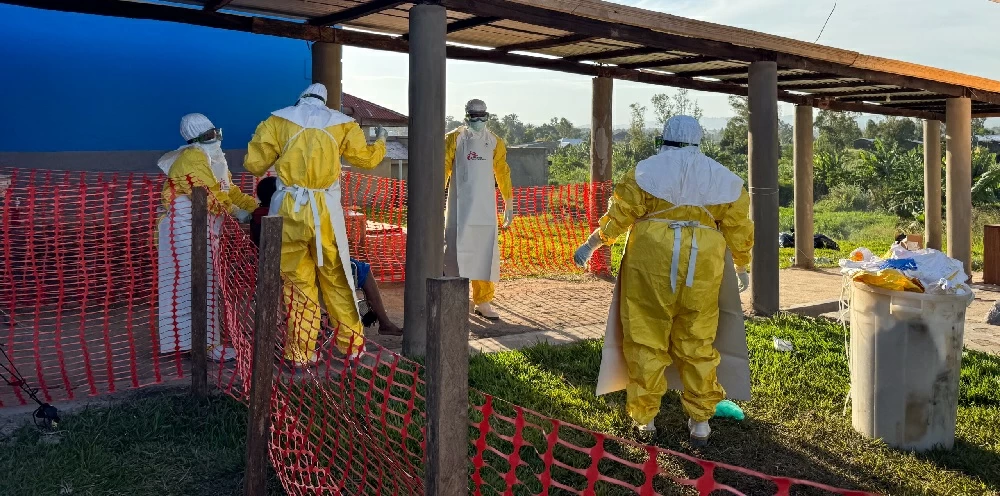
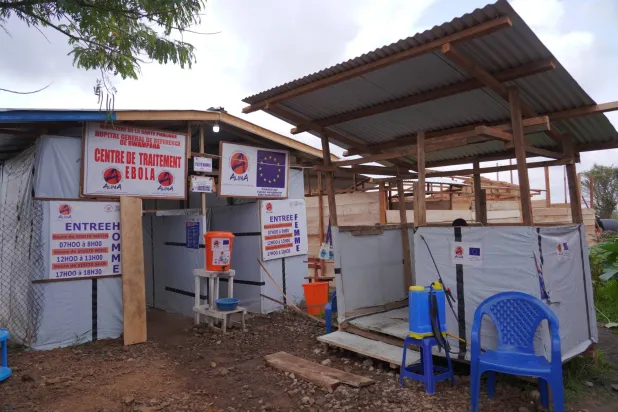
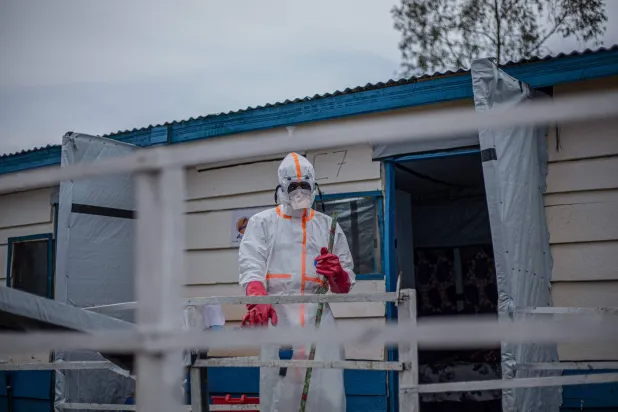
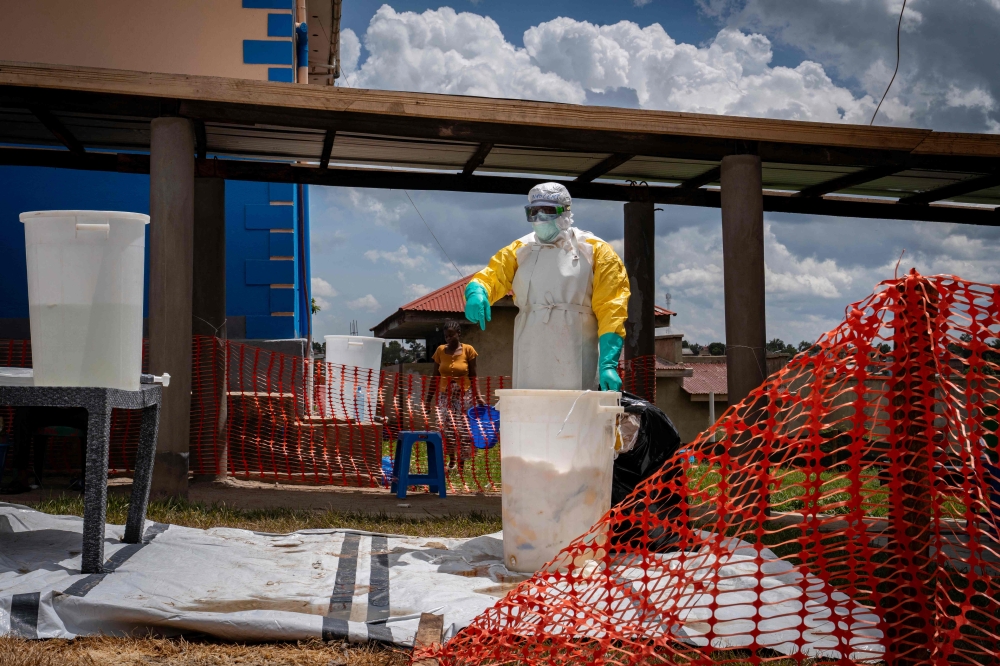
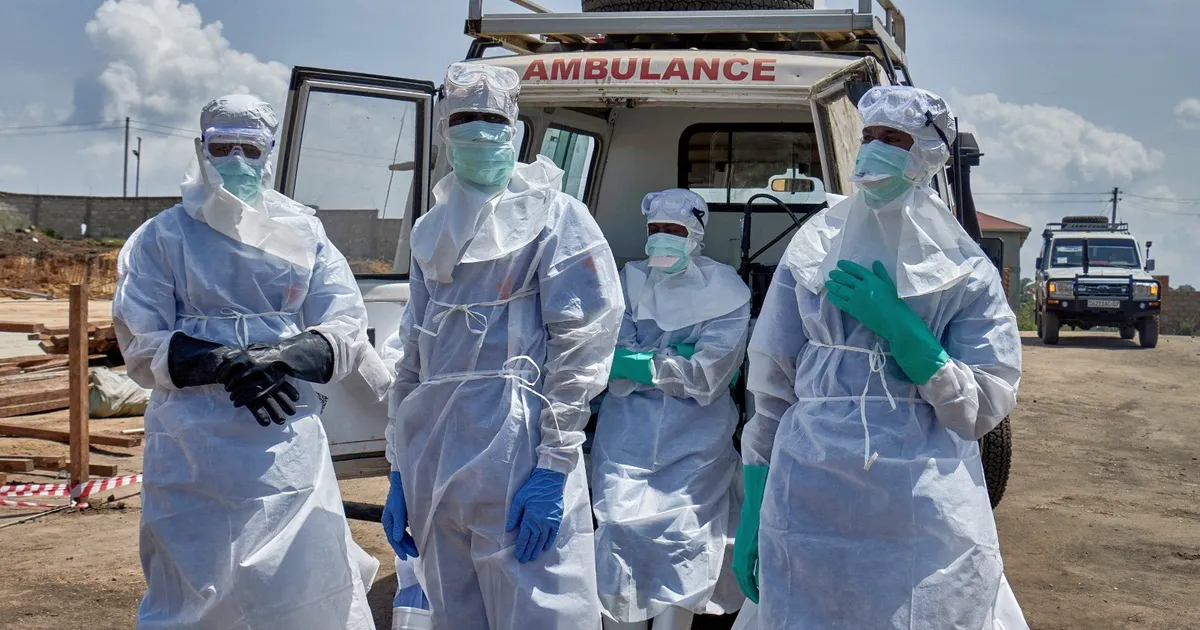
Doctors Without Borders runs seven treatment centers for the virus and more than 15 isolation units in Congo.
The virus, which can be fatal, spreads through direct contact with bodily fluids of infected people or animals, and causes symptoms including fever, vomiting, and internal and external bleeding. This outbreak is specifically attributed to the Bundibugyo strain of the virus.
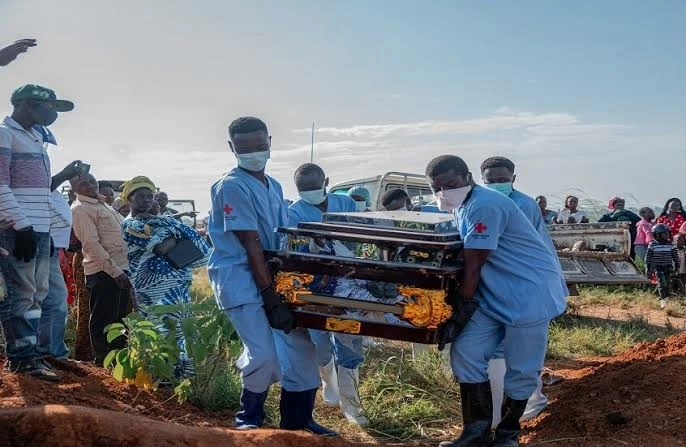
Health workers carry the coffin of a child suspected of dying from Ebola, before burial at Kigonze displacement camp, Bunia, Congo. June 18, 2026 - Reuters
Trish Newport, director of the emergency program at Doctors Without Borders, said: 'Every delay costs lives... We are still racing against time to catch up with the outbreak rather than getting ahead of it,' calling for more international coordination to improve care for those infected.
The organization raised concerns about the spread of Ebola at a time when communities outside urban areas are suffering from lack of support, limited access to medical care, and a depleted surveillance system.
The organization stated last week that the outbreak is still expanding, attributing it to reasons including population movement and delayed treatment.
A White House official said the U.S. administration is moving to prevent American citizens in Congo from returning to their country on commercial flights.
Doctors Without Borders said that epidemiological surveillance activities, testing, and safe and dignified burials all need additional resources.
Aykuno Raji, a doctor and medical program director for the organization, said: 'In Mungbwalu, we witness daily the deadly human consequences of these gaps,' explaining that patients often arrive at health facilities in critical condition with slim chances of survival.
Original source: Asharq News
Comments (0)
Be the first to comment.