Oil retreats and gold rises as markets balance between war and ceasefire

Oil retreats and gold rises as markets balance between war and ceasefire
''Al-Eqtisadiah'' from Riyadh
Tuesday, July 21, 2026 6:45 | 2 minutes read
Brent crude retreated after jumping 6% in the previous two sessions, as traders balanced the ongoing fighting between the US and Iran on one hand, and efforts to mediate a new ceasefire on the other.
The global benchmark crude fell to $88 a barrel, while WTI crude dropped to $83. The US carried out several strikes for the tenth day, after vowing that Iran would pay for killing American soldiers.
Diplomatic efforts continue
Nevertheless, diplomatic efforts continued, with Iran saying mediators are in touch regarding proposals to de-escalate fighting after a week of escalating clashes, while Reuters reported a proposal for a 10-day halt to strikes.
Saudi Arabia condemned Houthi threats to navigation in Yemen, pledging to protect ships and continue supporting the Yemeni people, while coalition forces affirmed they would respond to threats with all decisiveness and force. Riyadh also denounced the militia spokesman's accusations of besieging the Yemeni people and imposing a naval blockade on the kingdom.
Mon, 20 2026
Attacks on ships in Hormuz
Traffic through the Strait of Hormuz stopped on Monday after Iran's attacks on ships over the weekend. An oil tanker named 'Achilles' was hit in the waterway. The escalation of violence prompted some ship owners to offer huge bonuses to convince crews to sail through Hormuz. 'Sinokor,' the world's largest owner of very large crude carriers, offered extra pay equivalent to six months if sailors completed a round trip.
Gold rises supported by buying appetite
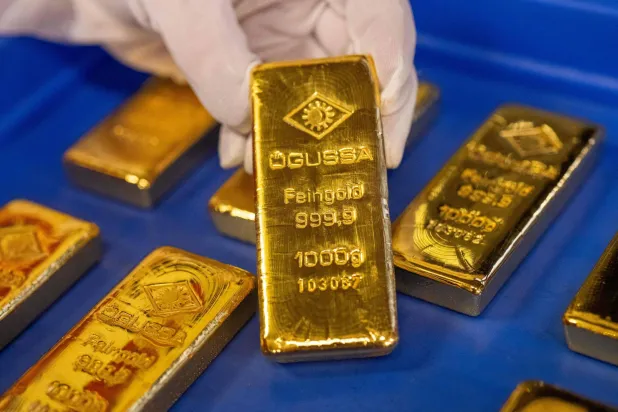
Gold rose on dip-buying, as traders monitored Middle East developments for signs of energy prices' impact on inflation. It continued trading near $4,000 an ounce after closing the previous session down 0.2%. Silver gained 1.9% to $57.47 an ounce.
Tue, 30 2026
The conflict, now in its fifth month, is driving up prices of manufacturing and food production commodities. Traders must balance rising energy prices and the possibility of interest rate hikes on one hand, and weak economic data on the other. High borrowing costs are a negative factor for gold, which yields no return.
$4,000 level supports dip-buying
Despite recent clashes, gold shows some signs of support at the key psychological level of $4,000 an ounce, indicating dip-buying that was also seen last week.
Christopher Wong, analyst at 'Oversea-Chinese,' said, 'Gold's rise may remain limited unless oil falls and rate hike expectations recede,' adding, 'Daily momentum indicators currently show no clear direction, and the longer-term view is that the pace of decline should likely slow if macroeconomic conditions do not deteriorate further.'
Definitions
Original source: Aleqtisadiah





Comments (0)
Be the first to comment.