Oil above $90 as Hormuz conflict escalates; gold stabilizes

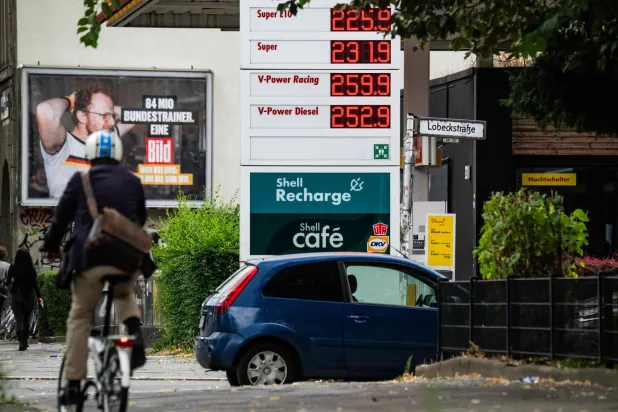
Brent crude jumped after the US and Iran escalated hostilities over the weekend, including targeting ships trying to cross the Strait of Hormuz and an attack on a major oil facility in Kuwait.
The global benchmark crude rose 4% before retreating to trade above $90 a barrel, the highest level since mid-June, while NYMEX crude was at $84.50.
U.S. forces began their ninth consecutive night of strikes against Iran, aiming to weaken its capabilities used to attack ships and civilians, while Kuwait reported intercepting Iranian drone attacks.
The Iranian Navy said yesterday, Sunday, that it stopped 4 unidentified ships that were trying to use an "unsafe route" through Hormuz after they ignored warnings, adding that two of them "had incidents and stopped in place," while the other two abandoned the route and turned back.
Sat, 18 2026
UK Maritime Trade Operations reported receiving information from military authorities that a ship was on fire northwest of Kumzar, Oman, and added that the cause of the fire had not been verified.
Conflict targets expand
A week of mutual attacks between the two sides expanded beyond purely military targets to include bridges, service facilities, and port installations, indicating slim chances of returning to the fragile truce. Kuwait Petroleum Corporation said Iran struck an oil facility on Saturday, causing significant damage.
Mon, 29 2026
Sol Cavonic, chief energy analyst at MST Marqui, said "the intensification of strikes over the weekend indicates room for the conflict to widen and extend," adding "accelerating price increases may require direct targeting of oil infrastructure in the region, or attempts to disrupt the Red Sea route."
The escalation of hostilities in the Middle East raised concerns about a supply crisis, and excluding China, global inventories have fallen to their lowest levels ever, according to JPMorgan, leaving the world with a small margin for error.
Gold stabilizes as traders await interest rate path
Gold stabilized at $4,030 per ounce as traders assess the likelihood of the Fed raising interest rates to contain inflation, while silver rose 2% to $57.30 per ounce.
Tue, 30 2026
High energy prices have raised fears that the Fed might tighten monetary policy, even as weak US economic data suggest that raising interest rates is unlikely soon. High borrowing costs are a headwind for gold, which yields no return. Gold has been moving in a narrow range near $4,000 in recent weeks, after losing 14% in the second quarter, its worst performance since 2013.
Justin Lin, analyst at Global X, said "Gold has shown a relatively limited reaction to the jump in oil prices, reflecting some investor apathy towards geopolitics, instead increasing focus on the Fed's interest rate decision," adding "yields have risen only marginally over the weekend despite the escalation in the Middle East, and maybe that is why gold has remained largely stable."
Cleveland Fed President Beth Hammack joined a growing number of Fed officials expressing concern about rising inflation in a Friday LinkedIn post, and swap traders priced in at least one rate hike by year-end.
Original source: Aleqtisadiah




Comments (0)
Be the first to comment.