North American Trade Agreement Faces New Test with Separate Negotiation Tracks
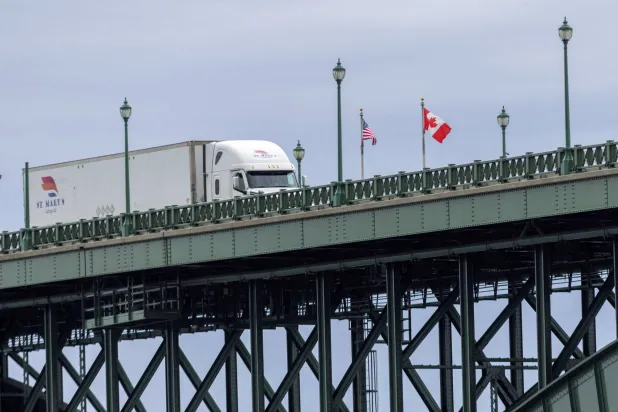
The separate negotiation tracks launched by the United States with Canada and Mexico test the trilateral free trade agreement that has shaped the North American economy for 32 years, as these negotiations may lead to concessions imposed on Canada that Mexico agrees to within its more advanced talks with Washington.
U.S. President Donald Trump's decision not to extend the United States-Mexico-Canada Agreement for an additional 16 years on July 1 kept the agreement in force, but imposed annual reviews on it until the three countries agree to renew it or it expires in 2036, according to Reuters. Trump escalated pressure on Canada on Monday by imposing 50 percent tariffs on a wide range of goods, and his administration said the move was in response to Canadian policies on automobiles and dairy products. The tariffs are set to take effect on August 19. The three countries will continue to deal with each other bilaterally, according to people familiar with the talks from the three countries, who expressed hope that the bilateral agreements could be merged into a trilateral framework. The economic stakes are high for Canada and Mexico, which direct most of their exports to the United States, as well as for automakers and other companies whose production networks cross North American borders multiple times.
Differences in Trade Reality
The main challenge is to keep the separate negotiation tracks aligned with each country's priorities, given the different trade conditions and political constraints between Canada and Mexico, in addition to the tense relations between Trump and Canadian Prime Minister Mark Carney, according to trade experts. Carney said on Tuesday that he agreed with Trump to intensify talks. Juan Carlos Baker, former Mexican trade negotiator, said: 'The challenge is to keep the two tracks moving in the same direction, so that they feed into the trilateral framework that Canada and Mexico insist on, and which the United States has expressed skepticism about.'
Mexico and Canada had wanted to extend the trilateral agreement, but they agreed to enter bilateral negotiations with Washington. The value of goods trade among the three economies is about $1.6 trillion annually under the agreement, which also helped protect Canada and Mexico from many of the global tariffs imposed by Trump. Trump had negotiated the USMCA during his first term to replace the 1994 North American Free Trade Agreement (NAFTA). Mexico began its third round of formal bilateral talks this week, while Canada has not yet started formal negotiations, but Canadian Trade Minister responsible for U.S. relations, Dominic LeBlanc, is holding phone calls and occasional meetings in Washington with U.S. Trade Representative Jamieson Greer. Canada hopes that any agreement will include the removal of U.S. tariffs on steel and aluminum, and avoid the entry into force of new tariffs in August.
A Mexican official familiar with the negotiations said that talks between the United States and Mexico are about six months ahead of the informal talks between Washington and Ottawa, and could give Mexico greater investment certainty and potentially better terms in areas such as steel tariffs.
The official added that Mexican and U.S. officials generally agree on a number of issues, including the decline in manufacturing jobs in the United States, increased use of Asian components in cars made in North America, and re-export of goods from outside the region.
The official said: 'Mexico and the United States agree on the objectives, and what we are discussing is how to achieve them.'
Mexico has already taken steps to address some U.S. complaints, including imposing tariffs on countries without free trade agreements, tightening customs rules, and addressing intellectual property concerns.
A container ship anchored off the Port of Los Angeles (AFP)
Politics Shape Strategy
People familiar with the strategies of the two countries said Mexico was more willing to cooperate than Canada.
Mexican President Claudia Sheinbaum had made concessions that she could present as achieving Mexico's priorities, including enhancing border security, curbing fentanyl smuggling, and tightening controls on Chinese investments.
Carney, meanwhile, faces different calculations, having won the election last year vowing to resist Trump's pressure.
Baker said of Sheinbaum: 'She has more room to maneuver compared to Prime Minister Carney.' But Canadian officials rejected the notion that their country is lagging in the negotiations.
Gabriel Brunet, LeBlanc's spokesperson, said: 'Canada is ready to accelerate talks on the trade agreement,' adding that his country has put forward proposals that are 'fair, balanced, and serve the broader North American economy.'
Washington's Influence
The main risk for Canada and Mexico is that the bilateral talks turn into a model agreement that the third country may have to accept or object to, potentially delaying a trilateral deal.
Neither government is expected to ask the other to delay reaching a beneficial bilateral agreement.
Baker said Mexico 'will do what is best for Mexico,' but it also wants to preserve the trilateral agreement and will resist any proposals that explicitly lead to its dismantling, while Carney has sought to improve relations with Mexico.
The Mexican official said that attacking the trade agreement may remain politically useful for Trump among voters who blame trade deals for the loss of manufacturing jobs, ahead of the U.S. midterm elections in November.
Matthew Holmes, executive vice president of the Canadian Chamber of Commerce, said Canadian negotiators should use the 30-day window before the new tariffs take effect to make rapid progress.
He noted that Canada has made clear it will not accept unfavorable terms just to end talks quickly, and that the extended 10-year review period could allow Carney to negotiate with a different U.S. president.
Holmes said: 'What I've heard from the prime minister and members of the negotiating team is: We want a good deal for Canada, not a fast deal for Canada.'
Read also
Read also
Original source: Asharq Al-Awsat



Comments (0)
Be the first to comment.