Beijing and London on the Brink of Investment Dispute over British Steel
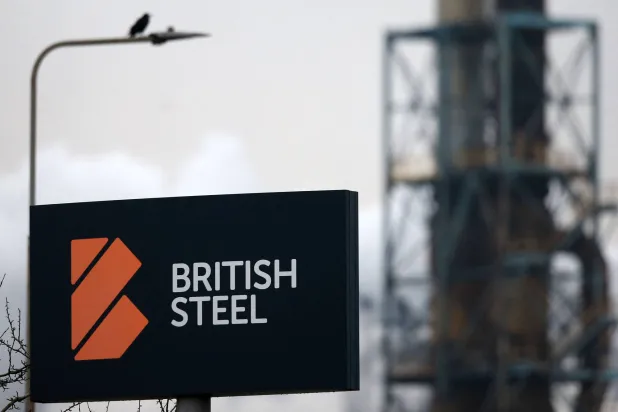
Investment relations between Beijing and London have entered a tunnel of tension, after the Chinese Jingye Group demanded the British government pay full financial compensation for its investment losses.
Since Saudi Arabia set its long-term economic vision and decided to diversify its economy and income sources, many economists have predicted a brilliant future for its non-oil economic sectors, which specialists consider 'virgin'. Officials and governments have offered partnerships and mergers at the public and private sector levels, especially with the Kingdom announcing the expansion of its largest economy in the region.
With the accelerating pace of global digital infrastructure development thanks to artificial intelligence, a new report indicates that the Middle East may become a leading hub for data centers in the field of AI, thus becoming one of the biggest global opportunities for investment in data centers and AI growth.
The Global Energy Report for 2026, issued by the International Data Center Authority (IDCA) on July 15, shows that although data centers currently consume about 2% of global electricity, the Middle East region is uniquely positioned to benefit from the next wave of AI infrastructure expansion, as its data centers consume only 0.5% of total electricity consumption.
The global data center landscape is at a pivotal point, where artificial intelligence (AI) is redefining much of its blueprint. The future of digital infrastructure is being defined by the evolving demand for AI, driving the industry toward a new generation of AI factories,... pic.twitter.com/9lpe6X3jI6 — IDCA (@IDCAorg) July 15, 2026
Looking at the Kingdom's long-term economic vision and the future of the global economy and AI, a link will emerge between them, so that each supports the other. If AI is the future, the need for data centers will increase and continue to rise, and thus the demand for energy will increase. This is where Saudi Arabia's role comes in, as it has abundant energy and the largest economy in the region. In this regard, the CEO and founder of the International Data Center Authority, Mehdi Paryavi, told Asharq Al-Awsat that Saudi Arabia currently leads the regional scene among countries expected to attract the largest share of data center investments, followed by the UAE.
Mehdi Paryavi, CEO and founder of the International Data Center Authority
Paryavi said in a special interview with Asharq Al-Awsat: 'Data centers are the main engine of the digital economy; they are like the refineries of the modern era that refine the most precious commodity of humanity: data... Saudi Arabia has the largest oil production facilities in the world, placing it in an ideal position to lead modern data and AI factories (data centers).'
Competition is open
However, he pointed out that competition is wide open in the Middle East currently in the data center sector, saying: 'Data center consumption in Saudi Arabia and the UAE amounts to about 440 megawatts and 340 megawatts respectively. We see that the region's total consumption currently is about 1 gigawatt, with the Kingdom and the UAE accounting for about 80% of it. But there are ambitious efforts in Oman, Kuwait, and Qatar, and Syria and Iraq are undergoing radical transformations.'
He also referred to 'Egypt, Jordan, and Iraq; Egypt has a population of over 100 million, and has a national AI strategy targeting AI to contribute 7.7% of its GDP by 2030... Jordan is working on developing its plan to embark on the digital transformation journey, and members of the Iraqi government are currently working to attract data center construction companies and investors.'
Paryavi returned to focus on Saudi Arabia again, saying that the Kingdom has the largest economy in the region and is currently clearly focusing on data centers. These efforts date back to 2004 when the Saudi government first presented its economic diversification plan at the G20 summit in Brisbane, Australia.
Paryavi stressed that 'Saudi Arabia remains an attractive destination in the data center sector, having demonstrated leadership and commitment to a data center-based economy. It has a stable government, a distinguished geographical location, a higher population density than other GCC countries, a massive sovereign wealth fund, and an ambitious vision for economic diversification.'
Saudi Arabia is the only country in the region from the G20, and its economy ranks 44th on the Global Digital Readiness Index issued by the IDCA, according to the Global Digital Economy Report for 2026. The Kingdom's AI ecosystem plan aims to establish AI data centers with a capacity of up to 6 gigawatts by 2034.
Data centers currently consume about 2% of global electricity (International Data Center Authority)
Paryavi attempted to differentiate here between small and medium-sized data centers and mega data centers, saying that data centers are spreading in Saudi Arabia and Gulf countries continuously, with small and medium capacities, but Saudi Arabia stands out as an attractive and qualified destination for mega data centers, pointing to the Saudi company 'Hiomine', a subsidiary of the Public Investment Fund, which has launched ambitious plans in this regard.
He also referred to Oman, which launched the Oman Digital Triangle (ODT) project, planned to deploy 9 gigawatts of AI applications; and 'Khazna Data Centers', based in the UAE, which was recently verified and accredited by the IDCA at the portfolio level, a leading operator in the region.
The CEO and founder of the International Data Center Authority said in this regard that Saudi Arabia has abundant resources and a regional commitment to developing its data center portfolio through its two ambitious initiatives 'Hiomine' and 'Hexagon', and data center operating companies such as 'Center 3', 'Mobily', and 'Data Volt'. He pointed out here that under current circumstances, the Sultanate of Oman emerges as a major data center hub (ODT) because it is currently the least affected and least exposed to the repercussions of Iran's war. However, the UAE also stands out, both in terms of demand, investments, and execution capability.
SDAIA's 'Hexagon' data center was designed according to the highest global standards (SPA)
Attributes of the Middle East
Paryavi believes that the Middle East is a fundamental pillar of the global economy. In the past century, the oil that fueled the world was extracted from the Middle East. Today, the region has the ability to extract the new oil: data. This new type of export will radically transform the region and will be a game-changer in a world thirsty for enhancing its AI and data center capabilities.
Original source: Asharq Al-Awsat




Comments (0)
Be the first to comment.