Economic / The emergence of "color" in Qassim date palms signals the start of the fresh date season
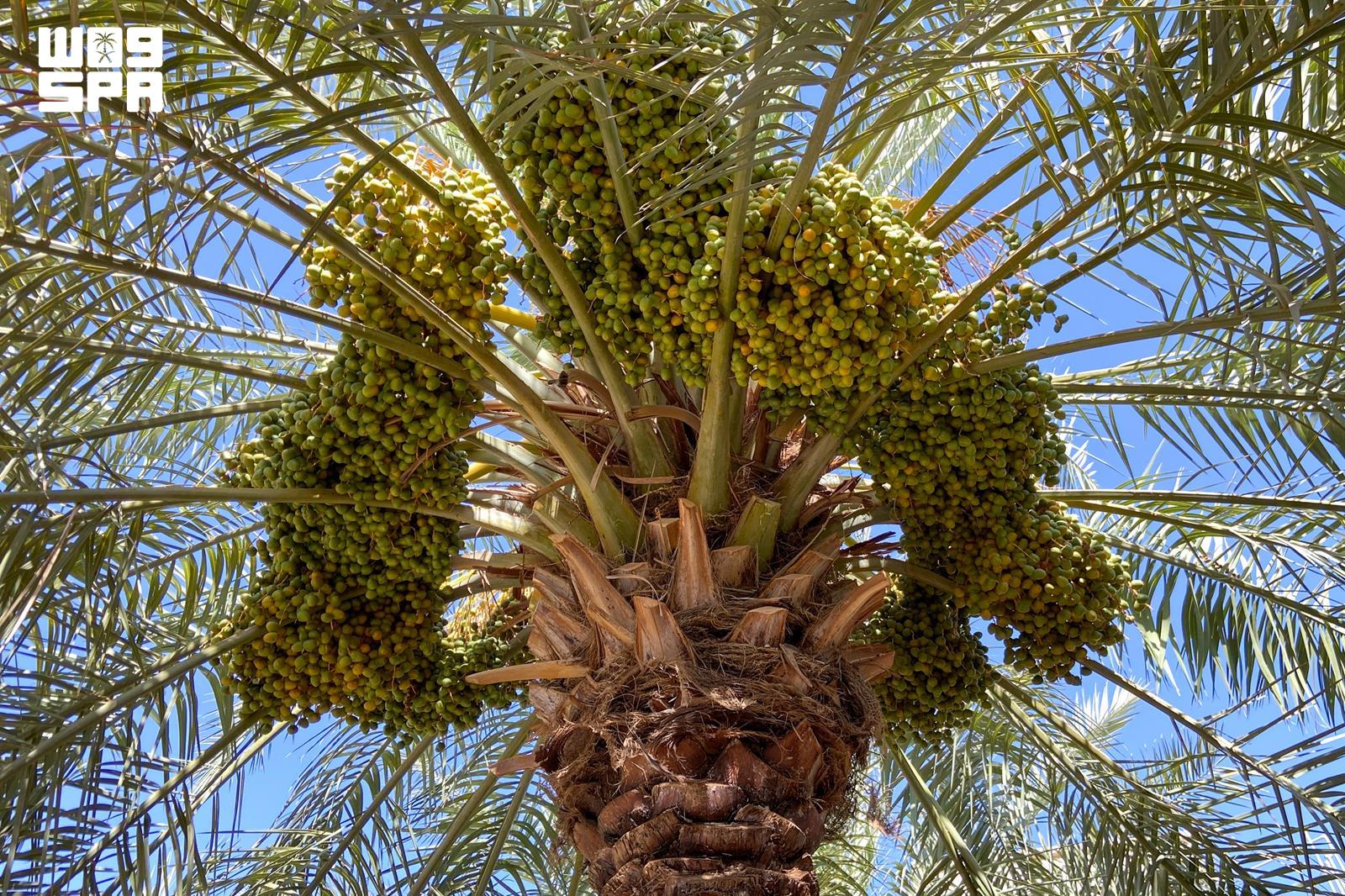
Buraidah, Muharram 21, 1448 AH, corresponding to July 6, 2026, SPA - Date palm farms in the Qassim region have begun to see the first stages of "color" appearing on the fruits, an agricultural indicator that farmers await annually, heralding the start of the fresh date (rutab) season and the approaching harvest period, which is one of the most prominent agricultural and economic seasons in the region. Farmers call this stage "al-lawn" (color) or "date dyeing," marking the transformation of dates from green to yellow or red depending on the variety, due to complete growth and rising temperatures. After this, the fruits gradually enter the ripening stage until they become fresh dates ready for picking. According to agricultural sources, this stage usually coincides with the peak summer heat, popularly known as the "color cooking" season. The Qassim region is one of the largest date-producing areas in the Kingdom, with over 11 million palm trees yielding dozens of varieties, most notably Sukkari, Barhi, Khlas, Nabtat Ali, Shaqra, Wanana, and other varieties that are popular locally and internationally. During this stage, farmers monitor the farms daily, carry out irrigation based on the actual needs of the palms, and observe the ripening of the bunches in preparation for the early harvesting of fresh dates, which progresses according to the varieties, farm locations, and varying climatic conditions. The impact of this season extends beyond agriculture to stimulate various related economic activities such as transport, packaging, marketing, and food processing, in addition to boosting commercial activity in local markets and increasing demand for seasonal agricultural products. The fresh date season in Qassim holds a special place in the local community, representing a social and heritage event passed down through generations, associated with summer memories, family gatherings, and the exchange of early produce among relatives and neighbors, reflecting the deep historical relationship between humans and the date palm, which for centuries has been a source of food, livelihood, and stability. The season also serves as an important driver of agricultural tourism, as farms and markets receive thousands of visitors eager to buy fresh dates directly from the producer and learn about the date varieties the region is famous for, reinforcing Qassim's status as one of the world's most important date-producing areas. In the coming days, farmers are anticipating the full ripening of early varieties, preparatory to starting the harvesting operations, which will continue progressively as different varieties ripen, reaching the peak of the season characterized by abundant production and diversity of supply in the markets. The appearance of color in Qassim date palms marks the beginning of a new chapter of agricultural bounty, reflecting the success of farmers' efforts in caring for the palms throughout the year, and affirming the region's continued leading role in date production, its contribution to food security and the agricultural economy, and the preservation of a civilizational legacy associated with the date palm as a symbol of generosity and goodness in the region. The emergence of "color" signals the start of a broad seasonal economic activity, including harvesting, packaging, and marketing operations, as well as preparing date markets to receive the new produce, amid expectations of a bountiful season thanks to accumulated agricultural expertise and increased use of modern technologies in date palm cultivation. Farmer Ibrahim Al-Sulaiman said in an interview with SPA that the high temperatures during this period accelerate the transition of fruits to the fresh date stage, while the speed of coloration varies among varieties; some are early ripening, while others need additional weeks to complete ripening. The fresh date season in Qassim is one of the most prominent agricultural seasons in the Kingdom, due to its economic and heritage value, as well as its role in stimulating commercial and agricultural activity and attracting shoppers and visitors as production begins to flow into the markets progressively. // End // 19:31 T M 0149
Original source: SPA



Comments (0)
Be the first to comment.