Egypt: Government Reassures on Strategic Goods Availability Amid Regional Tensions
The Egyptian government has issued new reassurances about sufficient stockpiles of strategic goods, amid renewed regional tensions and continued rise in the dollar price in the country.
The dollar price recorded a new rise, exceeding 51 pounds in Egyptian banks on Tuesday, affected by geopolitical tensions in the region and increased demand for foreign currency.
Before the outbreak of the Iran war at the end of last February, the exchange rate was around 47 pounds to the dollar. As the war continued, it recorded record levels exceeding 54 pounds, then declined below 49 pounds following the ceasefire decision in last April, which was followed by renewed confrontations between Washington and Tehran, causing it to rise again.
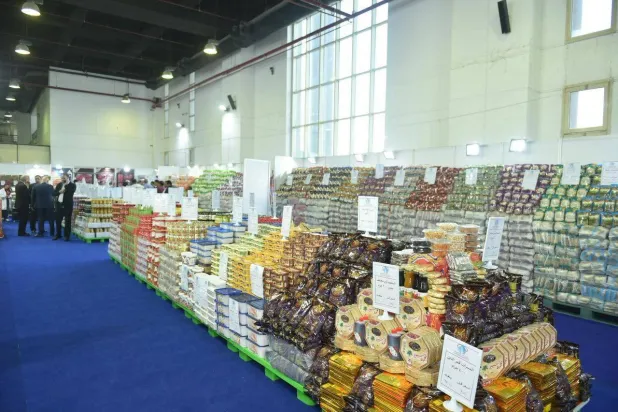
Minister of Supply and Internal Trade, Sherif Farouk, reassured citizens about the availability of strategic goods with sufficient stockpiles. During his chairmanship of the general assembly meeting of the 'Holding Company for Food Industries' on Monday, he confirmed the availability of 'safe balances of various supply commodities, ensuring market stability and continuity in meeting citizens' needs.' He also stressed 'the importance of continued coordination among various relevant authorities to maintain strategic stock levels and enhance the readiness of the supply system.'
The government is preparing to announce a plan aimed at regulating markets and addressing the rise in prices of some goods, according to Prime Minister Mostafa Madbouly.
In the view of economic expert Karim Al-Omda, the availability of basic goods during crises 'is not only related to prices, but is a matter of national security.' In his remarks to Asharq Al-Awsat, he pointed out that the government's hedging by providing a strategic stockpile of basic goods ensures that some goods do not become scarce, leading to a black market and successive price increases.
He added: 'The prevailing standards for commodity hedging during wars and crises require strategic goods to be available for a period sufficient for 4 to 6 months,' stressing that regional conditions 'necessitate that strategic goods be largely under state control, by making them available in markets to achieve price stability and prevent price spikes.'
Part of the meeting of Egyptian Supply Minister Sherif Farouk with leaders of the 'Holding Company' on Monday (ministry's Facebook page)
Regarding the foreign currency price, Al-Omda said it 'is subject to supply and demand, meaning that if the country's hard currency resources increase, that achieves exchange rate stability, and if demand increases and the available currency decreases, the price rises.'
The latest inflation data in Egypt indicates a relative slowdown in the pace of price increases. According to data from the Central Agency for Public Mobilization and Statistics, the annual consumer price inflation rate in cities recorded 14.3 percent in last June, compared to 14.6 percent in May. Central bank data also showed that the core inflation rate rose on an annual basis to 14.3 percent in June, compared to 13.8 percent in May.
Economic expert Wael Al-Nahas said that the government's hedging to provide strategic goods began since the start of the Iran war, especially food commodities and energy stocks.
He continued his remarks to Asharq Al-Awsat, saying: 'The government's reassurance about the availability of a strategic stockpile of basic goods cannot be separated from the plan the government is preparing to announce regarding market regulation, which is based on establishing a national company in partnership between the Future of Egypt Authority and the ministries of supply and agriculture, aiming to provide goods through national companies.'
He added: 'Providing goods through national companies can create an abundance in supply, leading to market stability and preventing price distortions.' Regarding foreign currency, he said: 'There is no horizon for expectations of the dollar price in the near future.'
The Egyptian government hedges to provide basic goods (Ministry of Supply Facebook page)
On Monday, the Minister of Supply reviewed updates on the implementation of the national project 'Carry On' and the status of plans to convert and develop outlets under the 'Holding Company for Food Industries,' contributing to enhancing their spread and raising their operational efficiency.
The 'Carry On' project is the first unified government commercial chain in Egypt launched by the Ministry of Supply and the 'Holding Company for Food Industries' to develop the internal trade sector. It aims to convert more than 1,060 consumer complexes into 'hypermarkets' that provide basic goods under a single brand, according to the Ministry of Supply.
Original source: Asharq Al-Awsat



Comments (0)
Be the first to comment.