New Tools: OpenAI Launches ChatGPT Work and Makes GPT-5.6 Publicly Available

OpenAI released GPT-5.6 models (Sol, Terra, Luna) and launched ChatGPT Work, an AI agent for long, complex tasks. New features include Sites for creating web apps, Computer Use for desktop automation, and scheduled tasks. ChatGPT Work integrates Codex and is available on Pro, Enterprise, and Edu plans, with broader rollout soon.
OpenAI has made GPT-5.6 models publicly available, alongside the introduction of ChatGPT Work, an intelligent agent within ChatGPT capable of executing long, complex tasks across applications and files, and completing general tasks autonomously.
The GPT-5.6 model family includes three main versions: Sol, the company's new flagship model; Terra, a balanced model designed for daily use; and Luna, the fastest and most cost-effective model.
In an official statement, the company said these models represent a transition from systems that only answer questions to systems capable of actually getting work done, especially as they are integrated into its ChatGPT Work, Codex, and OpenAI API services.
GPT-5.6 Sol is OpenAI's most powerful model to date, reportedly achieving leading results in programming, knowledge work, cybersecurity, and science, while using fewer tokens and at a lower estimated cost compared to previous OpenAI models and those from competitors like Anthropic and Google.
The company believes this gives users higher performance per dollar, whether by accomplishing more work at the same cost or achieving similar results at a lower total cost.
OpenAI also introduces Ultra mode, the highest setting for tuning and leveraging the new models' capabilities. This mode coordinates four AI agents working in parallel by default to handle complex tasks faster, with the possibility of increasing the number of agents to 16 in some scenarios.
This mode targets businesses that benefit from greater investment in time and computing power, such as multi-stage research, financial analysis, complex programming, cybersecurity testing, and preparing presentations and documents with precise design requirements.
ChatGPT Work Service
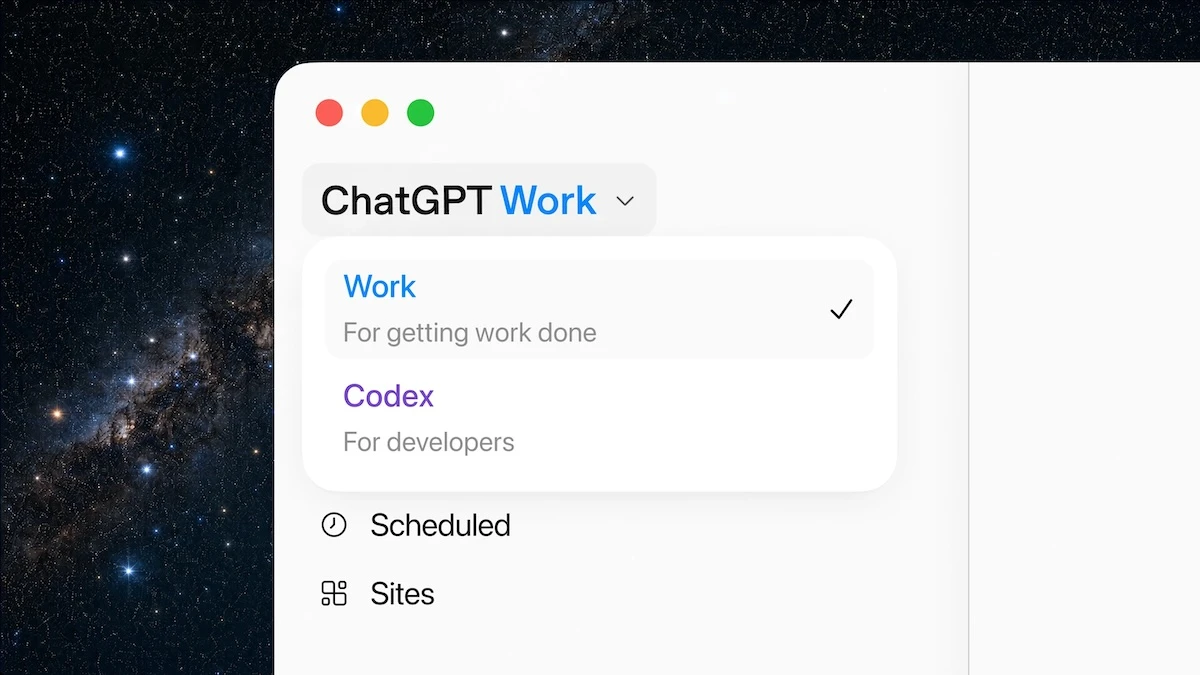
Alongside the GPT-5.6 release, OpenAI launched ChatGPT Work, an intelligent agent within ChatGPT that can gather information from connected Plugins and various workflows in the user's ChatGPT account, then create complete actionable documents such as spreadsheets, presentations, documents, and web applications.
After connecting applications, ChatGPT can understand the goal, retrieve information from relevant sources, create documents, presentations, and analyses, and continue refining drafts while keeping the user in control of the workflow.
OpenAI also introduces Sites within ChatGPT as a public beta feature, allowing users to turn work or ideas into an interactive website or web application that can be shared with a team or publicly via a link.
This feature is useful for creating live dashboards, project trackers, calendars, prototypes, internal portals, and interactive reports, with the ability to test these sites within ChatGPT and update them when underlying information changes.
The agent can stay with a project for hours if needed, breaking work into smaller steps and executing them independently, while the user remains able to monitor progress, answer questions, change direction, and approve important actions.
ChatGPT Work's architecture is based on GPT-5.6, enabling it to reason through multi-step tasks and create materials that adhere to users' templates and reference files.
More Than Answering Questions
Thanks to the Codex platform integrated into ChatGPT Work, ChatGPT is no longer limited to answering or providing text-based assistance; it can now execute tasks across the web, mobile app, and desktop app.
The company notes that more than 5 million people use Codex weekly, and over 1 million currently use it for work beyond coding, after initially starting as a coding agent for developers.
The company explains that the best way to use ChatGPT Work is to assign it a task the user knows well, such as analyzing end-of-month budget variances, converting a large volume of documents, information, and charts into a marketing campaign brief, or preparing for a sales team meeting.
It can also be tasked with creating a complete workflow from a single request, such as turning customer research into a marketing campaign brief, then using that brief to create marketing materials and adapt them for different markets while retaining the user's overall context regarding their company data at every step.
ChatGPT Work is designed to work from anywhere. Users can start a task on their phone, review a draft on the go, check the status of a long workflow between meetings, and later continue the same work on the web or desktop.
On the desktop, ChatGPT can use local files and applications to complete work. It also includes a new built-in browser that allows it to fetch websites, tools, and files available online, such as extracting information from websites or opening files from Google Workspace and Microsoft 365 and editing them within the app.
The company indicated that it will phase out its standalone Atlas browser and rely solely on the built-in browser within its intelligent platform.
The Computer Use feature also allows ChatGPT to use the computer on behalf of the user to perform background tasks across applications, tools, and the browser, including clicking, typing, and moving files to appropriate locations, whether for a single task or as part of a recurring scheduled task.
ChatGPT Work extends even when the user is away from their computer or phone, via Scheduled Tasks. For example, it can convert new messages from messaging services like Microsoft Teams and Slack into updated documents or presentations, then share important changes with the team. This is done by the user asking ChatGPT to perform an action once, repeat it on a schedule, trigger it upon an event, or monitor changes over time.
These tasks can use connected applications and the browser to review Slack updates weekly and refresh a recurring meeting schedule, check websites and dashboards in the morning and summarize changes in a report, monitor customer feedback and turn recurring topics into prioritized product ideas, or update a presentation when new feedback arrives via email.
ChatGPT Work is available on the web and mobile app for Pro, Enterprise, and Edu plan users, and will reach Plus and Business subscribers in the coming days.
The ChatGPT desktop app will make the new service available globally on Windows and Mac, with Chat, Work, and Codex usage modes available to all paid subscription types, as well as the free plan.
OpenAI is integrating the Codex app into the new ChatGPT desktop app, while Codex remains a powerful coding agent for developers and technical professionals, with new capabilities added.
Original source: Asharq News



Comments (0)
Be the first to comment.