Nikkei drops 3% as chip stocks slump
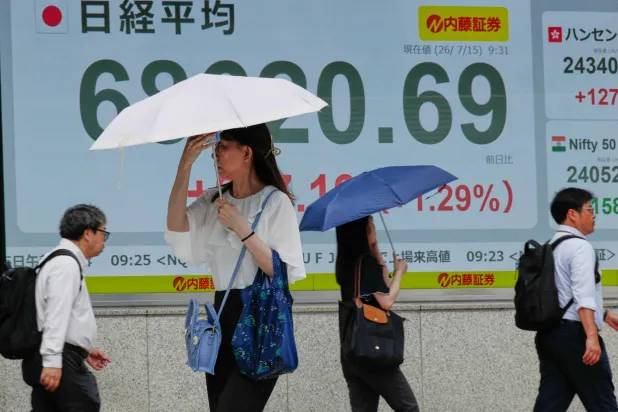
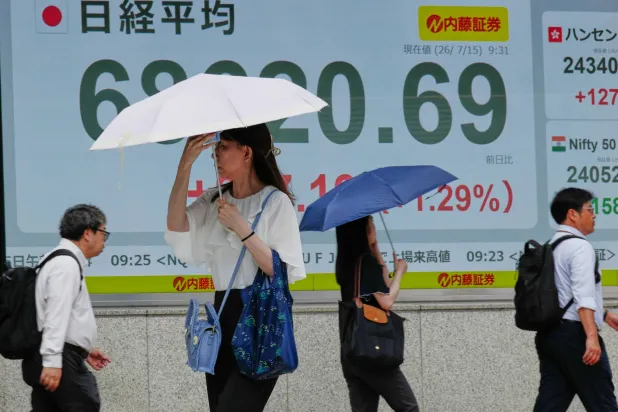
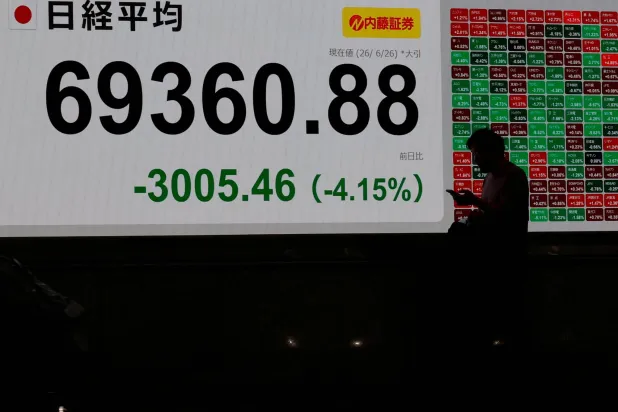
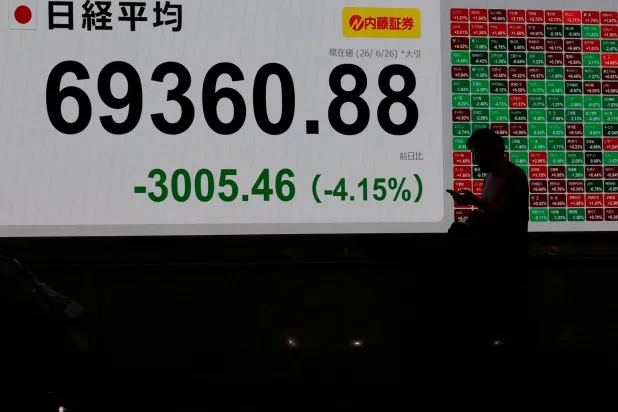
Japan's Nikkei index closed down about 3% on Thursday, as shares of companies in the electronic chip manufacturing sector fell.
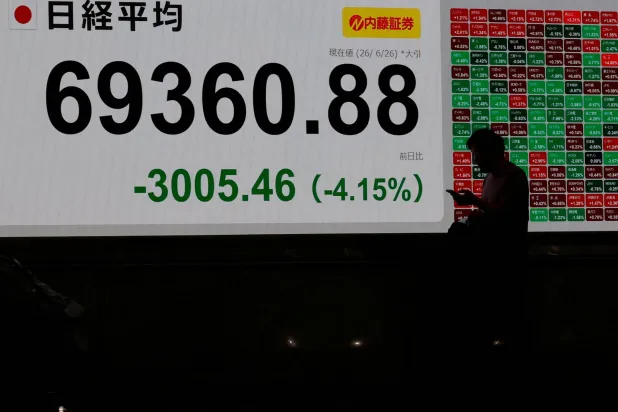
Japan's Nikkei index closed down about 3% on Thursday, as shares of companies in the electronic chip manufacturing sector fell, and the escalation of the conflict in the Middle East negatively affected risk appetite, overshadowing record profits and a positive outlook from Taiwan Semiconductor Manufacturing Company (TSMC).
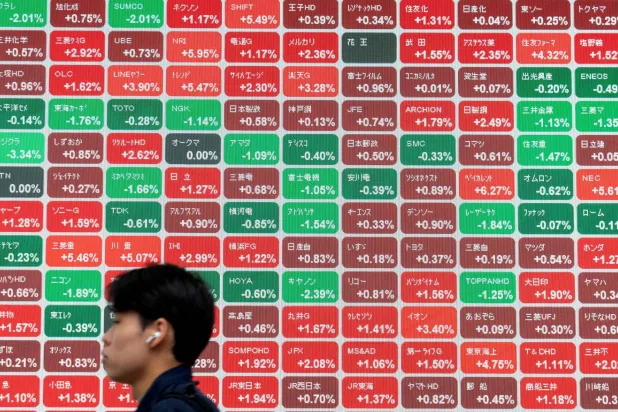
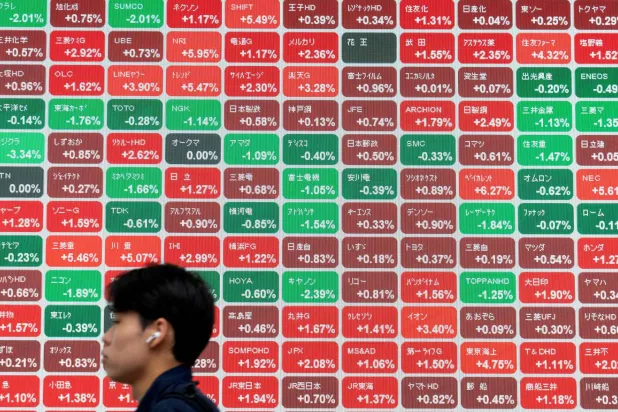
The Nikkei index closed down 2.8% at 66,835.54, after falling as much as 3.3% earlier in the day, while the broader Topix index fell 1.5% to 4,028.79. Market performance was negative, with 139 stocks on the Nikkei falling, 85 rising, and one unchanged.
Hiroki Takei, strategist at Resona Holdings, said: 'We have recently seen a notable divergence between semiconductor stocks and the broader market, and today is no exception, with high-tech stocks undergoing a price correction.'
Taiwan Semiconductor Manufacturing Company (TSMC) reported record net profit in the second quarter, surging 77% and beating market expectations, driven by rising global demand for artificial intelligence processors.
The company, the world's leading producer of advanced AI chips, raised its annual revenue growth forecast in US dollars to just over 40%, up from previously over 30%. It indicated that capital expenditure over the next three years will be significantly higher than the last three years. However, investors remained cautious. Kioxia, a memory chip maker, was the biggest loser on the Nikkei, with its stock falling 15%. However, investors remained cautious.
SoftBank Group, a technology investment conglomerate, fell 6.3%, while Advantest, a chip testing equipment maker, fell 5.9%. Takei said recent volatility in high-tech stocks appears driven by supply and demand factors rather than fundamentals, citing a sharp decline in South Korean stocks linked to problems with leveraged exchange-traded funds and a rise in margin buying by individual investors in Japan in recent weeks.
Sentiment was also negatively affected by the conflict in the Middle East, after the US launched two waves of attacks on Iranian coastal defenses and missile sites on Wednesday, and Iran responded by targeting US military positions in neighboring countries. Oil prices fell as traders assessed risks from renewed clashes. Meanwhile, shares of Nichirei jumped up to 7.7% after the frozen food and cold chain logistics company announced it would resume frozen food shipments and cold storage warehouse operations that had been suspended due to cyberattacks.
• Rising yields
For its part, Japanese government bond yields rose on Thursday as tensions escalated between the US and Iran, leading to higher oil prices, which increased concerns about inflation and exacerbated ongoing worries about Japan's fiscal situation.
The benchmark 10-year Japanese government bond yield rose 0.5 basis point to 2.690%. Yields move inversely to bond prices. Oil prices rose for a fourth straight session after a new wave of US strikes on Iranian military installations, raising fears of a full-scale conflict and oil supply disruptions in the Strait of Hormuz.
The 20-year Japanese government bond yield rose 3 basis points to 3.565%. Also, the 30-year bond yield rose 4.5 basis points to 3.800%.
The 40-year Japanese government bond yield, the longest maturity in Japan, rose 6 basis points to 3.815%. A Bank of Japan survey on Thursday showed that more than 90% of Japanese households expect prices to rise over the next year, up from three months earlier, indicating increasing inflationary pressures that could strengthen the case for another interest rate hike.
The two-year bond yield, which is most sensitive to Bank of Japan interest rates, rose 0.5 basis point to 1.435%. The five-year bond yield rose 1.5 basis points to 1.950%.
Japanese Prime Minister Sanae Takaichi said on Wednesday she did not see any link between her government's draft economic plan and the recent decline in the Japanese government bond market.
Kisuke Tsuruta, senior bond strategist at Mitsubishi UFJ Morgan Stanley Securities, said in a note: 'The government has recently taken steps to respond to higher interest rates, but there is still a clear discrepancy between the issues that concern the market and the government's view of the situation.' Tsuruta added: 'Ongoing concerns about fiscal expansion and increased issuance of Japanese government bonds are likely to keep market participants cautious.'
US Treasury yields fell overnight after data showed the producer price index for final demand fell 0.3% last month, below economists' estimates.
Original source: Asharq Al-Awsat
Comments (0)
Be the first to comment.