Takaichi Bets on Investment... and Japan Fears Debt
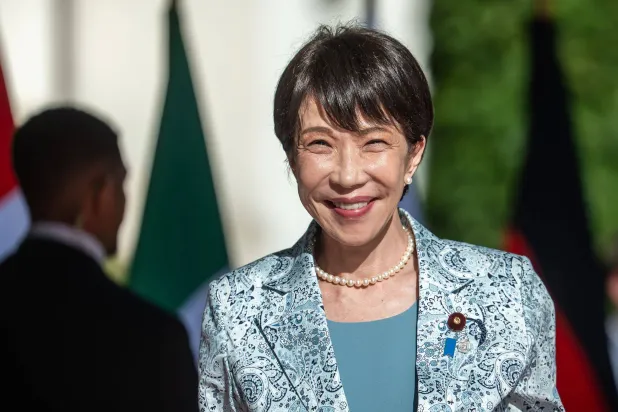
Japanese Prime Minister Sanae Takaichi pledged to boost investment in growth sectors in her first economic roadmap, completed on Tuesday, a pledge overshadowed by rising bond yields, reflecting fears of government intervention in monetary policy.
The Takaichi administration has struggled to dispel market perceptions that it may increase spending and pressure the Bank of Japan to delay interest rate hikes to reduce the cost of financing Japan's already massive debt.
With government bond yields rising to record highs not seen since last June, the administration was forced to revise the plan's wording related to monetary policy several times.
A phrase from an early draft calling for monetary policy that 'supports private demand' disappeared as long-term interest rates rose.
Clarifications
After a later version linking monetary policy to the government's efforts to boost growth caused market turmoil, adjustments were made to clarify that the central bank sets monetary policy 'to achieve stable price increases.'
The final plan retained wording urging the Bank of Japan to align its policy with the government's policy, but added a footnote referring to a provision in the law requiring protecting the Bank of Japan's independence in setting monetary policy.
The final plan, approved by the cabinet on Tuesday, emphasized the importance of properly implementing monetary policy to achieve stable price increases, in order to achieve a strong economy.
Japan's law grants the central bank complete independence from political interference, but at the same time requires close coordination with the government's economic policy.
Boosting Investment
Takaichi is known for supporting 'Abenomics,' a mix of massive fiscal spending and monetary easing through massive bond issuance, adopted by former Prime Minister Shinzo Abe to pull Japan out of prolonged deflation.
The plan stated: 'Under the Takaichi administration, the government, in cooperation with the private sector, will take the lead in investing in strategic areas, putting an end to the underinvestment that has plagued Japan.'
Japan announced it will seek cooperation with the private sector to direct resources to strategic industries, with total public and private investment expected to exceed 370 trillion yen ($2.28 trillion) by the end of fiscal 2040.
Instead of the rhetoric used by previous administrations, which pledged to restore fiscal stability, Takaichi pledged in her plan to balance the need to boost growth with achieving 'fiscal sustainability.'
Since taking office in October last year, Takaichi has pledged to increase spending to revive the economy. Her administration has also expressed reservations about the Bank of Japan raising interest rates.
The focus on massive spending and low interest rates has led to rising bond yields, amid market concerns that Japan's already deteriorating fiscal situation could worsen and that it may lag in addressing inflation risks.
After the benchmark 10-year Japanese government bond yield hit a three-decade high of 2.9 percent on July 9, it pulled back slightly to settle at 2.73 percent on Tuesday. Takaichi said on Tuesday during a meeting of a committee discussing the plan: 'We have steered economic and fiscal policy with due attention to fiscal sustainability and the need to maintain market confidence. We will continue to do so based on this plan.'
But some analysts believe that minor wording changes alone will not ease market concerns about Takaichi's policies.
Seiji Adachi, a former Bank of Japan board member, said: 'The administration wants the Bank of Japan to keep interest rates low so it can issue more debt. This is not a good message for markets.'
The Bank of Japan ended a powerful economic stimulus program in 2024 and raised interest rates several times, including last June. It signaled readiness to continue raising its key interest rate, which remains low at 1 percent compared to other advanced economies.
Thus, Japan's dilemma does not seem limited to the size of spending, but also to the ability of the government and the central bank to present coherent policy that convinces markets that growth stimulus will not come at the expense of price stability or confidence in public debt.
Original source: Asharq Al-Awsat






Comments (0)
Be the first to comment.