After 50 years, how did Fairuz’s sunglasses return to the fashion of summer 2026?
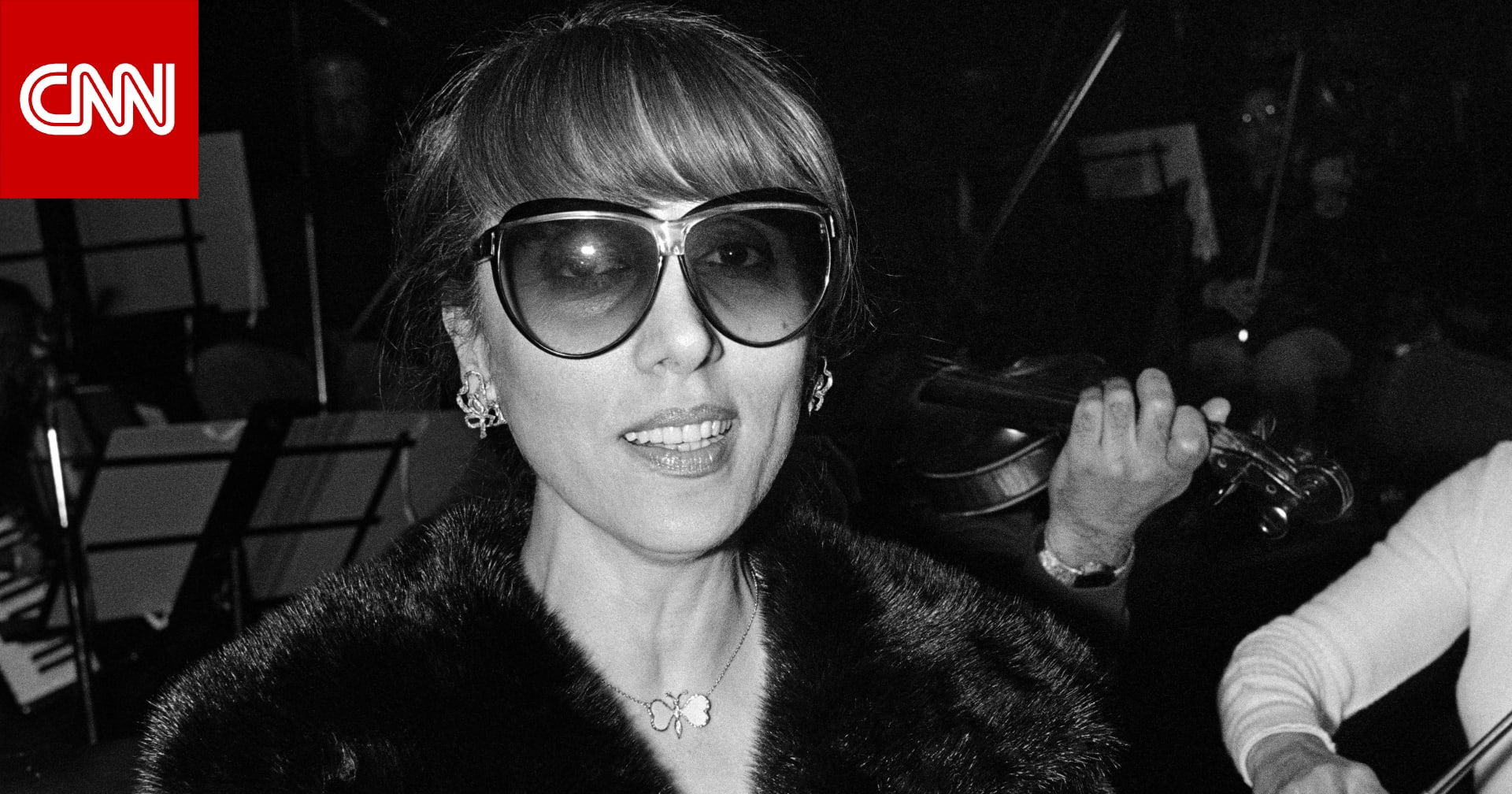
The iconic sunglasses associated with names such as Fairuz, Sophia Loren, and Jackie Kennedy are back in the spotlight, reinterpreted in a contemporary style that suits today’s taste.
Lebanese artist Fairuz during preparations for two concerts at the Olympia theater in the French capital Paris in May 1979. Credit: Photo by Aldo BENNATI / AFP via Getty Images
(CNN)-- Season after season, sunglasses prove they are more than just a seasonal accessory; today they stand at the intersection of fashion and identity, where choosing a frame is no longer linked only to what is trendy, but to what reflects the wearer’s personality and personal style.
The trends of 2026 reveal a diverse landscape that combines inspiration from fashion archives, modern techniques, and a search for pieces capable of transcending seasons, as fashion houses move toward reinterpreting the past rather than reproducing it.
Lebanese fashion stylist Elie Mchantaf explained in an interview with CNN Arabic how sunglasses have become a visual language expressing the wearer, and why images of old-time icons such as Lebanese artist Fairuz, late American First Lady Jacqueline Kennedy, and Italian actress Sophia Loren still inspire designers today.
Lebanese artist Fairuz arriving at Orly Airport on April 30, 1979, to perform two concerts at the Olympia theater in Paris. Credit: Photo by Pierre GUILLAUD / AFP via Getty Images
Mchantaf stressed that sunglasses are no longer just an accessory that completes the look, but have become comparable to a handbag or shoes in their ability to express personality, noting that the years of dominance of the "quiet luxury" concept have now paved the way for the return of a style based on expressing identity through the look, where the piece does not just complete the appearance but gives the wearer a clear visual presence.
He added that the upcoming season will see three main trends running in parallel: first, large and sculpted frames that give a strong presence; second, sporty sunglasses that have moved from the world of performance to the world of fashion with more elegant designs; and third, ultra-thin metal frames that reflect quiet simplicity.
Italian movie star Sophia Loren upon arrival at London Airport in May 1965. Credit: Photo by Michael Stroud/Express/Getty Images
It is not just about the shape of the frame; geometric shapes and colored lenses in shades of amber, honey, olive, and light blue are also present, indicating, according to Mchantaf, that fashion no longer imposes a single style, but gives each person space to express their own identity.
Rereading the past in a contemporary language
Despite this forward-looking direction, fashion continually returns to its archive, but in a different way.
The Lebanese stylist pointed out that what we are experiencing today is not a return to the past, but a rereading of it in a contemporary language, explaining that designers are not searching the archive to replicate old designs, but to extract the identities and stories those pieces carried.
Late American First Lady Jacqueline Kennedy arrives at her hotel in Paris in 1970. Credit: Photo by Keystone/Getty Images
He said: “The success of modern designs lies in their ability to achieve a balance between nostalgia and innovation; a pair of glasses may take a shape from the 1960s or 1970s, but it is reworked with lighter materials, more advanced lenses, modern manufacturing techniques, and colors that suit the contemporary consumer’s taste.”
Mchantaf explained this idea using the example of Lebanese artist Fairuz, whose glasses were not just an accessory but part of her personal image and visual identity. In her photos from the 1960s and 1970s, the large, soft frames appear as an element reflecting her calmness, mystery, and elegance – qualities that still give this style its appeal today.
A pair of full-rim glasses worn by Jacqueline Kennedy, designed by Maison Bonnet, displayed at the group’s store in Paris on December 6, 2012. Credit: JOEL SAGET/AFP via Getty Images
The same applies to Jackie and Sophia; their images have become visual references for fashion houses, not only because of the sunglasses designs they wore, but because of the complete image and the messages those looks carried.
As for current generation stars, such as models Hailey Bieber and Bella Hadid, they do not copy those looks, but rather re-present them in a way that suits contemporary fashion language and social media culture, making the archive a renewable source of creativity, not just a space for nostalgia.
Mchantaf noted a clear difference between owning a vintage piece as is and reinterpreting it, explaining that fashion today resembles a "montage" process that combines elements from different eras to produce a completely new design.
Palestinian-origin model Bella Hadid walks the runway at the Saint Laurent women’s spring/summer 2026 fashion show during Paris Fashion Week. Credit: Photo by Vittorio Zunino Celotto/Getty Images
This is why some sunglasses may look familiar at first glance, but the difference appears in subtle details, such as frame thickness, curves, lens distribution, and even the way light reflects off the materials – elements that make the difference between reproduction and innovation.
Classicism does not disappear
Despite the widespread presence of large and bold frames, Mchantaf does not believe that classic designs are on their way to disappearing, comparing them to a white shirt or a black blazer, as a permanent staple in any wardrobe no matter how trends change.
He added that what has changed is not the value of these designs, but the way fashion is consumed; many now own more than one pair of sunglasses: a classic pair for daily use, work, and travel, and a bolder pair for occasions or special looks.
American model Hailey Bieber attends the premiere of the Netflix series "Something Very Bad Is Going To Happen" at the Egyptian Theatre in Hollywood. Credit: Photo by Matt Winkelmeyer/Getty Images
When choosing the right sunglasses, Mchantaf stressed that fashion should serve the person, not the other way around. Despite the importance of face shape, he believes that the overall proportions of the features are no less important; two people may have round faces, but differences in forehead width or cheekbone height can make the same glasses look perfect for one and unsuitable for the other.
He also emphasized that personality plays a fundamental role: some can confidently pull off a large frame, while others need a more understated design.
Therefore, he advised not to follow trends blindly, but to choose a design that carries the spirit of the trending direction while adapting it to the person’s features and style, especially since confidence in the sunglasses is what makes the look successful.
Colored lenses and more sustainable materials
As for colors, Mchantaf predicted the continued presence of lenses in amber, honey, olive, smoky gray, and light blue shades, because of the natural warmth they add to the face and their harmony with the summer color palette that relies on linen, cotton, and earthy tones.
Meanwhile, ultra-thin metal frames and clear acetate will continue their presence during the season, with increased interest in lightweight and more sustainable materials, a clear reflection of the shift in the concept of luxury toward quality and longevity, instead of fast seasonal consumption.
Original source: CNN Arabic



Comments (0)
Be the first to comment.