KAUST Develops Smart Patch for Real-Time Monitoring of Drug Levels in the Body
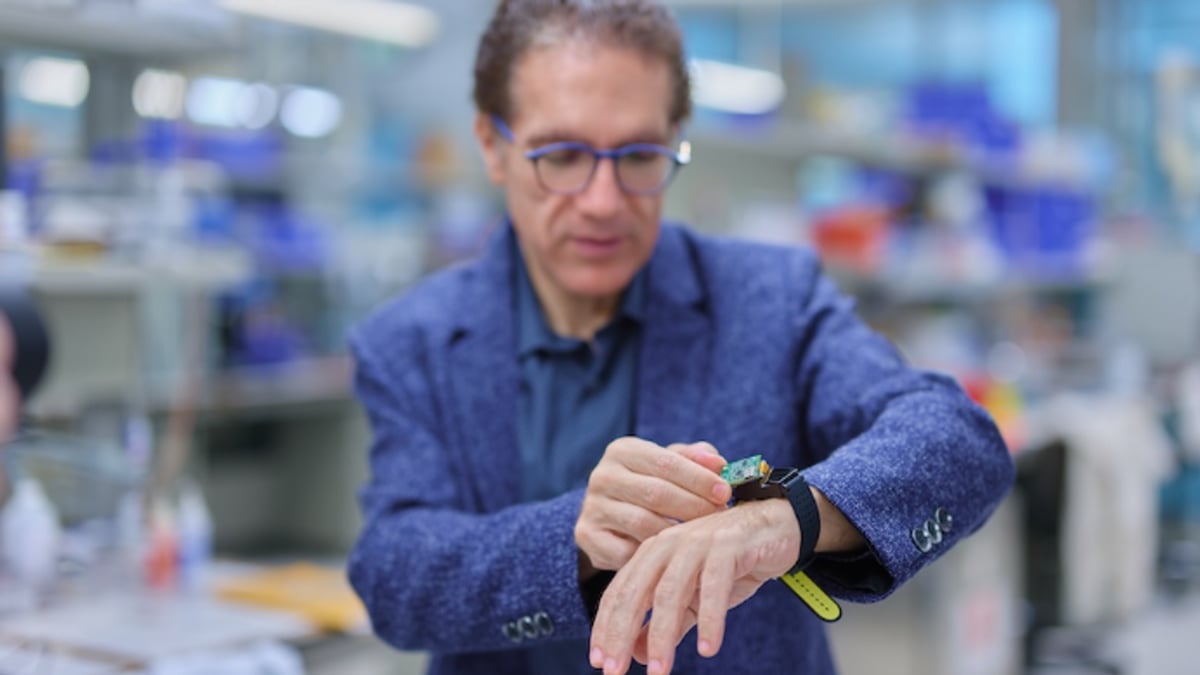
Saudi innovation enables drug monitoring via a wearable patch that transmits data directly to the phone
Researchers at King Abdullah University of Science and Technology (KAUST) have developed a lightweight, wearable smart patch that allows continuous monitoring of drug levels under the skin and wirelessly sends data to a smartphone in real time.
The university stated that the innovation represents a new advancement in wearable devices, expanding their use from monitoring vital signs and physical activity to tracking changes in drug levels within the body over time.
In a study published in the scientific journal Device, the KAUST team presented an integrated system based on a patch equipped with microneedles that continuously measures drug concentration under the skin and sends readings directly to a smartphone, enabling precise tracking of the drug's movement without the need for repeated blood tests and time-consuming laboratory results.
Device Mechanism and Efficacy Tests
The researchers noted that the device uses an array of microneedles to access interstitial fluid under the skin, contains miniature electronics and Bluetooth communication technology, and weighs only 6.7 grams. The device combines microneedle sensing technology, electrochemical biosensors, wireless communication, and real-time data display on a smartphone.
The team added that the technology's effectiveness was demonstrated using vancomycin, an antibiotic that requires precise monitoring of its concentration to ensure safety and efficacy. Laboratory experiments and preclinical studies successfully tracked changes in drug concentration in the body over hours, confirming the feasibility of continuous drug level monitoring via a wearable device with minimal surgical intervention.
Future Prospects of the Technology
For his part, the lead researcher of the study, Professor Khaled Nabil Salama, explained that wearable devices have changed the way health is monitored, and that the research explores the possibility of tracking drug behavior inside the body in the future, noting that the technology is still in its early stages but offers a new approach for continuous treatment monitoring.
In the same context, the researchers emphasized that the technology requires further development and clinical validation before being adopted in healthcare facilities, but the study results show the potential to build wearable systems that provide continuous data on drug levels.
It is worth noting that the platform was tested with an antibiotic, but the team believes it can be adapted to monitor other drugs that require precise dose adjustment, supporting the development of more personalized treatments. Future research will focus on extending the duration of drug monitoring, improving device stability and performance, and testing it in broader medical applications.
Original source: Ajel.sa





Comments (0)
Be the first to comment.