Energy and Industry... Now the Heavy Files Move! - Abdulwahab Al-Fayez

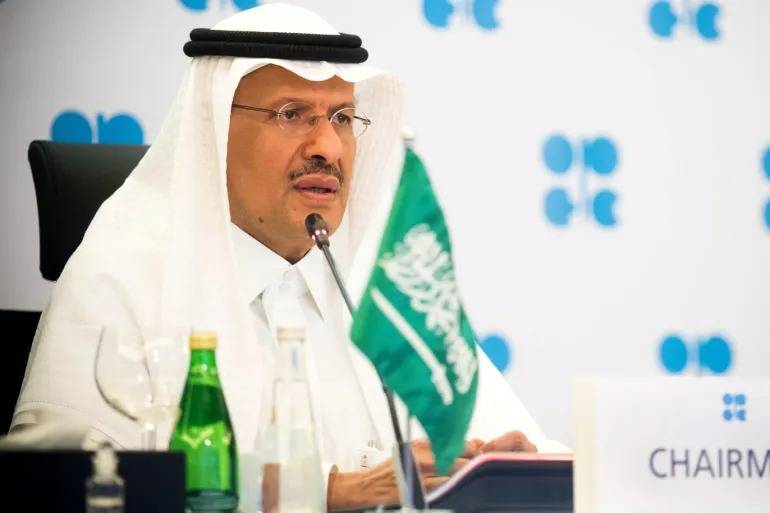
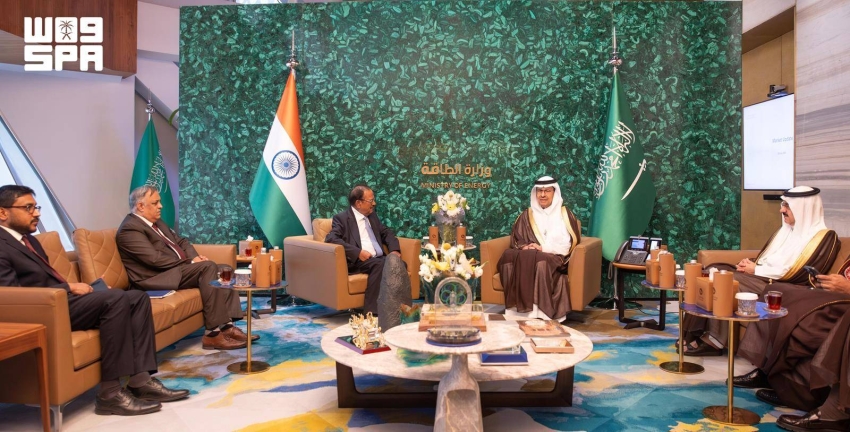
Saudi Arabia unites energy and industry leadership under Prince Abdulaziz bin Salman to enhance synergy. The article outlines seven key challenges including feedstock availability, energy security, energy transition, mineral resources, energy efficiency, human resources empowerment, and R&D innovation, with a focus on AI integration in manufacturing.
When the good news came that the energy and industry sectors were brought together under the umbrella of a single leadership and management, not through a merger of two entities, those in the know said: light upon light!
Energy and Facilities
These observers, aware of the course of public administration, have recently come to prefer neither merger nor separation, because these are (theoretically excellent and dazzling, and previous mergers of industry and energy occurred but were not capitalized on / look for management), and generally merger is often a complex process pulled by human nature tendencies; some prefer to keep their powers, departments, staff, relationships, and interests that the position in the apparatus grants them, which makes them resist merger or separation to the last breath. Conversely, there are those who jump for joy and surrender the whole deal. So, whoever has reservations is justified. This is how convictions evolve.
Overall, what is happening in the public sector of reform, development, merger, separation, or abolition of government entities aims, as established in governance literature, at the supreme interest of the Saudi people, and this is the essence of (good governance), which is the spirit of the Vision now, regardless of where opinions and interpretations go regarding merger, separation, or abolition!
From this perspective, we see that unifying leadership or unifying the administrative pyramid in (the energy and industry system) to be within the responsibilities and tasks of Prince Abdulaziz bin Salman is a positive decision for the public interest, supported by many objective technical justifications given the significant organic relationship between the two sectors. From our experience in economic journalism over the past three decades, we were always in the circle of technical and administrative tension between the leaderships of the two systems, and our role was often to remain in a neutral zone and commit to the supreme interest of the country. Objective neutrality is necessary because each side has technical justifications, especially in a country that is (growing) and facing major challenges, with its supreme goal being the spread of development in all fields, including rural areas, villages, mountain tops, sand dunes, and urban centers.
Among the ongoing challenges of our country is achieving harmony between energy and industry; the latter cannot be established and thrive without stable energy supply and supportive prices, and this is the country's competitive advantage. In contrast, energy is a rare commodity and a (blessing) that requires high efficiency in all its affairs. In public or private discussions and debates, the main issue raised was: (who bears the cost of support), and where is it transferred: to the investor, the consumer, or the public treasury? Each party advocating for these sides has its justifications.
But the cost to the country's overall economy, the disruption of its projects, and the delay of its interests... sometimes we see no one advocating for them; and this was the area of great and worrying pain until God raises someone to tackle it and take charge for decisive treatment.
And this is what we see after the assignment of Prince Abdulaziz to this task, and we sincerely pray to God that He grants success and guidance to our country's leadership and the leaderships of the two systems; success will extend its impact to future generations, and now we are all reaping the fruits planted by the leaders of energy and industry fifty years ago; it is a marathon of achievement whose flame never extinguishes. This is what we look forward to, as transformation and leadership in the energy sector—which is the future and prosperity of our country and its generations for the next 100 years—are strongly linked to the existence of an advanced industrial sector and optimal investment of our natural resources.
We return to our topic, which is the unification of the (administrative pyramid); this matter places before us the concerns of energy and the files of industry, including:
The first concern is the availability of (feedstock), which is the basic need of the future transformative industry, directly linked to the energy sector. Here, the required balance is between investing every bit of fossil energy while stimulating local industries to enhance their global competitiveness. The Saudi government has supported this sector since the inception of the petrochemical industry. What we need is precise governance of this matter, (and here lies the importance of the leadership pyramid in the two systems), as it is capable of decisiveness while caring for the interests of both sectors and giving each the opportunity to innovate the best solutions and achieve results.
The second concern is (energy security), a concept established by Prince Abdulaziz, where the two systems integrate because energy security is not only about ensuring its flow but also about integrating all its components logistically, industrially, and innovatively. Energy security, for example, is achieved through components in all their branches and diversity, manufacturing and localization, and leading in them. This is greatly linked to an advanced industrial system that prioritizes serving the energy sector.
The third concern is the new (energy transition) represented by renewable energy, energy storage, and energy transmission with all its stations, components, and others.
The fourth concern is the connection of all components of the energy sector with mineral wealth, of which the Kingdom possesses large stocks. This requires optimal employment and covering local needs that support the Kingdom's leadership and build bridges towards leadership in all forms of energy.
The fifth concern is energy efficiency. Prince Abdulaziz will strongly transfer the experience of energy efficiency to the industrial sector, which is the largest consumer of all types of energy, especially with the trends of the Fourth Industrial Revolution.
Libraries
The sixth concern, or our greatest national concern, is (the issue of empowering human resources in the national industrial system). This file is laden with questions, wishes, and some regrets. After half a century of supporting the industrial system: what have we achieved in this file, how many Saudis have been employed? Why are the indicators low? Why is the industry intensive in cheap labor? Why do our advanced factories turn into training centers for workers until they qualify to emigrate to Europe and America?
The seventh concern is the file of (research, development, and innovation). Here we must acknowledge that the Kingdom has achieved positive steps in the industrial research and innovation system by integrating advanced technical solutions into the production reality. This requires another extended stop.
To these are added major national aspirations whose achievement may transcend the two systems. The industrial excellence we seek from the integration of energy and industry work is (localizing artificial intelligence in factories). In this context, we may benefit from the Chinese experience in integrating AI with industry, which is a unique model based on phased strategic planning that began with a regulatory framework then transitioned to wide application through the 'AI Plus' initiative, which succeeded in building more than 40,000 smart factories and deploying applications in more than 300,000 factories within a few years. Importantly, this leap was achieved after China adopted massive government support (investment funds worth tens of billions, and training vouchers where the state bears 80% of the cost).
The coordinated Chinese government mechanism with (high governance) enabled China to benefit from AI not only in industry but in many fields. In his speech at the World AI Conference 2026 and the High-Level Meeting on Global AI Governance held in Shanghai (July 17, 2026), Chinese President Xi Jinping presented a comprehensive vision focusing on international cooperation and human responsibility. Here, China calls for the integration of international collective action after its successful domestic experience.
Original source: Al-Jazirah


Comments (0)
Be the first to comment.